


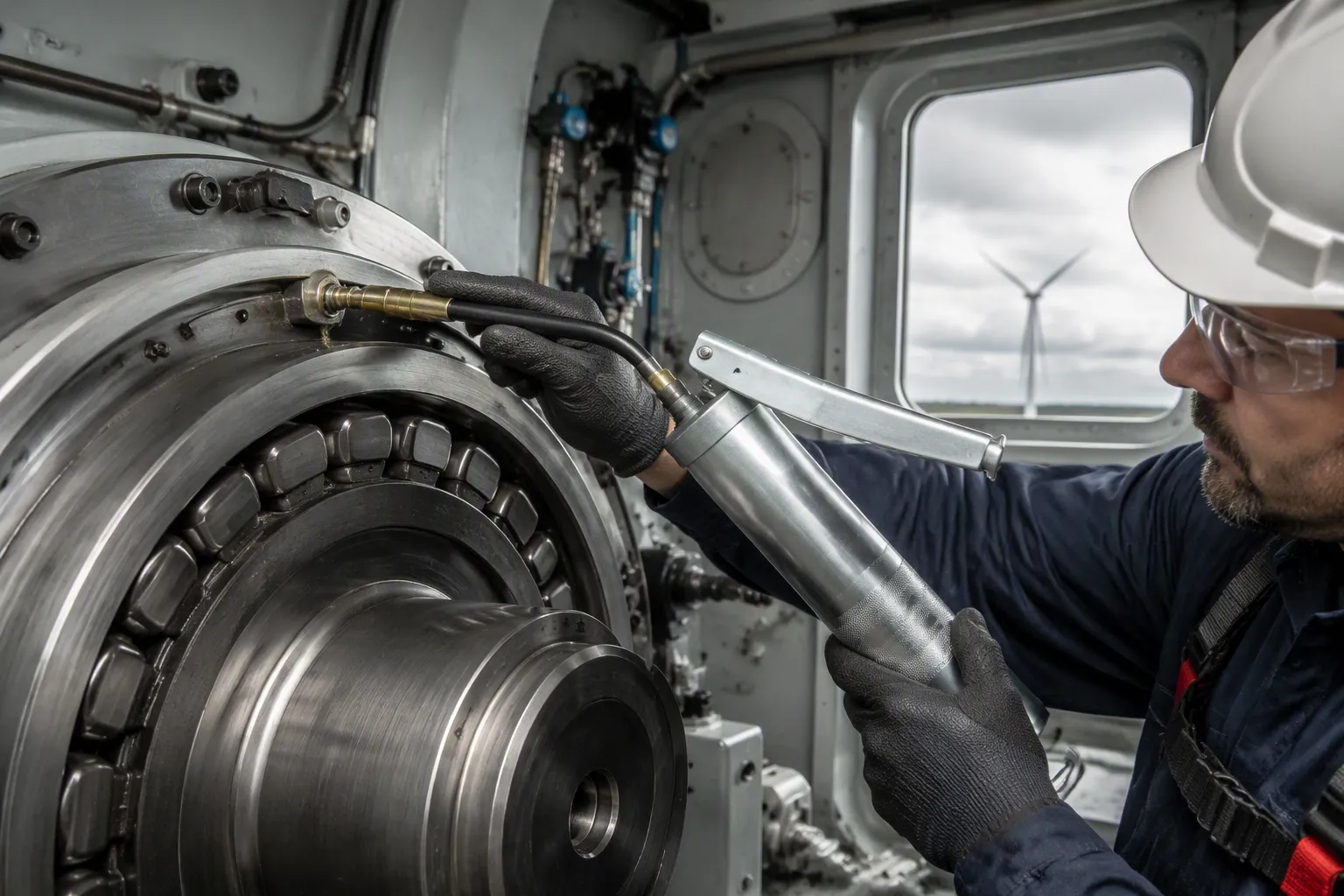
Main shaft bearings operate under low speed, high load, vibration, and weather exposure. These harsh conditions demand a grease that resists water washout and extreme pressure. Choosing the wrong Wind Turbine Main Shaft Bearing grease causes premature failure. You must evaluate five key factors: base oil viscosity, thickener type, base oil type, additives, and consistency. The optimal choice depends on your specific speed, load, temperature, moisture, sealing, and re-lubrication interval. This guide gives you actionable criteria to select the best Wind Turbine Main Shaft Bearing grease for your turbine. Making the correct selection extends bearing life and reduces maintenance costs.
Key Takeaways
Evaluate five key factors: base oil viscosity, thickener type, base oil type, additives, and consistency.
Match grease to your turbine’s load, speed, temperature, and moisture conditions.
Start with OEM specifications and bearing supplier recommendations for approved grease types.
Field test your chosen grease and monitor its condition with lab analysis.
Adjust re-lubrication intervals based on grease analysis results to extend bearing life.
Main Shaft Bearing Operating Conditions
Load, Speed, and Temperature
Your main shaft bearing faces demanding operating conditions. The bearing rotates at very low speeds. Typical rotational speeds range from 8 to 20 RPM. Some designs reach up to 30 RPM. This slow rotation creates a unique lubrication challenge. You cannot rely on high speed to distribute grease evenly across the bearing surfaces. The bearing must carry heavy fluctuating loads instead. Wind gusts, rotor weight, and mechanical vibration all contribute to these loads. They create extreme pressure at contact points between rolling elements and raceways. Your Wind Turbine Main Shaft Bearing grease must handle these pressures without breaking down.
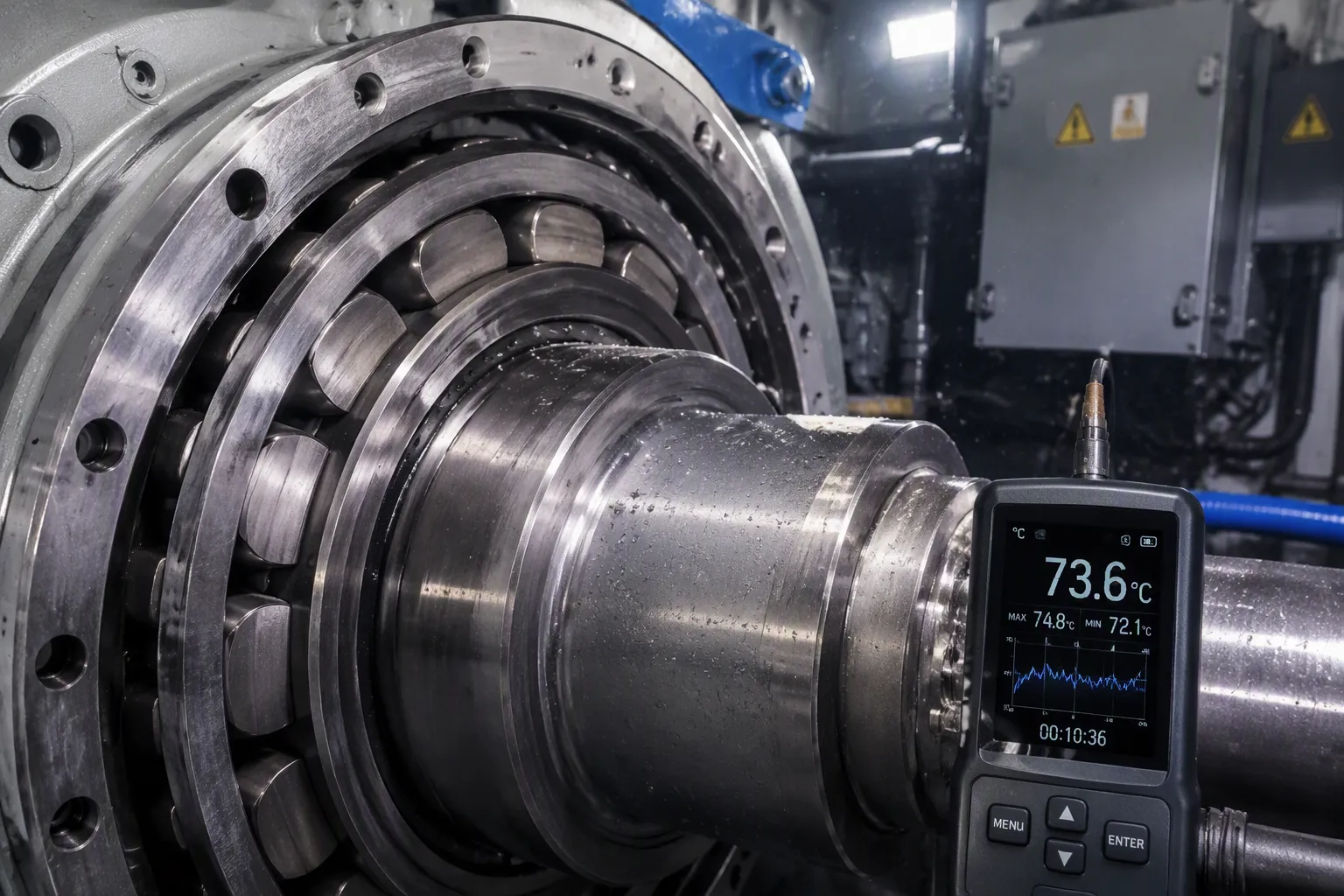
Temperature adds another layer of difficulty. The bearing experiences frequent thermal cycling. Day and night temperature swings cause expansion and contraction. Research confirms that these temperature fluctuations accelerate grease oxidation. Large temperature differentials break down the grease structure. This process speeds up oxidation and alters viscosity. It also reduces corrosion protection. Oxidation begins after antioxidants deplete during an induction period. Temperature variation and oxygen exposure strongly influence this period. As oxidation progresses, the grease loses base oil. Lubrication performance degrades steadily. Some compensation occurs through oil release from the grease reservoir. However, the overall service life shortens significantly. Frequent thermal cycling reduces your grease oxidation life by accelerating antioxidant depletion.
Contamination and Moisture Exposure
Contamination poses a major threat to your main shaft bearing. Water ingress is your primary concern. Rain, condensation, and humidity can enter through compromised seals. Even small amounts of water cause rust and corrosion. Water also washes away the grease, leaving the bearing completely unprotected.
Dust and airborne particles present another challenge. Wind turbines operate in open environments. They face sand, salt spray, and industrial pollutants regularly. These particles act as abrasives. They grind away at bearing surfaces. They also thicken and degrade the grease over time.
Your seal condition directly impacts contamination levels. Worn or damaged seals allow contaminants to enter. Regular seal inspection becomes essential for protection. A small investment in seal maintenance prevents costly bearing failure later.
Moisture and contaminants together shorten grease life dramatically. They accelerate oxidation. They wash out additives. They alter grease consistency. Your Wind Turbine Main Shaft Bearing grease must resist water washout effectively. It needs strong rust inhibitors. It requires a robust additive package. Choosing the right grease for these conditions extends bearing life and reduces your maintenance costs significantly.
Key Wind Turbine Main Shaft Bearing Grease Criteria
Base Oil Viscosity and Type
Base oil viscosity is the single most important property of any Wind Turbine Main Shaft Bearing grease. It determines the film thickness between rolling elements and raceways. A thicker film separates metal surfaces and prevents wear. A film that is too thin allows metal-to-metal contact and rapid failure.
For main shaft bearings, ISO VG 130 and ISO VG 300 are typically optimal. These grades provide sufficient film strength at low speeds without excessive drag. However, industry practice often favors ISO VG 460. This heavier grade offers extra protection under high loads and vibration. The table below summarizes these options.
Viscosity Grade | Typical Use Case |
|---|---|
ISO VG 130 | Light loads, moderate temperatures |
ISO VG 300 | Standard main shaft conditions |
ISO VG 460 | High loads, heavy vibration, industry common |
Base oil type also matters. Mineral oil paired with lithium soap works well for high-load and vibration applications. This combination offers good mechanical stability at a reasonable cost. For extreme conditions, consider PAO synthetics. These fluids resist oxidation and maintain viscosity across wide temperature ranges. Gel-type grease represents another option for severe environments. It stays in place under heavy vibration and resists water washout effectively.
Thickener, Additives, and Consistency
The thickener holds the base oil in place and releases it gradually during operation. Lithium soap remains the most widely used thickener for main shaft bearings. It provides excellent mechanical stability and water resistance. Lithium complex grease offers even better thermal stability. This thickener works well when your bearing sees frequent thermal cycling.
Consistency describes how hard or soft the grease feels. NLGI 2 is the most common consistency for wind turbine main shaft bearings. This grade stays in place under vibration and does not leak from the housing. Softer grades may channel poorly at low speeds. Harder grades may not release enough oil to lubricate contact points.
Additives complete the grease formulation. Extreme pressure (EP) additives form a protective layer on metal surfaces. This layer prevents welding and scoring under heavy loads. Anti-wear additives reduce friction and extend bearing life. Rust inhibitors protect against moisture ingress. Oxidation inhibitors slow the breakdown of base oil during thermal cycling. A well-balanced additive package addresses all four functions.
You should verify that your chosen grease contains each additive type. Some products emphasize EP performance but skimp on rust protection. Others focus on oxidation resistance but lack sufficient anti-wear chemistry. Read the technical data sheet carefully. Match the additive package to your specific operating conditions.
Practical Steps for Grease Selection
Consult OEM and Application Data
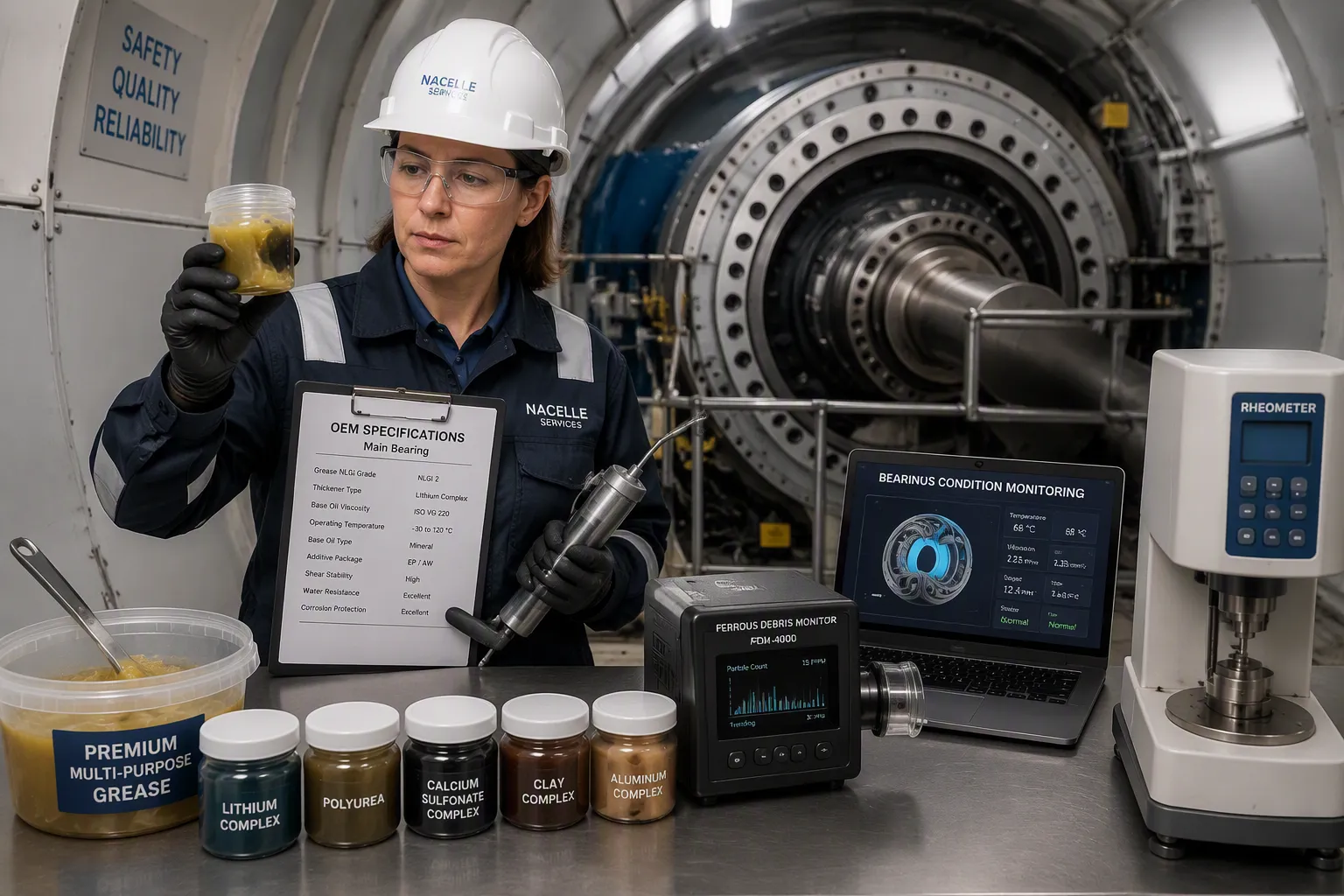
Start your selection process with the original equipment manufacturer (OEM) specifications. The OEM knows your turbine model best. Their guidelines reflect years of field data and bearing supplier recommendations. Review the OEM manual for approved grease types and required performance properties. Check the bearing supplier’s technical documents as well. These sources tell you the minimum base oil viscosity, thickener compatibility, and additive requirements for your specific bearing.
Your application data fills in the gaps. Gather operating parameters like actual load profiles, speed ranges, and temperature extremes at your site. Note your re-lubrication interval and seal condition. A grease that works well in a dry desert climate may fail in a coastal environment with salt spray. Match the grease to your real conditions, not just the catalog ratings.
Test, Monitor, and Adjust
Field testing validates your choice before widespread use. Install the candidate Wind Turbine Main Shaft Bearing grease in a few turbines. Monitor performance over several months. Then send grease samples to a lab for analysis. Several proven methods reveal grease condition:
Ferrous debris monitoring (ASTM D7918) measures magnetic wear debris content using a passive sampling device to improve trendability.
Grease consistency (ASTM D7918) evaluates changes in grease stiffness by measuring extrusion load, indicating thinning or thickening.
Comparative FTIR spectroscopy compares infrared spectra of in-service grease with new grease to detect oxidation, contamination, or mixing of different greases.
Anti-oxidant analysis monitors depletion of antioxidant additives, providing early warning of grease degradation.
Grease rheology uses a rheometer to assess viscosity, normal force, and shear behavior, revealing issues like incompatible mixing or excessive working.
Advanced ferrographic analysis identifies wear particle morphology and black oxides indicating high localized temperatures.
Elemental comparison detects contamination or mixing by comparing used and new grease composition.
These tests give you concrete data. You can spot oxidation before it causes bearing damage. You can detect water ingress or solid contamination early. You can confirm whether two greases were accidentally mixed. Some operators use fdm+ technology as a screening tool for wear levels. This guides further testing like metal spectroscopy or analytical ferrography. Vestas threshold criteria, derived from historical lab analyses of main shaft bearing grease samples, serve as condition assessment benchmarks.
Monitoring does not stop after the initial test. Track your re-lubrication intervals continuously. Adjust the interval based on grease analysis results. If antioxidant levels drop faster than expected, shorten the interval. If consistency remains stable and wear debris stays low, you may extend it safely. This condition-based approach saves grease and labor while protecting the bearing.
The right choice depends on five factors. Base oil viscosity, thickener, base oil type, additives, and consistency determine performance. You must match your Wind Turbine Main Shaft Bearing grease to load, speed, temperature, and moisture exposure. This alignment ensures reliable lubrication and extends bearing life. Your maintenance costs drop as a result.
Start with OEM specifications. Your manual lists approved grease types and required properties. Field testing validates your Wind Turbine Main Shaft Bearing grease selection. Send samples to a lab. Monitor oxidation, contamination, and wear debris. Adjust your interval based on results.
Review your current grease today. Consult your supplier for tailored recommendations. The right grease protects your bearing and reduces costs.
FAQ
Which base oil viscosity grade should you pick?
Start with ISO VG 300 for standard main shaft conditions. Choose ISO VG 460 when your bearing carries heavy loads and strong vibration, which is common in the industry. Use ISO VG 130 only for light loads and moderate temperatures. Always confirm the grade against your OEM manual first.
Is NLGI 2 always the right consistency?
NLGI 2 suits most wind turbine main shaft bearings. This grade stays in place under vibration and resists leakage from the housing. Softer grades may channel poorly at low speeds. Harder grades may release too little oil at contact points. Check your bearing supplier’s recommendation before switching.
Should you choose mineral or synthetic base oil?
Mineral oil with lithium soap handles high loads and vibration at a reasonable cost. PAO synthetics resist oxidation and hold viscosity across wide temperature ranges. Gel-type grease works well in severe environments. Your site conditions decide the answer. Coastal sites with salt spray often justify the synthetic upgrade.
How often should you re-lubricate main shaft bearings?
No single interval fits every turbine. Track your interval continuously and adjust it based on grease analysis results. Shorten the interval when antioxidant levels drop faster than expected. Extend it safely when consistency stays stable and wear debris remains low. This condition-based approach saves grease and labor.
Can you mix two different greases in one bearing?
Mixing greases can change consistency, drop the base oil viscosity, and weaken additives. Incompatible thickeners may soften the grease or cause it to harden. Some operators confirm mixing through comparative FTIR spectroscopy or elemental comparison. Avoid mixing whenever possible. Standardize on one approved product per bearing.
See Also
Essential Guide to Grease for Harmonic Drive Reducers
Key Factors That Define Exceptional High-Performance Industrial Grease
Boosting Automotive Reliability Using FAKKT-GC874K Synthetic Grease: Technical Bulletin
How Colloidal Stability of Grease Affects Its Overall Performance
FAKKT Grease Solutions Addressing Contemporary Automotive Industry Challenges