


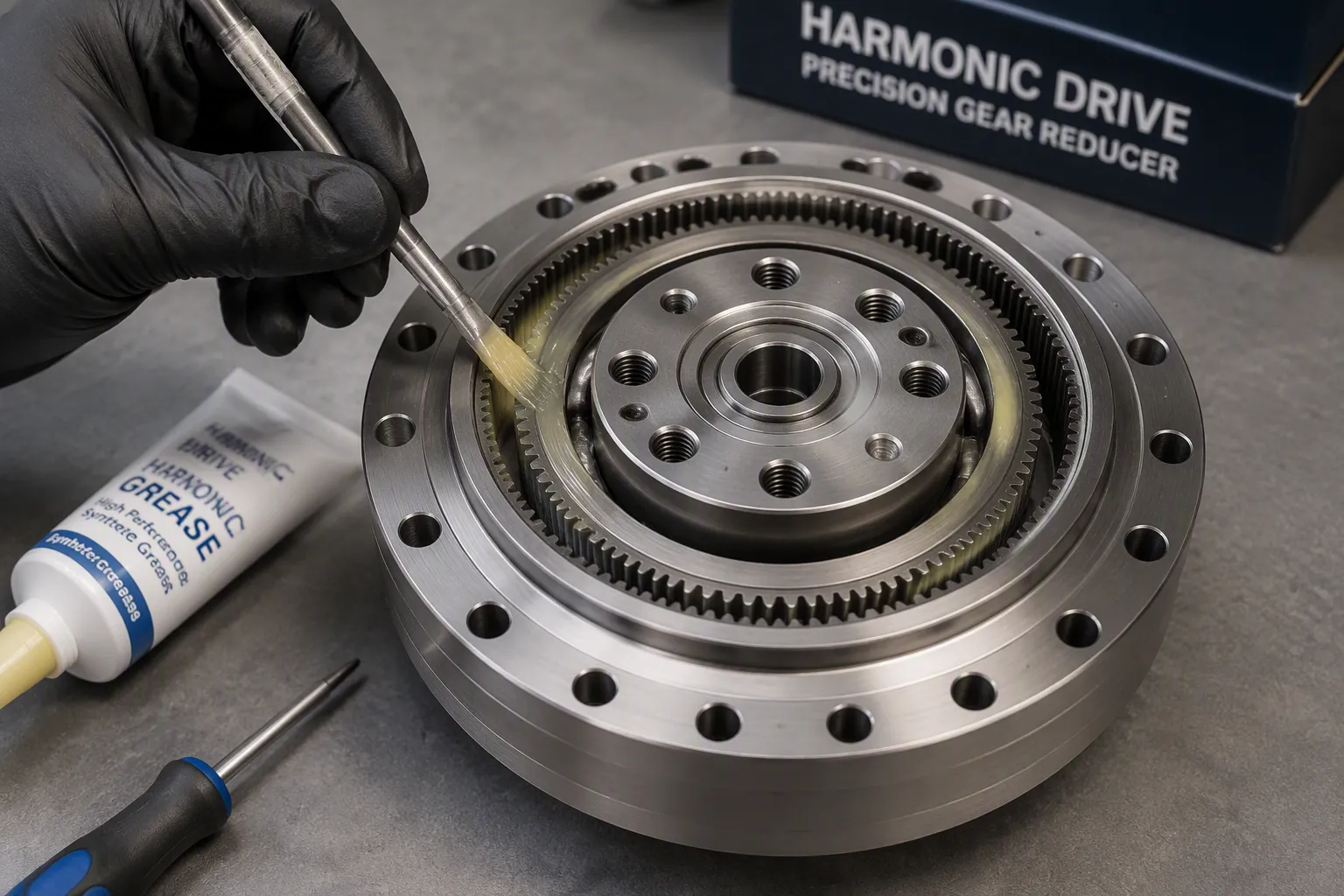
Grease for Harmonic Drive Reducer systems is not ordinary lubricant. It must withstand extreme flexing and sliding motion inside the reducer. Standard greases lack the film strength for this demanding environment. They cannot prevent metal-to-metal contact, which causes rapid wear and lost precision.
You need a specialized grease that protects the flexible spline during elastic deformation. This component bends continuously, creating unique friction patterns. Regular grease also risks corroding sensitive parts. You receive component sets with rust-preventative oil, but that oil does not provide long-term lubrication. The correct grease ensures durability and accuracy. Without it, your precision equipment fails prematurely. This often-overlooked component determines your system’s reliability.
Key Takeaways
Use only specialized grease designed for harmonic drives. Standard grease fails under extreme flexing and causes rapid wear.
Follow the manufacturer’s exact specifications for grease type, amount, and application to maintain precision and warranty.
Avoid using standard grease. It lacks film strength, causes metal-to-metal contact, and risks corrosion and premature failure.
Inspect grease regularly for discoloration, grittiness, or separation. Replace degraded grease immediately to prevent costly damage.
Why Standard Grease Fails in a Harmonic Drive Reducer
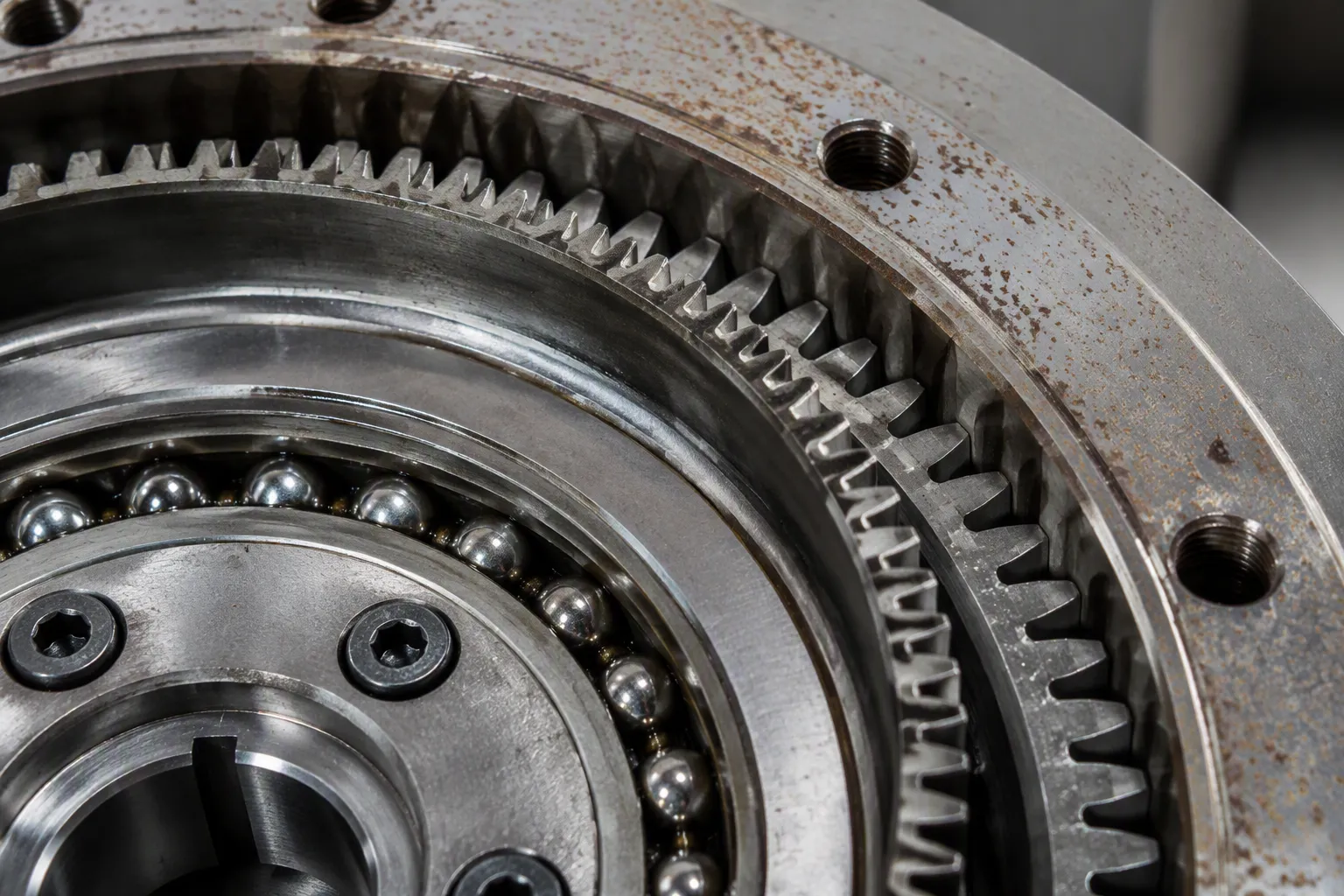
A harmonic drive operates on a principle that sets it apart from conventional gear systems. Inside the reducer, a flexible spline deforms elastically as the wave generator rotates. This continuous flexing creates sliding and rolling motions at the tooth interface that standard lubricants cannot handle. The motion pattern changes constantly, unlike the predictable meshing of rigid gears in a standard gearbox. You need a lubricant that adapts to this dynamic environment.
The Problem with Metal-to-Metal Contact
Standard grease lacks the film strength required for harmonic drive operation. When you use ordinary lubricant, the thin protective layer breaks down under the extreme pressure generated at the tooth contact points. Metal surfaces then touch directly. This contact causes rapid wear, scoring, and pitting on the gear teeth.
The consequences appear quickly. You notice increased friction, which raises operating temperatures. Higher temperatures thin the grease further, creating a vicious cycle. The flexible spline loses its precise engagement with the circular spline. Positional accuracy drops, and backlash increases beyond acceptable limits. For applications requiring repeatable precision, this degradation proves catastrophic.
Consider the forces at work. The wave generator pushes the flexible spline outward against the circular spline. This action creates a moving zone of maximum stress that travels around the circumference with each rotation. Standard grease cannot maintain a consistent film in this dynamic environment. The lubricant gets squeezed out from the high-pressure zones, leaving bare metal exposed. You end up with metal rubbing against metal at every revolution.
Corrosion Risks to Flexible Components
Standard greases pose another danger to harmonic drives. Many conventional lubricants contain additives that attack the materials used in flexible components. The flexspline often features specialized coatings or treatments that resist wear. Certain grease formulations corrode these protective layers.
The corrosion process starts subtly. You might notice discoloration on the flexspline surface during routine inspection. Over time, the damage spreads. The corroded areas become weak points where cracks can initiate. Since the flexspline bends continuously during operation, any surface defect experiences repeated stress. A small corrosion pit can grow into a fatigue crack that eventually fractures the component.
Some standard greases also separate over time. The base oil migrates away from the thickener, leaving a hardened residue. This residue interferes with the smooth flexing motion of the spline. The drive becomes stiff, requiring more torque to operate. Efficiency drops, and the motor works harder than necessary.
The rubber-like seals and gaskets inside the drive face similar risks. Certain grease formulations cause these elastomeric components to swell, harden, or crack. Once seals fail, contaminants enter the drive. Dirt and moisture accelerate wear on all internal surfaces. The entire unit then requires replacement, not just re-lubrication.
You must understand that Grease for Harmonic Drive Reducer systems serves as a critical engineering component, not an afterthought. The correct formulation protects against both mechanical wear and chemical attack. Standard grease cannot provide this dual protection. Choosing the right lubricant from the start prevents costly failures and extends the service life of your precision equipment.
Key Properties of Effective Harmonic Drive Grease
Choosing the correct lubricant requires understanding its core ingredients. The base oil, thickener, and additives determine reliability. A grease must handle extreme flexing and sliding without breaking down. It must also protect the flexible spline during every cycle.
Base Oil and Thickener Selection
The base oil makes up most of the grease. It provides the primary lubricating film between teeth. You must choose a synthetic base oil for harmonic drives. Full synthetic polyalphaolefin (PAO) oil offers superior oxidation stability. It also provides excellent low-temperature fluidity down to -40°C. This keeps the drive running smoothly in cold environments. Some greases blend PAO with ester. This blend enhances lubricity for metal-to-metal contact. Both options represent the gold standard for Grease for Harmonic Drive Reducer systems. You should avoid mineral oil entirely. It degrades much faster than synthetic alternatives. Mineral oil also produces more noise during operation. The thickener holds the oil in a stable structure. Lithium soap thickeners are common in effective greases. They offer thermal stability and water resistance. This combination ensures the grease stays in the contact zone. It does not wash out or melt away under heavy use.
Additives for Wear and Temperature Resistance
Additives boost the performance of the base oil significantly. Anti-wear additives create a protective layer on metal surfaces. This layer prevents scoring during boundary lubrication. Extreme pressure additives handle shock loads reliably. They react chemically with the metal to prevent welding. Corrosion inhibitors protect the flexible spline from rust. This protection is critical because the flexspline experiences constant stress.
Temperature resistance is another key property. High-performance greases operate across a wide range. The table below shows examples for industrial robotics.
Product | Temperature Range |
|---|---|
FRTLUBE CP RE0/00 series | -40°C to 160°C |
Shell Robotic Grease HD S5 V30 | -40°C to 150°C |
You need a grease that performs at both extremes. Low-temperature performance ensures easy startup. High-temperature stability prevents the grease from liquefying. The right additives balance friction reduction with efficiency. You avoid over-lubrication while ensuring full coverage.
Consequences of Using the Wrong Grease
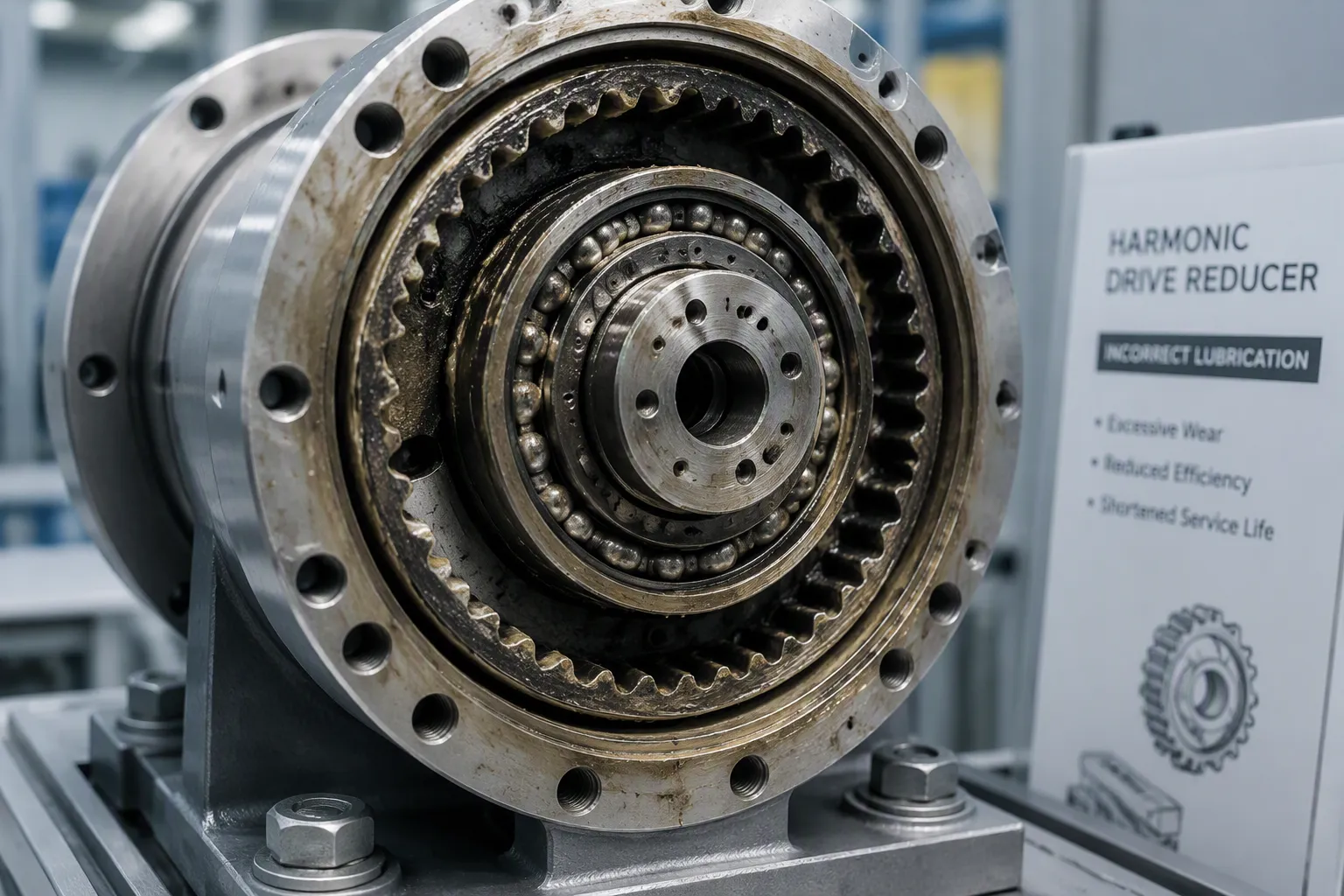
Using the wrong grease in your harmonic drive starts a chain of problems. The first sign of trouble appears in your system’s precision. The damage then accelerates toward complete failure. You must understand each consequence to protect your investment. The right grease prevents all of these outcomes.
Loss of Precision and Increased Backlash
Incorrect grease creates higher friction between the gear teeth. The flexible spline cannot slide smoothly against the circular spline. This friction directly reduces your positional accuracy. You notice the robot arm or positioning table no longer returns to the same spot. The error grows with every operating cycle. The drive loses its ability to hold a precise position under load. Your application suffers from inconsistent results.
Backlash increases as the friction wears down the tooth surfaces. Your drive loses the tight engagement that makes harmonic drives valuable. The wave generator pushes against teeth that have already lost their precise shape. You compensate by tightening control loops, but this only masks the problem. The underlying damage continues. The wear creates a gap between the teeth. This gap translates directly into lost motion. You cannot eliminate this mechanical play once it develops.
Heat builds up inside the reducer. Higher friction generates more heat with each revolution. The wrong grease cannot withstand this temperature rise. It thins out and flows away from the contact points. Now you have even less lubrication where you need it most. The cycle feeds itself. Heat degrades the grease. Degraded grease creates more friction. More friction generates more heat. Your precision drops further with each pass. The system becomes unpredictable. You lose the repeatability that your application requires. The error becomes worse over time. You cannot tune the system to compensate for the ongoing damage. The only solution is intervention.
Premature Wear and Catastrophic Failure
The heat damage does not stop at lost precision. The grease breaks down chemically at high temperatures. It loses its protective properties. Scoring appears on the tooth flanks. You see lines and grooves where metal rubs against metal. Pitting follows as fatigue cracks form and material flakes away. The damage spreads across the tooth surface. Each revolution removes more material. The wear accelerates as the surface roughness increases. The tooth profile changes shape permanently.
The flexspline bears the brunt of this damage. It flexes thousands of times per minute. Every cycle stresses the weakened areas. A small pit grows into a crack. The crack propagates through the thin wall of the flexspline. Eventually, the component fractures. The drive stops working completely. You face a sudden, catastrophic failure. The unit must be replaced entirely. There is no repair option for a fractured flexspline. You cannot simply re-lubricate and continue.
Replacing a failed harmonic drive costs you significantly. A single axis gearbox replacement runs between $5,000 and $15,000 in parts and labor. If two or three axes fail sequentially from the same lubrication mistake, you face $15,000 to $45,000 in costs. That figure does not include production downtime. Each gearbox failure also takes 8 to 24 hours to replace. Your entire production line stops during that time. The lost output adds substantially to the total expense. The downtime costs often exceed the repair costs. This financial impact affects your entire operation.
The high cost of a harmonic drive makes this choice clear. You invest in the correct Grease for Harmonic Drive Reducer as insurance against these failures. The right grease costs a fraction of a single replacement. It protects your equipment and your production schedule. You cannot afford to treat lubrication as an afterthought. The consequences of using the wrong grease are too severe. Your precision equipment depends on the correct lubricant from the start. The right choice prevents these outcomes entirely. Your investment in the correct grease pays for itself many times over. You protect your production line and your bottom line.
Selecting the Right Grease for Harmonic Drive Reducer
Choosing the correct lubricant requires more than picking any high-performance product. You must follow specific guidelines from the manufacturer. The right selection protects your investment.
Following Manufacturer Specifications
Always start with the unit’s manual. The manufacturer specifies the exact grease formulation for your harmonic drive model. This includes the base oil type, thickener, and additive package. Any other product can change the performance characteristics. Precision equipment deserves a precise match.
Warranty coverage depends on the correct lubricant. If you apply a different grease and the drive fails, the manufacturer will deny the claim. You avoid costly mistakes by following the specification exactly. The manual accounts for the unique flexing motion inside the drive. It also considers the materials used in seals and coatings. Trust the engineering behind the recommendation.
Best Practices for Application and Maintenance
Start with a clean environment. Remove all old grease from the components before applying fresh lubricant. Use a lint-free cloth and approved cleaning solvent. Any contamination trapped inside the drive will cause accelerated wear.
Apply the correct amount of grease. Too little leaves some contact areas unprotected. Too much creates churning losses and heat buildup. The manufacturer specifies the exact volume for your unit. Measure carefully rather than guessing.
Never mix different grease types. Two formulations can react chemically. The thickeners may separate, or the additives may neutralize each other. The result is a compound that protects nothing. Always use a single, approved grease throughout the drive.
Establish a maintenance schedule based on your operating conditions. High-duty-cycle operations demand more frequent attention.
High-duty-cycle operations (continuous 3-shift welding or press-tending) should re-check at 2,000 hours.
For continuous high load applications, the recommendation extends further.
For continuous high load applications, we recommend checking the lubricant condition every 20,000 hours or consulting the manual for specific re-greasing intervals based on operating temperature.
Inspect the grease regularly for signs of degradation. Look for discoloration, a gritty texture, or separation. These indicators tell you the lubricant can no longer protect the drive. Replace it immediately when you see these warning signs. The correct Grease for Harmonic Drive Reducer keeps your equipment running at peak performance.
The grease inside your harmonic drive is not an afterthought. It is a critical engineering component that determines precision and longevity. Given the high replacement costs, proper lubrication is a cost-effective investment in reliability.
Always consult the manufacturer’s manual. Use the specified Grease for Harmonic Drive Reducer without substitution. Follow the recommended application procedures and maintenance schedule. Check the lubricant condition regularly for signs of degradation.
Proactive maintenance protects your equipment and your production schedule. The right grease keeps your drive performing at its best for years. Make lubrication a priority from day one.
FAQ
What happens if you use the wrong grease?
You lose precision and increase backlash. Heat builds up inside the reducer. The grease degrades from the heat. Wear accelerates. Scoring and pitting appear on teeth. The flexspline can fracture. Replacement costs $5,000 to $15,000 per axis.
How often should you replace the grease?
High-duty-cycle operations need inspection every 2,000 hours. Continuous high-load applications need checking every 20,000 hours. Consult your manual for specific intervals based on operating temperature.
Can you mix different grease types?
No. Different formulations react chemically. Thickeners separate. Additives neutralize each other. The result provides no protection. Always use a single approved grease throughout the drive.
Why can’t you use standard grease?
Standard grease lacks the film strength for harmonic drives. It cannot prevent metal-to-metal contact. It risks corroding the flexible spline and seals. This causes rapid wear and premature failure.
What signs indicate grease degradation?
Look for discoloration, gritty texture, or separation. These signs mean the grease can no longer protect your drive. Replace it immediately when you see these warnings.
See Also
Modern Automotive Challenges Solved by FAKKT Grease Solutions
Improving Vehicle Dependability Using FAKKT-GC874K Synthetic Grease
Key Traits That Define Exceptional High-Performance Industrial Grease
How Colloidal Stability in Grease Affects Its Performance
FAKKT-UB 45001 Sets Tribological Standard for Demanding Environments