


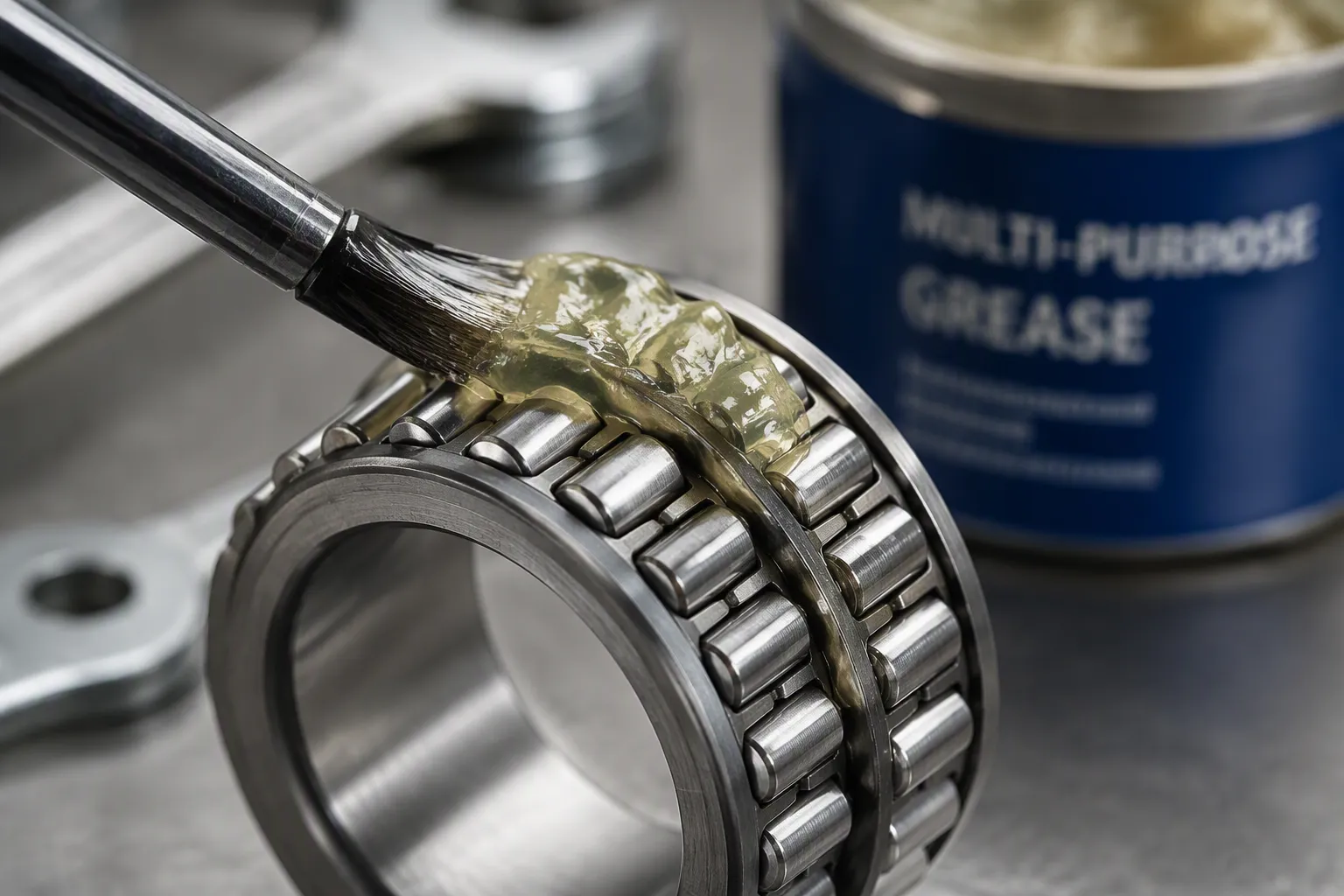
What lubricant should you use for needle roller bearings? A high-quality lithium complex product with an NLGI grade of 2 is your best starting point.
The best option for your setup depends on load, speed, and temperature. A lubricant that works in a cold climate may fail under high heat. Heavy loads demand different properties than high-speed operation.
Proper selection and maintenance directly affect bearing life. The wrong product or poor application habits cause premature failure. You can avoid these problems with the right knowledge.
Key Takeaways
Choose a high-quality lithium complex grease with NLGI grade 2 for most needle roller bearings.
Fill the bearing only one-third to one-half full to avoid overheating and seal damage.
Relubricate needle roller bearings at about 30% of the interval for deep groove ball bearings.
Store grease containers sealed in a cool, dry place to prevent contamination.
Check manufacturer specifications first and adjust based on your operating conditions.
Why Grease Matters for Needle Bearings
Lubrication and Friction Reduction
When you run a needle roller bearing without proper lubrication, metal surfaces grind against each other under load. This direct contact creates heat and speeds up wear. A thin layer of lubricant separates the rolling elements from the raceways. That separation cuts friction dramatically. Less friction produces less heat. Less heat allows the bearing to run cooler and last longer.
Proper lubrication extends the service life of your bearings directly. The right product forms a durable film that handles pressure during operation. High-speed applications need more frequent lubrication. The lubricant breaks down faster under constant motion. Low-speed systems can tolerate longer intervals between applications. You must adjust your schedule based on how the bearing operates in your equipment.
Lithium-based grease works well as a common choice for needle bearings. It performs consistently across a wide range of conditions. The thickener holds the oil in place and releases it slowly as the bearing rotates. This steady release keeps the protective film intact over time. You get reliable performance when you select a product matched to the temperature and load.
Protection Against Wear and Corrosion
Beyond cutting friction, the lubricant guards against wear and corrosion. It seals out moisture and dust that would harm the bearing surfaces. Without this barrier, rust forms quickly on exposed metal surfaces. Rust creates pits and rough spots that ruin the smooth rolling action. Contaminants that enter the bearing act like sandpaper against the precision surfaces.
You must watch for signs of grease degradation. Hardening of the product means it has lost its ability to flow and coat surfaces. Dryness shows that the oil has separated from the thickener. Leakage indicates the seal has failed or the bearing is overfilled. Using a degraded lubricant causes more harm than running the bearing dry. The degraded material no longer protects the surfaces properly. It may even block the movement of fresh lubricant.
Follow manufacturer guidelines for the type and quantity of lubricant. These specifications match the bearing design to the operating conditions. Using the wrong product or the wrong amount reduces protection. You achieve the best results when you apply the recommended product in the correct amount and at the right intervals. The effort you invest in proper lubrication pays back in longer bearing life.
Key Properties of Needle Bearing Grease
Base Oil Viscosity and Thickener
Base oil viscosity determines the film thickness between the rolling elements and raceways. This film separates the metal surfaces and prevents wear. Viscosity below 20 mm²/s at 40°C needs a slight increase for a robust film. Readings between 20 and 250 mm²/s generally work without adjustment. Above 250 mm²/s you need specialized selection. Higher viscosity handles heavy loads better. Lower viscosity works best for high-speed operation because it flows more easily.
The thickener holds the oil in place and releases it as the bearing rotates. Lithium-based products offer versatility and heat resistance. They work well across a wide range of conditions. Calcium sulfonate formulations provide superior corrosion protection and high load capacity. This makes them a strong choice for wet or harsh environments. Polyurea thickeners deliver high-temperature stability and oxidation resistance. They suit high-speed bearings where heat buildup is a concern. Each thickener type has a specific strength. Match the thickener to your operating conditions for best results.
NLGI Grade and Additives
The NLGI grade measures the consistency or stiffness of the grease. NLGI 2 offers a versatile balance of fluidity and stiffness for general rolling bearing use. This is your default choice for most applications. NLGI 1 suits cold environments or applications with limited movement. It flows more easily at low temperatures. NLGI 3 maintains its protective layer under high temperature or vibration. It stays in place better when conditions are severe.
Additives enhance the lubricant performance. Extreme pressure (EP) additives form a protective layer on metal surfaces. This layer prevents metal-to-metal contact and wear under high load or shock conditions. Anti-wear additives reduce surface damage during normal operation. Rust inhibitors protect against corrosion from moisture exposure. These additives work together to extend bearing life.
Some applications require oil instead of a lubricant. High-speed or high-temperature operation can exceed what a lubricant can handle. Oil circulates more effectively in these conditions. It carries heat away from the bearing surfaces. Check your equipment specifications to confirm when oil is the better choice.
Choosing the Right Grease Type
Synthetic vs. Mineral Grease
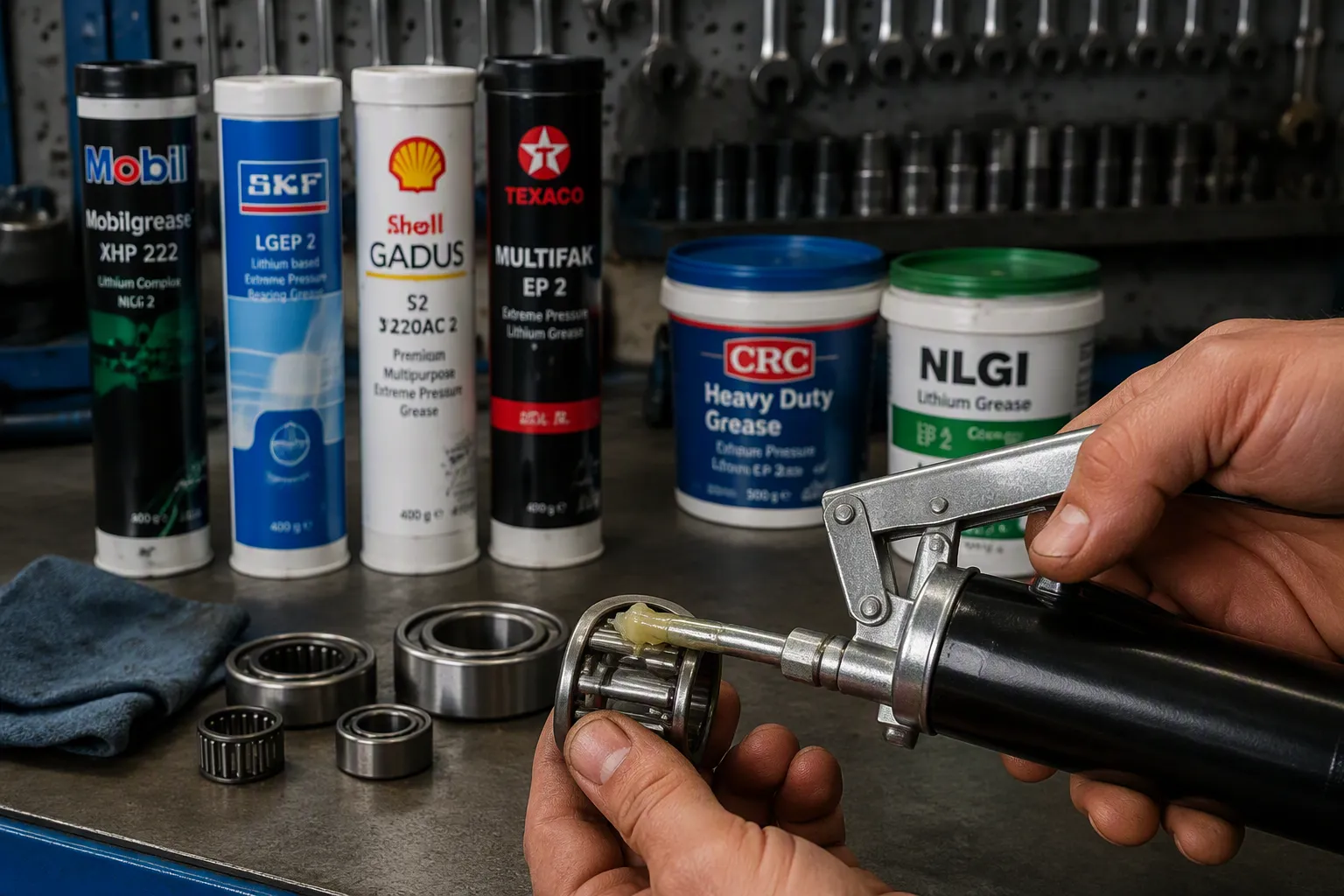
Synthetic and mineral products differ in how they handle extreme conditions. Synthetic grease uses laboratory-made base oils. These oils resist breakdown at very high and very low temperatures. They also last longer before oxidation degrades them. You get consistent performance when your equipment sees wide temperature swings. The trade-off is a higher purchase price. Mineral grease costs less upfront. It works well in moderate conditions and standard industrial settings. However, mineral base oils thin out faster under heat and thicken in cold. You must relubricate more often when temperatures fluctuate. For most everyday needle bearing applications, a mineral-based lithium product delivers reliable service at a lower cost. Choose synthetic when your operating conditions push beyond the normal range.
Specific Brand Recommendations
Lithium grease remains the most common and versatile choice. It handles moderate loads, speeds, and temperatures without special formulation. You can find it at any auto parts store. The table below summarizes the key selection factors.
Factor | Guidance for Grease Selection |
|---|---|
NLGI consistency | NLGI 2 is the common general-purpose grade; NLGI 1 suits cold or low-movement bearings; NLGI 3 suits high-temperature or high-vibration bearings. |
Base oil viscosity | Must match operating speed and load to maintain adequate lubricating film thickness. |
Grease type / thickener | Lithium, calcium sulfonate, polyurea, and synthetic greases each suit different conditions; lithium is versatile, calcium sulfonate handles corrosion and heavy loads, polyurea handles high temperature and high speed, synthetic handles extreme temperatures. |
Compatibility | Do not mix greases unless the manufacturer confirms compatibility; incompatible mixing can degrade lubricant and damage the bearing. |
Operating temperature | High temperatures require good thermal stability and high dropping point; wide temperature ranges may need mineral base with lithium complex or synthetic base oils. |
Speed | High-speed bearings need grease with high-temperature stability and oxidation resistance; over-greasing is especially problematic at high speed. |
Load | Severe loads and vibration require EP additives and robust thickeners such as lithium soap. |
EP additives | Essential for high load or shock conditions, but must be balanced against possible adverse reactions with bearing materials at elevated temperatures. |
Application amount | Avoid over-greasing and under-greasing; generally fill about one-third of the bearing free volume unless manufacturer guidance says otherwise. |
Re-lubrication interval | Base interval on bearing size, speed, load, temperature, and contamination; start with OEM interval and adjust through inspection or grease analysis. |
How to Apply Grease Correctly
Fill Volume and Application Methods
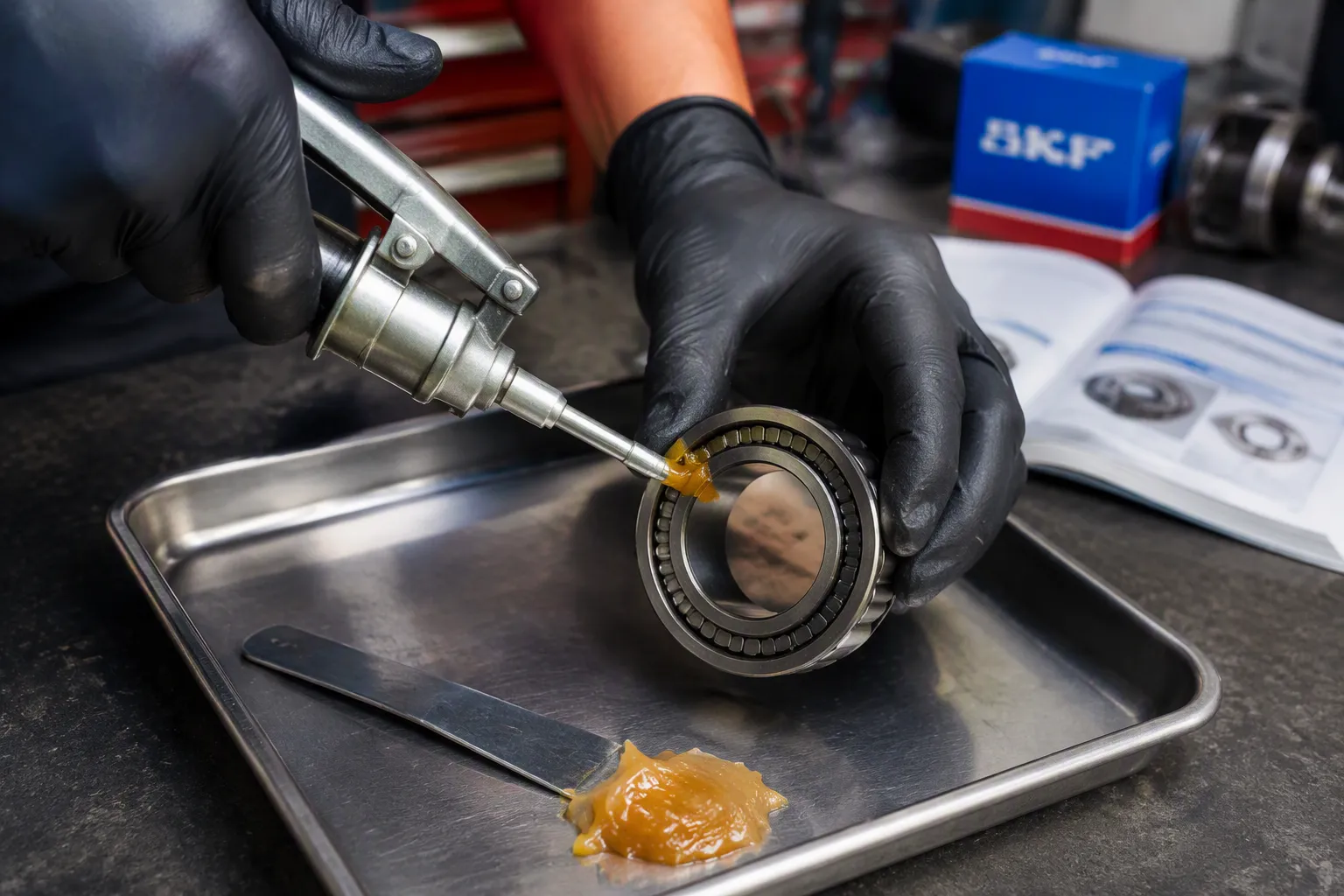
The amount of lubricant you pack into a needle roller bearing directly affects its performance. Too much causes churning, excess heat, energy loss, and seal stress. Too little leads to an insufficient lubricant film, friction, wear, and overheating. For most needle bearings, fill about one-third of the free volume. This gives you enough lubricant to form a protective film without creating excess resistance. Always use the bearing or equipment manufacturer’s recommended quantity when available. Do not guess the amount.
You have three main application methods to choose from. Hand packing works well for small batches and field repairs. You work the lubricant into the rolling elements by hand or with a clean spatula. A grease gun suits routine maintenance through fittings. Automated systems deliver precise amounts in high-volume production or hard-to-reach locations. No matter which method you choose, use clean tools and clean fittings. Contamination during application defeats the purpose of lubrication.
Follow a practical process every time you apply lubricant. First, confirm you have the correct product. Second, clean the fitting and surrounding area. Third, apply only the recommended amount. Fourth, rotate the bearing where appropriate to distribute the lubricant. Fifth, purge excess only where housing design and procedure allow. Finally, monitor temperature, noise, and condition after lubrication. This sequence prevents common mistakes and ensures consistent results.
Relubrication Frequency
Relubrication intervals depend on bearing type, speed, load, temperature, and contamination. Needle roller bearings need more frequent attention than many other types. High contact stress in a small envelope drives this requirement. As a starting point, needle roller bearings typically need relubrication at approximately 30% of the interval you would use for deep groove ball bearings. This shorter cycle reflects the demanding conditions inside a needle bearing.
Bearing Type | Relubrication Interval (Relative to Deep Groove Ball Bearings) | Reason |
|---|---|---|
Needle roller bearing | Approximately 30% of the deep groove ball bearing interval | High contact stress in a small envelope |
Start with the OEM interval and adjust for your actual operating conditions. Higher speeds, heavier loads, elevated temperatures, and dirty environments all shorten the interval. You can validate your schedule through inspection, condition monitoring, or grease sample analysis. Watch for excessive noise, excess heat, or lubricant leaks. Dry bearings often sound louder due to insufficient lubrication. Overheating can indicate too much or too little lubricant. Leakage may mean over-lubrication or failing seals. These signs tell you when to adjust your maintenance plan.
Avoid common mistakes such as using the wrong product type or mixing incompatible products. These errors cause poor lubrication, increased wear, overheating, and bearing failure. A disciplined approach to fill volume, application method, and relubrication timing protects your bearings and extends their service life.
Preventing Grease Failure and Contamination
Signs of Incorrect Grease
You can catch most lubrication problems before they cause bearing failure. Watch for leakage around seals or housing joints. Leakage often means over-lubrication or a worn seal. Hardening of the lubricant signals that the oil has separated from the thickener. Discoloration points to oxidation or heat damage. Abnormal noise and vibration suggest the film has broken down. Overheating tells you the lubricant cannot handle the operating temperature or speed.
Different failure modes leave different clues. The table below connects common problems to their likely causes.
Failure Mode | Common Cause |
|---|---|
Shaft raceway wear or galling | Inadequate lubricating film; contamination; oscillation with low-bleed grease |
False brinelling under idle vibration | Poor film persistence; micro-motion at rest; transport vibration |
Cage wear or skewing | Insufficient lubrication at speed; overload; full-complement bearing beyond its speed limit |
Contamination or abrasive wear | Ingress through inadequate sealing; filtration gaps; direct wash jets |
Washdown or food environment | Incorrect grease selection; need NSF H1 grease validated against cleaners and temperature |
High-speed continuous operation | Low-bleed grease or light oil feed required; verify heat generation |
Relube or starvation | Improper relube cadence; full-complement versus caged design affects grease flow |
When you spot any of these signs, act quickly. Identify the root cause before you add more lubricant. Adding fresh grease to a contaminated bearing makes the problem worse.
Maintenance and Storage Tips
Good maintenance starts with clean handling. Clean grease applied carefully during initial assembly, combined with proper handling, can sustain long machine performance without introducing contaminants. A Rolls Royce PLC study reportedly showed that rolling element bearings installed correctly, operated within specifications, and lubricated with ultra-pure grease can perform indefinitely.
Follow these practices to protect your bearings:
Obtain lubricants from a trusted supplier, ensuring product specifications and up-to-date standards (e.g., IEC, ASTM, ISO, DIN) are available.
Store lubricants indoors, away from heat and contamination sources; keep drums horizontal and use them in purchase-date order (oldest first).
Check equipment for imbalance, misalignment, and similar issues using vibration analysis, thermography, and other proactive maintenance techniques to reduce wear.
Keep the lubricant clean; when changing grease or oil, also clean the equipment.
Store containers sealed in a cool, dry place. Inspect bearings on a regular schedule. Adjust your relubrication intervals based on speed, load, temperature, and contamination. These habits prevent premature failure and extend bearing life.
You now know the core selection factors. Match base oil viscosity, thickener type, and NLGI grade to your load, speed, and temperature. Lithium complex grease with an NLGI 2 rating works as a reliable default.
Application and maintenance decide bearing life. Fill the bearing about one-third full, relubricate on a regular schedule, and store containers sealed in a cool, dry place. These habits prevent premature failure.
Always check the bearing manufacturer’s specifications first. Your operating conditions matter most. Combine both for the best results.
FAQ
What happens if you overfill a needle roller bearing with grease?
Overfilling creates churning, excess heat, and energy loss. It stresses the seals and causes leakage. Fill only about one-third of the free volume for best results.
Can you mix different grease types?
Do not mix greases unless the manufacturer confirms compatibility. Incompatible mixing degrades the lubricant and damages the bearing. Stick with one product for consistent protection.
How often should you relubricate needle roller bearings?
Needle roller bearings need relubrication at about 30% of the interval for deep groove ball bearings. Start with the manufacturer’s guideline. Adjust based on speed, load, temperature, and contamination.
What does NLGI grade tell you about grease?
NLGI grade measures grease stiffness. NLGI 2 is the standard choice for most applications. NLGI 1 suits cold environments. NLGI 3 works better for high temperature or high vibration conditions.
Should you choose synthetic or mineral grease?
Synthetic grease handles extreme temperatures better and lasts longer. It costs more. Mineral grease works well in moderate conditions. Choose synthetic when your operating temperatures push beyond the normal range.
See Also
The Role Of FAKKT-GC874K Synthetic Grease In Automotive Reliability
Key Characteristics Of A Truly Exceptional Industrial Grease
How FAKKT Grease Solves Modern Automotive Challenges Effectively
Essential Information About Grease For Harmonic Drive Reducer