


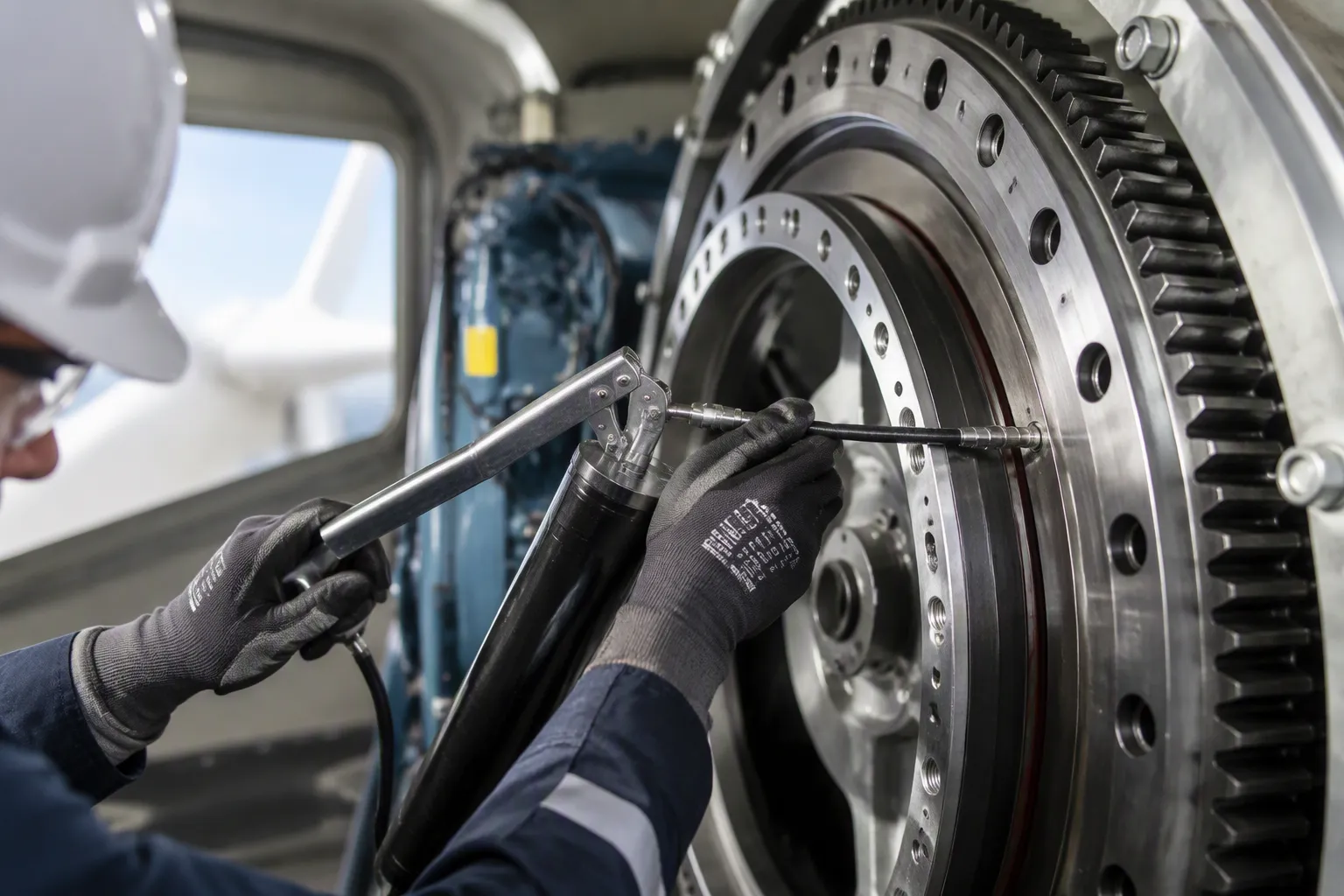
The best grease for wind turbine pitch bearings is not a single universal type. You need a formula tailored to the bearing’s unique oscillating motion. Unlike rotating bearings, pitch bearings do not form a full lubricating film. They need low base oil viscosity and high bleeding rates to minimize wear. A grease that releases oil quickly protects metal surfaces during slow, back-and-forth movement. Synthetic options, such as PAO-based formulas, and mineral oil polyurea greases often perform well in these conditions. You must match the lubricant to the motion, the load, and the site environment for reliable performance.
Key Takeaways
Choose grease with low oil viscosity and high bleeding rate for pitch bearings.
Polyurea thickeners and synthetic formulas often work best for oscillating motion.
Avoid mixing different greases; flush old grease completely before switching.
Relubricate every 6 to 12 months, depending on site conditions.
Water ingress quickly damages bearings; use grease with strong corrosion inhibitors.
Why Pitch Bearings Demand Special Grease
The Unique Oscillating Motion and Its Wear Effects
Pitch bearings do not spin like a wheel. They rock back and forth through small angles. This slow, reciprocating motion prevents the bearing from building a full elastohydrodynamic film. Without that film, metal surfaces can touch and wear. You need a grease that releases oil quickly to protect the contact zone.
Research confirms this. Schwack et al. (2020) found that greases with high bleeding rates and low base oil viscosities give the best wear protection under oscillating conditions. Industry experts agree. Leckner (STLE, 2023) states: “greases with low base oil viscosities and high bleeding rates show the least wear, since the bleed oil can reflow in the contact zone.” Januszewski adds that greases most able to allow lubricant flow are more effective.
Oscillating motion causes specific damage types. Fretting corrosion, also called false brinelling, appears as oxidation lines along the contact patch. Micropitting can develop on the edges of progressed fretting corrosion. Macropitting follows as the damage worsens. These failure modes shorten bearing life and raise maintenance costs.
Harsh Conditions: Load, Temperature, and Contamination
Wind turbine pitch bearings face heavy loads, temperature swings, and contamination. Dust acts as an abrasive agent. It damages raceways and rolling elements. Moisture causes corrosion and degrades the lubricant. Heat, dust, and humidity work together to compound these effects.
Water ingress is especially harmful. As little as 0.1% water ingress will reduce bearing life to 25% of what it should be. Just 1% will see a four-year lifespan reduced to just three months. Foreign particles scratch raceways and produce pitting or spalling. Wear particles then become new contaminants, creating a self-reinforcing degradation loop.
You must choose a grease that resists these threats. The right formula releases oil readily, fights corrosion, and maintains stability under load. This approach protects your bearings and extends service life.
Grease Technologies That Excel in Pitch Bearings
Low-Viscosity Greases for Reciprocating Loads
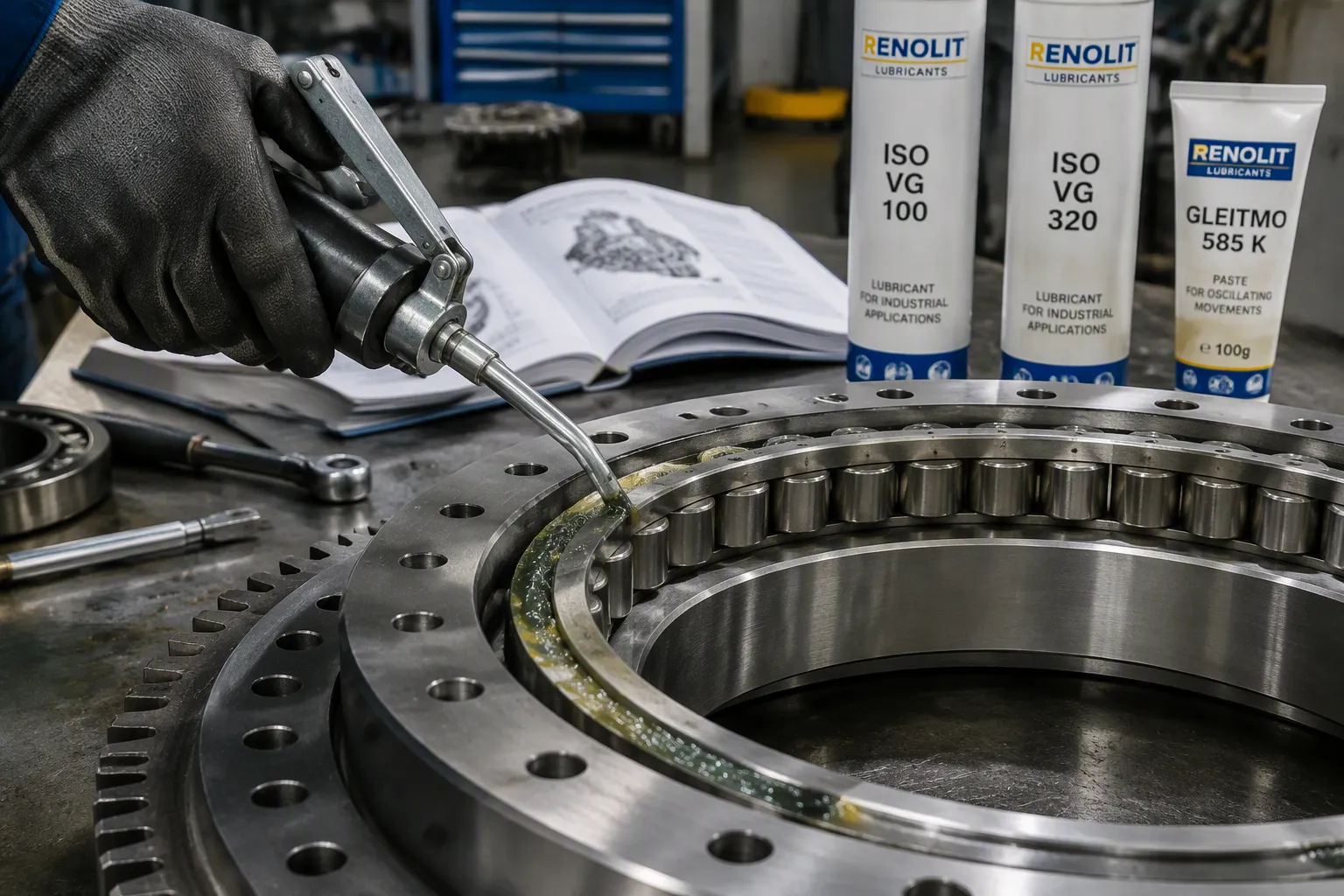
For pitch bearings, low-viscosity formulas perform best during reciprocal motion. These greases release oil easily into the contact zone. This oil creates a thin protective layer between rollers and raceways. Without this layer, metal surfaces would grind against each other. You need a base oil viscosity around ISO VG 100 to 320. This range provides enough oil release without sacrificing film strength.
Mineral oil polyurea greases work well in this application. Their fine structure penetrates small gaps in the bearing. This ensures complete coverage of every rolling element. The polyurea thickener also resists water washout and maintains adhesion during slow motion.
PAO-based synthetic greases offer another strong option. These fully synthetic formulas resist oxidation better than mineral oils. They also handle extreme temperature swings more effectively. You get longer lubricant life and fewer relubrication intervals. Synthetic greases do not thicken as much at low temperatures. This keeps the product soft enough to flow into tight contact zones.
Some earlier guides suggest high viscosity for bearings. That advice applies to high-speed rotating bearings. Those bearings need thick oil films to survive continuous fast motion. Pitch bearings are different. They only rock back and forth over a small angle. High viscosity grease cannot flow into the contact zone during this slow motion. You need low viscosity oil that bleeds from the thickener quickly. This bleeding rate is the key property for oscillating motion protection.
Specialized High-Bleed and Synthetic Greases
Several specialized products have proven themselves in field tests. These greases are designed from the ground up for oscillating motion in wind turbines.
GLEITMO 585 K is a top performer for pitch and yaw bearings. It uses a special additive package that fights fretting corrosion and micropitting. This product provides consistent high bleeding rates under slow motion. You see less wear on raceways and longer bearing life overall.
Shell Gadus is a fully synthetic option. It delivers strong performance across a wide temperature range. The synthetic base oil resists hardening and maintains its bleeding properties. You can rely on Shell Gadus in cold climates where conventional greases become too stiff to work properly.
Shell Rhodina BBZ outperforms many competitors in slow oscillating operation. It uses a unique formulation that releases oil at a controlled rate. This ensures fresh oil always reaches the contact zone during each small movement. Field data shows lower wear rates compared to standard greases in the same service.
Liebherr Duro Wind PBG is another proven choice. It combines high bleeding rates with excellent anti-wear properties. This product handles the heavy loads found in large wind turbines. It also resists water ingress, which is critical for offshore installations in wet environments.
You must avoid mixing these products. Each uses different thickeners and additive systems. Mixing can cause the lubricant to soften or harden unpredictably. Always flush the old product completely before switching to a new one.
Choose a specialized high-bleed formula that matches your site conditions and OEM requirements. This approach protects your investment and reduces maintenance costs over the turbine lifetime.
Selecting the Right Grease: Key Properties
Base Oil Viscosity and Bleeding Rate
Base oil viscosity is the first property you should check. For pitch bearings, you want a relatively low viscosity. The target range is ISO VG 100 to 320. This range allows the oil to flow freely during slow oscillating motion. A thicker oil cannot reach the contact zone in time. The bearing rocks back and forth through small angles. This motion does not generate enough heat or pressure to push heavy oil into place. Low viscosity oil moves easily and protects metal surfaces.
Bleeding rate matters just as much. Bleeding is the process where base oil separates from the thickener. This released oil then lubricates the bearing. A high bleeding rate ensures fresh oil reaches the contact zone with each movement. You should look for products with proven high bleeding performance. Research from Schwack et al. (2020) confirms this. Greases with high bleeding rates and low base oil viscosities show the least wear under oscillating conditions. The bleed oil can reflow into the contact zone and replenish the lubricating film.
You must balance these two properties. A low viscosity oil with a poor bleeding rate will not release enough lubricant. A high bleeding rate with thick oil will release lubricant too slowly. The best combination is low viscosity plus high bleeding. This pairing delivers oil where you need it, when you need it.
Thickener Type and Additive Package
The thickener holds the oil in place and gives the grease its structure. Three common types appear in pitch bearing applications: calcium, lithium, and polyurea. Each has different properties.
Thickener Type | Key Properties | Best Use Case |
|---|---|---|
Calcium | Good water resistance | Moderate loads, wet environments |
Lithium | Good mechanical stability | General purpose, wide temperature range |
Polyurea | Fine structure, strong adhesion | Pitch bearings, oscillating motion |
Polyurea thickeners often work best for pitch bearings. Their fine structure penetrates small gaps between rolling elements. This ensures complete coverage of every contact surface. Polyurea also adheres well to metal, which keeps the lubricant in place during slow motion. You get consistent protection across the entire raceway.
The additive package completes the formula. Extreme pressure (EP) additives prevent metal-to-metal contact under heavy loads. Anti-wear additives reduce friction and surface damage. Corrosion inhibitors fight rust and oxidation from moisture ingress. You need all three in a pitch bearing grease. The site environment determines which additives matter most. Offshore turbines need stronger corrosion protection. Cold climate sites benefit from additives that maintain flexibility at low temperatures.
NLGI grade also affects performance. Most pitch bearing greases fall between NLGI 1 and NLGI 2. A lower NLGI grade flows more easily. This helps during cold weather and slow motion. Check your OEM specifications before selecting a grade.
Application and Maintenance Best Practices
Recommended Grease Products and Compatibility
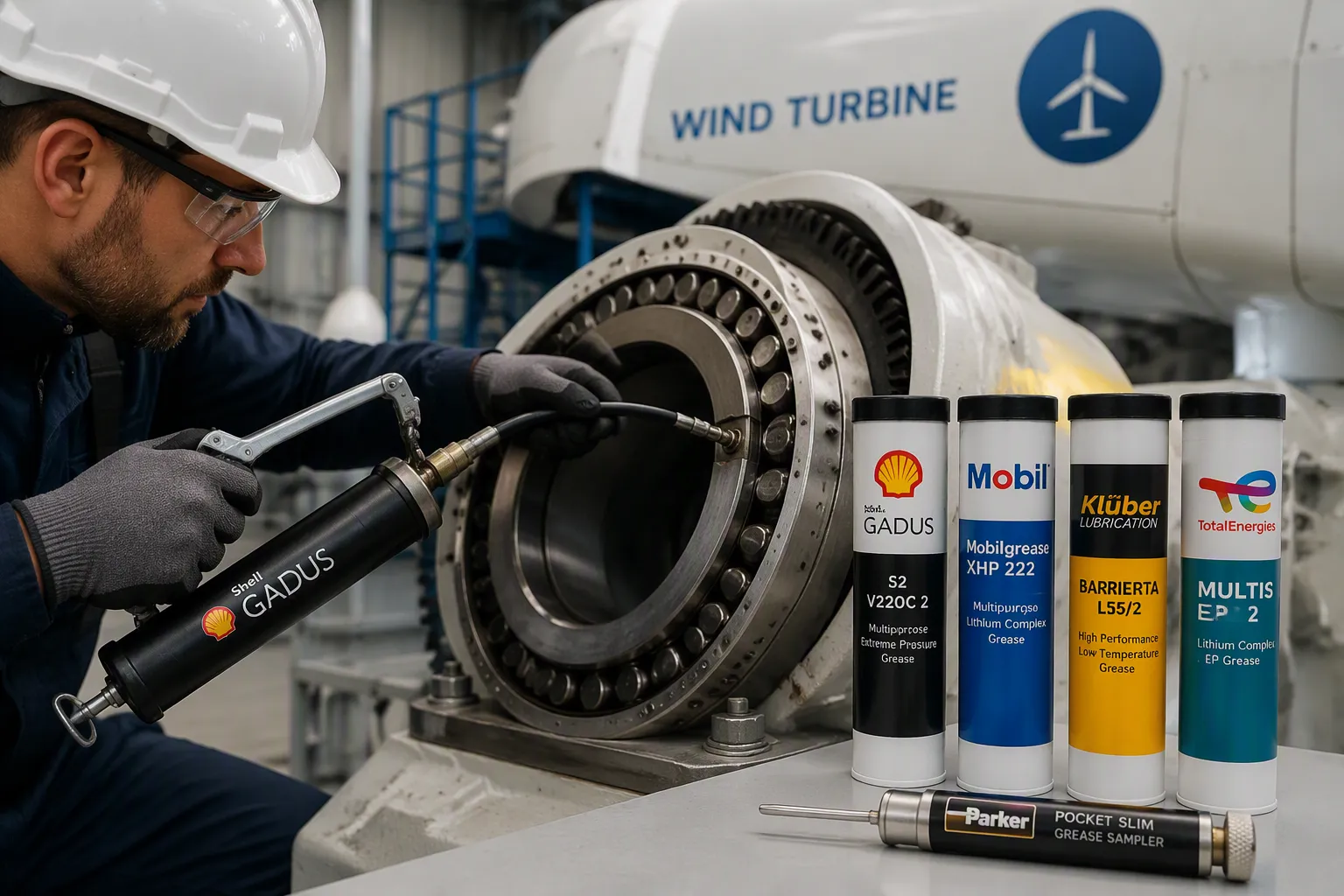
Several proven products match the demands of pitch bearings. Each formulation offers specific advantages for your site conditions.
Product | Best Use | Key Advantage |
|---|---|---|
GLEITMO 585 K | Pitch and yaw bearings | Special additive package fights fretting corrosion and micropitting |
Shell Gadus | Wide temperature ranges | Fully synthetic formulation resists hardening in cold climates |
Shell Rhodina BBZ | Slow oscillating operation | Controlled oil release rate delivers fresh lubricant to the contact zone |
Liebherr Duro Wind PBG | Heavy loads and wet environments | High bleeding rates combined with excellent water resistance |
Mixing different greases creates serious risks. The compatibility of thickener types determines whether mixing is safe. Lithium and polyurea are rated as incompatible. Mixing them can cause complete oil separation where the thickener collapses fully. Base oil and soap phase-separate, leading to immediate adhesive wear and potential seizure. You may also see softening, where the thickener structures react and reduce oil-holding capacity. The grease slumps and oil pools form, causing starvation within hours to days. Dropping point reduction is another risk. The mixture’s thermal resistance falls, causing grease to melt out at temperatures below either grease’s limit. Additive antagonism can degrade EP, rust, and corrosion protection even if the physical consistency appears acceptable.
To avoid these problems, always flush the old product completely before switching to a new Grease. Use a grease sampling tool like the Pocket Slim to extract a core sample for laboratory analysis. This tool enables one-handed operation in tight spaces with clearance less than 2 feet.
Relubrication Intervals and Grease Volume
You should relubricate your pitch bearings every 6 to 12 months depending on service conditions. Turbines in harsh environments need more frequent attention. Offshore installations or dusty sites require the shorter end of this range. Milder conditions allow you to extend the interval.
The volume of Grease you add depends on bearing size. A general rule is to fill the bearing cavity completely and then purge a small amount through the seals. Check your OEM specifications for exact quantities. Over-greasing can cause seal damage and heat buildup. Under-greasing leaves surfaces unprotected.
You should monitor condition to optimize your schedule. Ferrous debris monitoring per ASTM D7918 measures ferromagnetic effects to compensate for non-uniform particle distribution and improve trendability. Grease consistency measurement per ASTM D7918 evaluates thinning or thickening by measuring load during extrusion through a die. Comparative FTIR spectroscopy uses new grease as a baseline to detect mixing, oxidation, and presence of organic additives.
Beware of misusing dropping point as a high-temperature performance specification. According to Fish, dropping point is actually a quality control test for thickener system correctness. Standard bearing tests for performance are less relevant to wind turbine main bearings. Upscaling from smaller bearings to full-size requires more attention.
The best grease for your pitch bearings delivers low base oil viscosity, a high bleeding rate, and the right thickener package. Synthetic or polyurea formulations often meet these needs. Proven products include GLEITMO 585 K, Shell Gadus, Shell Rhodina BBZ, and Liebherr Duro Wind PBG. Your selection must match the bearing’s oscillating motion and your site’s specific conditions. A product that works offshore may perform poorly in a dusty desert. Consult your OEM specifications for guidance on viscosity, thickener type, and NLGI grade. Consider condition monitoring tools to optimize your relubrication schedule. Analysis of ferrous debris or lubricant consistency helps you adjust intervals based on real data. This approach protects your equipment and extends service life significantly.
FAQ
Can I use a high-viscosity grease instead?
No. High-viscosity grease suits fast rotating bearings. Pitch bearings rock slowly through small angles. Thick oil cannot flow into the contact zone in time. Choose low viscosity instead, around ISO VG 100 to 320. This range releases oil quickly and protects metal surfaces during each small movement.
How often should I relubricate pitch bearings?
Plan on every 6 to 12 months. Harsh sites need the shorter interval. Offshore or dusty locations demand more frequent service. Milder conditions let you extend the schedule. Always check your OEM specifications first. Condition monitoring helps you fine-tune the timing based on real wear data.
What happens if I mix two different greases?
Mixing creates real danger. Lithium and polyurea are incompatible. The thickener can collapse and oil separates completely. You may see softening, oil pooling, or starvation within hours. Dropping point falls too. Additive protection weakens even when the grease looks fine. Flush the old product fully before switching.
Does water really damage pitch bearings that fast?
Yes. Even 0.1% water ingress cuts bearing life to 25% of normal. Just 1% water reduces a four-year lifespan to three months. Moisture causes corrosion and breaks down the lubricant. Choose a grease with strong corrosion inhibitors and good water resistance, especially for offshore turbines.
Which thickener works best for oscillating motion?
Polyurea often wins here. Its fine structure penetrates small gaps between rolling elements. It also adheres well to metal, so the grease stays in place during slow motion. Calcium and lithium have their uses, but polyurea delivers the coverage and adhesion that pitch bearings need.
See Also
Essential Facts About Harmonic Drive Reducer Grease
How Grease Colloidal Stability Affects Performance Outcomes
Key Traits That Define Exceptional Industrial High Performance Grease
Boosting Auto Reliability Using FAKKT GC874K Synthetic Grease
Advanced FAKKT Grease Addressing Today’s Automotive Problems