


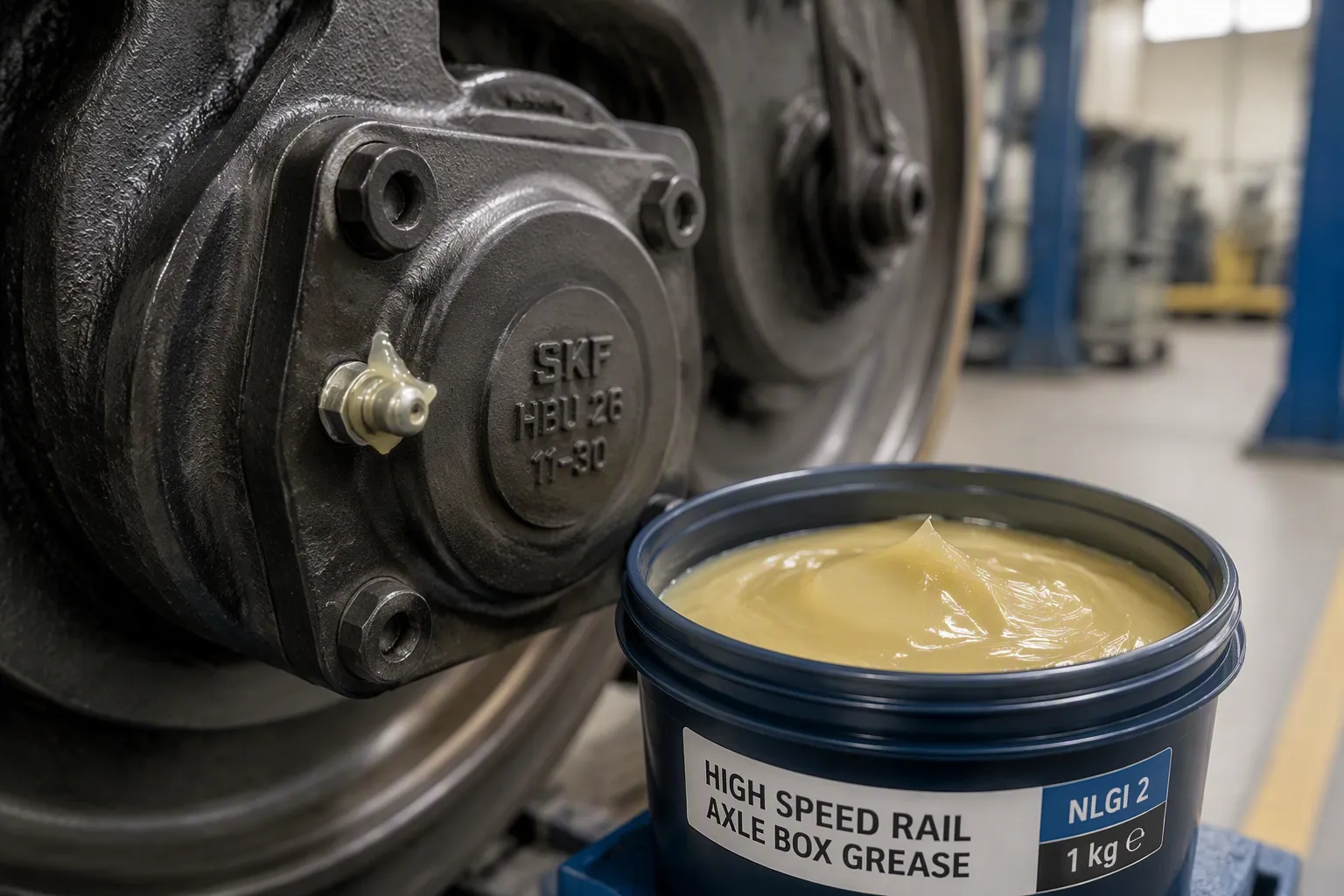
SKF LGRT 2 stands as the premier High-speed Railway Axle Box Bearing Grease. Its exceptional thermal stability and load-carrying capacity ensure reliable operation. High-speed axle boxes face extreme speeds, intense heat generation, constant vibration, and contamination. These demanding conditions quickly degrade standard lubricants. A specialized grease proves essential for maintaining performance and safety. SKF LGRT 2 delivers a long service life, reducing maintenance frequency and preventing costly downtime. Engineers trust this grease to protect critical bearings under the most severe operational stresses.
Key Takeaways
SKF LGRT 2 grease withstands extreme heat and heavy loads, preventing bearing failure.
Its lithium complex formula resists water and contamination, extending bearing life.
This grease reduces maintenance frequency, saving time and money for railway operators.
Proper application and storage are crucial to maintain its protective qualities.
SKF LGRT 2 outperforms standard greases, ensuring reliable high-speed rail operations.
Challenges of High-Speed Railway Axle Boxes
Thermal and Mechanical Stresses
High-speed railway axle boxes operate under brutal thermal conditions. Trains routinely reach speeds of 200 km/h and beyond. Friction between rolling elements, cages, and raceways generates intense heat. This heat accumulates rapidly inside the sealed bearing cavity. Temperatures can spike dramatically during acceleration, sustained cruising, and braking events. Each thermal cycle stresses the lubricant’s chemical structure. Standard greases begin breaking down at these elevated temperatures. Their base oils oxidize, thickeners soften, and protective films thin out. This degradation leads to thermal runaway—a dangerous condition where heat generation outpaces heat dissipation. Bearing surfaces then experience metal-to-metal contact, causing scoring and premature failure.
Mechanical stresses compound the thermal challenge. Axle box bearings endure constant vibration from track irregularities, wheel-rail interactions, and aerodynamic forces at speed. These vibrations create micro-movements between bearing components. They also churn and shear the grease continuously. High-frequency oscillation breaks down the thickener network that holds the grease together. The grease loses its structural integrity and can leak from the bearing cavity. Additionally, heavy axial and radial loads from train weight and cornering forces squeeze the lubricant film. Standard lithium soap greases lack the film strength to withstand these combined loads. They squeeze out, leaving bearing surfaces unprotected. The result is accelerated wear, increased friction, and shortened bearing life.
Contamination and Wear Risks
Railway environments present constant contamination threats. Dust, sand, and airborne debris infiltrate axle box seals. Moisture from rain, snow, and humidity finds its way into bearing housings. Brake dust and metallic particles from wheel-rail contact add abrasive contaminants. These foreign particles act as grinding agents inside the bearing. They score bearing surfaces, create indentations, and accelerate fatigue. Water contamination is particularly destructive. It washes out grease, causes rust, and promotes hydrogen embrittlement in bearing steel. Standard greases offer minimal resistance to water washout and contamination. Their simple soap structures cannot encapsulate and neutralize harmful particles effectively.
Wear risks escalate when contamination combines with thermal and mechanical stress. Abrasive particles embedded in degraded grease create a lapping effect on bearing surfaces. This leads to pitting, spalling, and flaking over time. The bearing’s precision surfaces lose their geometry, increasing vibration and noise. Eventually, bearing failure occurs, potentially causing axle seizure or derailment. The economic consequences are severe. Unscheduled maintenance, replacement parts, and downtime cost railway operators substantial sums. Frequent relubrication intervals with standard greases cannot prevent these failures. The grease simply cannot withstand the combined assault of heat, vibration, and contamination. This reality demands a specialized high-speed railway axle box bearing grease engineered for these extreme conditions.
Properties of High-speed Railway Axle Box Bearing Grease
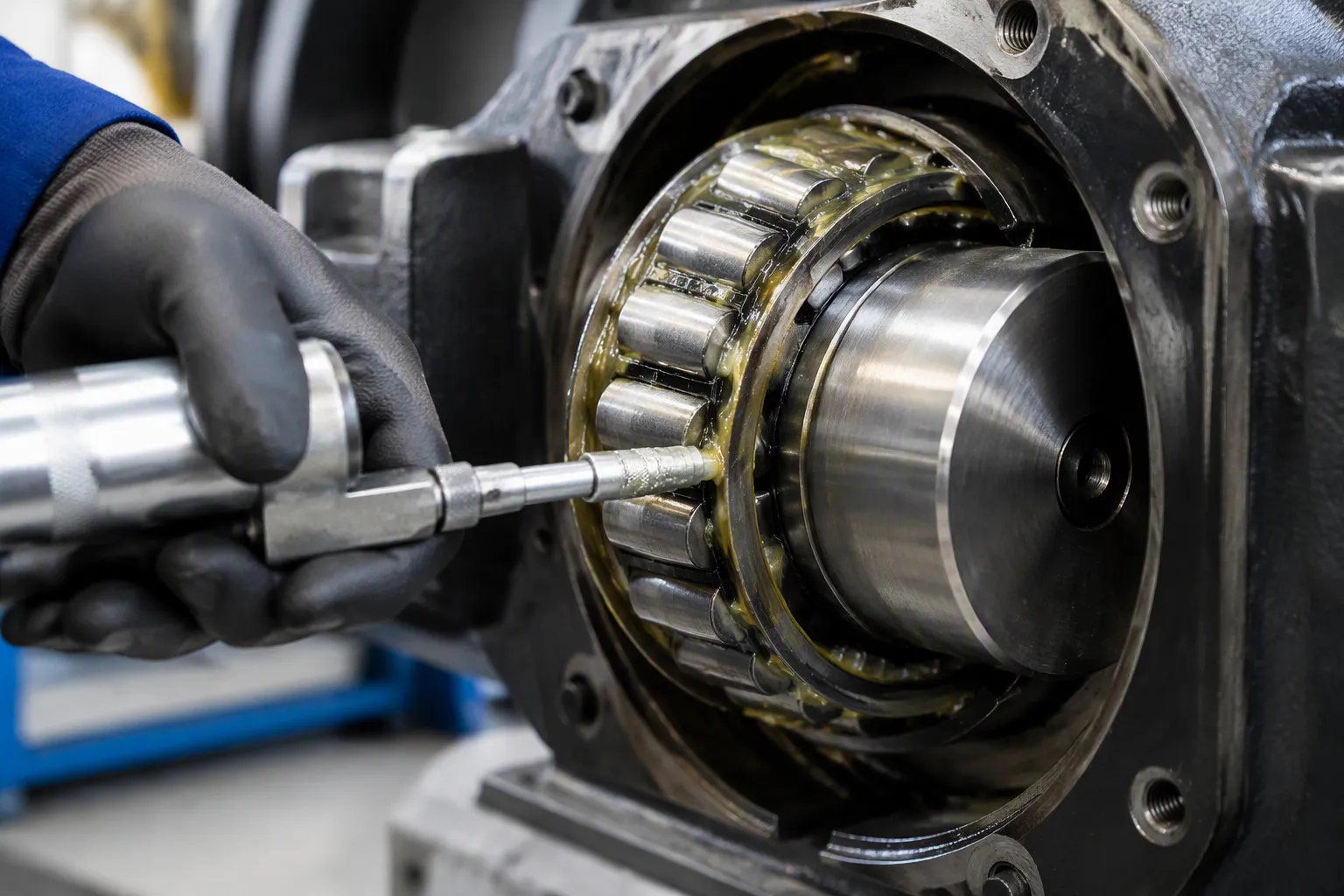
SKF LGRT 2 represents a carefully engineered formulation designed specifically for railway axle box lubrication. This grease belongs to the lithium complex family, a chemistry that distinguishes it from conventional simple lithium soaps. The lithium complex thickener forms a robust three-dimensional network within the grease structure. This network resists breakdown under continuous shear forces and elevated temperatures. The base oil, selected for its high viscosity index, maintains a stable film thickness across a wide operational spectrum. This combination delivers exceptional thermal stability, allowing the grease to preserve its structural integrity even after prolonged exposure to high operating temperatures.
The formulation undergoes rigorous validation before reaching service. SKF LGRT 2 has passed the EN 12081 test for speed class ‘a’, a demanding certification standard for railway axle box lubricants. This certification confirms the grease’s suitability for high-speed railway axle box bearing grease applications. The test evaluates performance under conditions that simulate real-world high-speed operation, including sustained thermal loading and mechanical stress. Passing this test provides engineers with documented evidence of the grease’s capability.
The thickener system also contributes to the grease’s resistance to water washout. Lithium complex chemistry forms a stable structure that repels moisture and prevents emulsification. This property proves critical in railway environments where rain, snow, and humidity constantly threaten bearing integrity. The grease maintains its protective film even when exposed to water ingress, preventing corrosion and rust formation on precision bearing surfaces.
Base Oil and Thickener System
The base oil in SKF LGRT 2 provides the load-carrying foundation for the entire lubrication system. This oil exhibits excellent oxidation resistance, meaning it resists chemical breakdown when exposed to oxygen at high temperatures. Oxidation causes conventional oils to form sludge, varnish, and acidic byproducts that attack bearing surfaces. The advanced base oil in this formulation resists these degradation pathways, maintaining its lubricating properties over extended service intervals. The oil’s viscosity characteristics ensure adequate film thickness at operating temperatures while allowing easy flow during cold starts.
The lithium complex thickener works synergistically with the base oil. This thickener raises the grease’s dropping point substantially compared to simple lithium soaps. A higher dropping point means the grease can withstand higher temperatures before transitioning from a semi-solid to a liquid state. This property prevents grease loss through melting and ensures continuous lubrication during peak thermal loads. The thickener also provides mechanical stability, resisting the physical breakdown that occurs from constant churning and shearing inside the bearing cavity.
Temperature Range and Consistency Grade
SKF LGRT 2 carries an NLGI grade 2 consistency rating. This classification represents the standard for railway axle box applications. NLGI 2 grease offers an optimal balance between pumpability and retention. The grease flows readily through distribution systems and into bearing cavities during relubrication. Once inside, it remains in place, resisting centrifugal forces that would throw lighter greases out of the bearing. This retention property ensures a continuous lubricant supply to rolling elements and raceways.
The grease’s operating temperature range accommodates the full spectrum of railway service conditions. During winter operations in cold climates, the grease maintains sufficient fluidity for effective lubrication. During summer operations or sustained high-speed running, it resists softening and maintains its structural integrity. This wide temperature tolerance eliminates the need for seasonal grease changes, simplifying maintenance procedures and reducing inventory requirements. The brown color of the grease provides visual confirmation during inspection, allowing maintenance crews to verify proper application and detect potential contamination issues.
The combination of NLGI 2 consistency and robust thermal properties makes this grease suitable for passenger coaches, freight wagons, and locomotives. Each application presents unique demands, yet this single formulation addresses them all effectively.
Performance Benefits for Axle Box Bearings
Friction Reduction and Extended Intervals
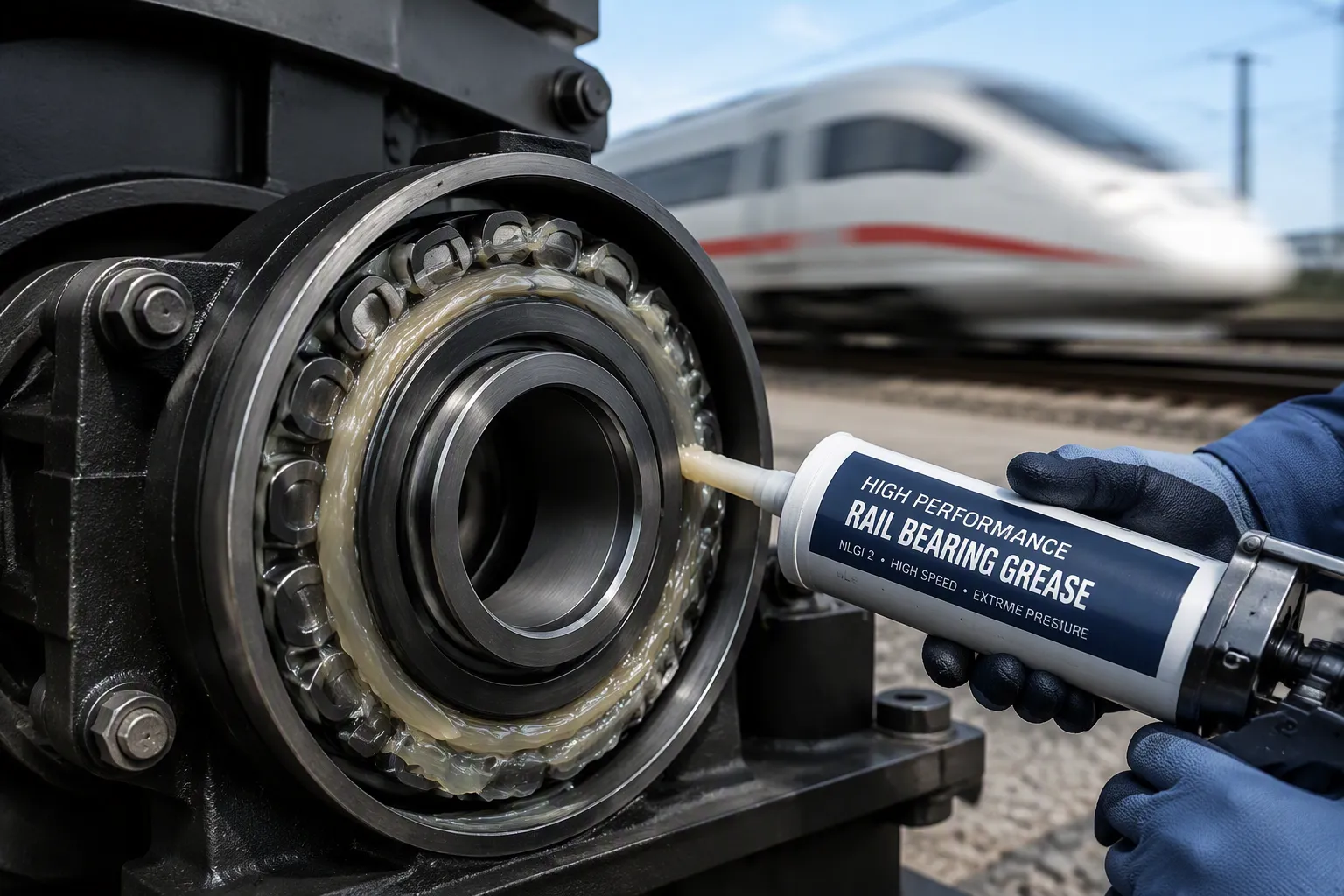
SKF LGRT 2 demonstrates applicability at speeds up to 200 km/h. In specific configurations, this grease supports even higher operational velocities. The formulation achieves a low friction coefficient through its carefully balanced base oil and lithium complex thickener system. This low friction directly reduces heat generation inside the bearing cavity. Less heat means slower grease oxidation and less thermal stress on bearing components. The bearing operates at a lower steady-state temperature, preserving the lubricant’s structure over longer periods.
The grease’s robust film strength prevents metal-to-metal contact between rolling elements and raceways. This film remains intact under extreme pressures from train weight and cornering forces. As a High-speed Railway Axle Box Bearing Grease, SKF LGRT 2 maintains this protective separation during peak loads and acceleration events. The continuous film eliminates boundary lubrication conditions where surface damage occurs most rapidly.
Extended relubrication intervals follow directly from these properties. The grease retains its lubricating capability significantly longer than standard alternatives. This reduces maintenance frequency, lowering labor costs and equipment downtime. Railway operators benefit from increased asset availability and reduced scheduling complexity. The extended intervals also reduce grease consumption, providing environmental and economic advantages. Fewer lubrication events mean fewer contamination ingress opportunities during maintenance. The bearing remains sealed and protected for longer periods between service interventions.
The speed capability provides confidence for high-speed passenger services. Operators rely on consistent lubrication performance across the entire service schedule. The low friction coefficient also contributes to energy efficiency. Reduced friction lowers rolling resistance, translating to modest reductions in traction energy consumption. Over a fleet’s operational life, these savings accumulate substantially.
Corrosion and Wear Protection
The additive package in SKF LGRT 2 provides superior corrosion protection against moisture and contaminants. Railway axle boxes face constant exposure to water from rain, snow, and humidity. Water ingress through seals initiates rust formation on precision bearing surfaces. Rust creates surface irregularities that act as stress concentrators. These stress points accelerate fatigue crack initiation and propagation. The corrosion inhibitors in this grease neutralize water’s destructive effects. They form a protective barrier on metal surfaces, preventing electrochemical reactions that cause rust. This protection continues even when water contamination occurs between scheduled maintenance intervals.
Anti-wear additives protect bearing surfaces from pitting and spalling. These additives form a sacrificial layer on metal surfaces. Under high load conditions, this layer wears preferentially instead of the bearing steel. The additives replenish continuously from the grease reservoir, providing sustained protection. This mechanism prevents the surface fatigue that leads to pitting and spalling over time. Bearing life extends significantly as a result of this continuous protection.
This High-speed Railway Axle Box Bearing Grease maintains its protective properties under heavy loads. Freight wagons carrying maximum loads place extreme demands on axle box bearings. The grease’s film strength and anti-wear additives ensure reliable performance under these conditions. Locomotives with high traction forces also benefit from this robust protection. The additives work synergistically with the lithium complex thickener to provide comprehensive surface protection.
The combination of corrosion and wear protection ensures long service life for axle box bearings. Bearings remain in service for extended periods without requiring replacement. This reduces parts costs and the labor associated with bearing changes. The economic benefits of reduced maintenance extend throughout the bearing’s operational life. Operators achieve lower total cost of ownership for their rolling stock. The grease’s protective properties directly contribute to fleet reliability and safety.
Application Best Practices
Proper Lubrication Methods
SKF LGRT 2 arrives in a 50 kg package and requires application using clean, dedicated equipment. Contamination from previous lubricants compromises performance. Residual standard lithium or polyurea grease alters the lithium complex chemistry and reduces thermal stability and load capacity. Thorough cleaning of all application tools prevents this problem before each relubrication event.
The application process requires attention to bearing cavity fill levels. Overfilling creates excessive churning and heat generation. Underfilling leaves bearing surfaces unprotected. Proper fill volume depends on bearing size and operating conditions. The grease’s NLGI 2 consistency allows smooth transfer through standard grease guns. This consistency ensures reliable delivery without excessive pressure.
Compatibility testing proves essential when switching from a previous grease formulation. A simple test involves mixing small samples of the old and new greases. Observing the mixture for oil separation, softening, or hardening indicates incompatibility. Operators should not mix SKF LGRT 2 with standard lithium or polyurea greases without thorough system cleaning. This precaution maintains the High-speed Railway Axle Box Bearing Grease’s protective properties.
Storage and Handling
Proper storage preserves grease performance throughout its shelf life. The storage area must remain cool and dry. Direct sunlight accelerates base oil oxidation and degrades the thickener structure. Temperature fluctuations cause condensation inside the container. Moisture initiates corrosion and reduces protective capabilities.
Operators must keep lids tightly sealed when not in use. Open containers expose grease to airborne dust, moisture, and oxygen. These contaminants degrade chemical stability over time. The lithium complex network can absorb moisture from humid air, reducing structural integrity. Operators should use clean tools to remove grease. Dirty tools introduce contaminants that remain in the supply for the entire service life.
Inventory rotation prevents storage-related degradation. Using the oldest stock first ensures grease remains within its optimal performance window. Each container should carry a clear date stamp for tracking purposes. Storage conditions directly impact the grease’s ability to perform as a High-speed Railway Axle Box Bearing Grease. Proper handling from receipt through application maintains the formulation’s engineered properties.
Comparison with Alternative Greases
Advantages Over Standard Greases
SKF LGRT 2 emerges from decades of SKF experience in railway axlebox lubrication. This pedigree shows clearly in its performance against conventional lithium soap greases. Standard lithium greases break down under sustained high temperatures. Their simple soap structures soften, allowing oil separation and grease leakage from bearing cavities. SKF LGRT 2’s lithium complex chemistry maintains structural integrity far longer. The advanced thickener network resists thermal degradation, keeping the grease in place and protecting bearing surfaces throughout demanding service cycles.
Load-carrying capacity separates this grease from standard alternatives. Simple lithium greases squeeze out under heavy axle loads and cornering forces. Their thin films cannot prevent metal-to-metal contact. SKF LGRT 2 maintains a robust protective film under identical conditions. This superior film strength translates directly to longer bearing life and reduced maintenance frequency. Operators see fewer unscheduled bearing replacements and less unplanned downtime.
The economic argument favors SKF LGRT 2 despite its higher initial price. Standard greases require frequent relubrication intervals. Each lubrication event demands labor, equipment, and track access time. Extended service intervals with SKF LGRT 2 reduce these recurring costs substantially. Over a bearing’s operational life, the total cost of ownership proves lower than using cheaper standard greases. The initial investment pays dividends through reduced maintenance spending.
Performance Against Synthetic Options
Polyurea greases represent a common alternative in railway applications. These synthetic formulations offer good oxidation resistance. However, they lack the mechanical stability of lithium complex chemistry. Polyurea greases tend to soften under continuous shear forces inside axle box bearings. This softening leads to grease loss and inadequate lubrication over time. Bearing surfaces then experience increased friction and accelerated wear.
Water washout resistance further distinguishes SKF LGRT 2 from synthetic competitors. Polyurea greases show vulnerability to moisture ingress. Rain, snow, and humidity can emulsify these greases, washing them from bearing surfaces. The lithium complex thickener in SKF LGRT 2 repels water effectively. This High-speed Railway Axle Box Bearing Grease maintains its protective film even during prolonged exposure to wet conditions. Corrosion protection remains intact when synthetic alternatives fail.
Synthetic greases often require special handling and storage procedures. Their formulations can be sensitive to contamination and temperature extremes during storage. SKF LGRT 2’s robust chemistry tolerates standard storage conditions without degradation. This reliability extends from the container through the entire service life. Railway operators benefit from consistent performance without special precautions.
The demanding conditions of high-speed rail demand proven solutions. SKF LGRT 2’s lithium complex chemistry delivers the mechanical stability and water resistance that synthetic alternatives cannot match. This High-speed Railway Axle Box Bearing Grease provides dependable protection where other formulations fall short. Engineers seeking reliable long-term performance choose this grease for its demonstrated superiority across all critical parameters.
SKF LGRT 2 delivers unmatched thermal stability, load capacity, and service longevity for high-speed railway axle boxes. This High-speed Railway Axle Box Bearing Grease directly counters heat generation, vibration stress, and contamination ingress. Operators gain improved reliability, reduced maintenance costs, and extended bearing life. The lithium complex formulation withstands extreme operational demands that destroy standard lubricants. Engineers and specifiers seeking dependable performance should adopt this proven solution. Its documented EN 12081 certification validates suitability for demanding rail applications. Choosing SKF LGRT 2 ensures optimal protection, minimizes downtime, and maximizes fleet availability. This grease represents the most effective lubrication strategy available for modern high-speed rail networks.
FAQ
How often should SKF LGRT 2 be reapplied to axle box bearings?
SKF LGRT 2 enables extended relubrication intervals compared to standard greases. The exact interval depends on operating speed, load, and environmental conditions. Maintenance engineers should follow OEM recommendations and monitor bearing temperature and vibration to determine optimal service schedules.
Can SKF LGRT 2 be mixed with other greases?
No. SKF LGRT 2 should not mix with standard lithium or polyurea greases. Mixing compromises thermal stability and load capacity. Operators must thoroughly clean the bearing cavity and application equipment before switching to this grease.
What is the shelf life of SKF LGRT 2?
Proper storage preserves SKF LGRT 2’s performance throughout its intended shelf life. Store the grease in a cool, dry place away from direct sunlight. Keep lids tightly sealed to prevent oxidation and moisture ingress. Following these guidelines maintains the grease’s engineered properties.
Does SKF LGRT 2 work for all railway vehicle types?
Yes. SKF LGRT 2 suits passenger coaches, freight wagons, and locomotives. Its NLGI 2 consistency and wide temperature range accommodate diverse operating conditions. The grease passed EN 12081 certification for speed class ‘a’, confirming suitability for high-speed applications.
See Also
Innovative FAKKT Greases Tackle Today’s Auto Industry Hurdles
Key Traits Defining Superior Industrial Grease Performance
Boosting Car Dependability Using FAKKT-GC874K Synthetic Lubricant
How Colloidal Stability Affects Grease Efficiency and Durability
FAKKT-UB 45001 Sets Tribology Benchmark for Demanding Conditions