


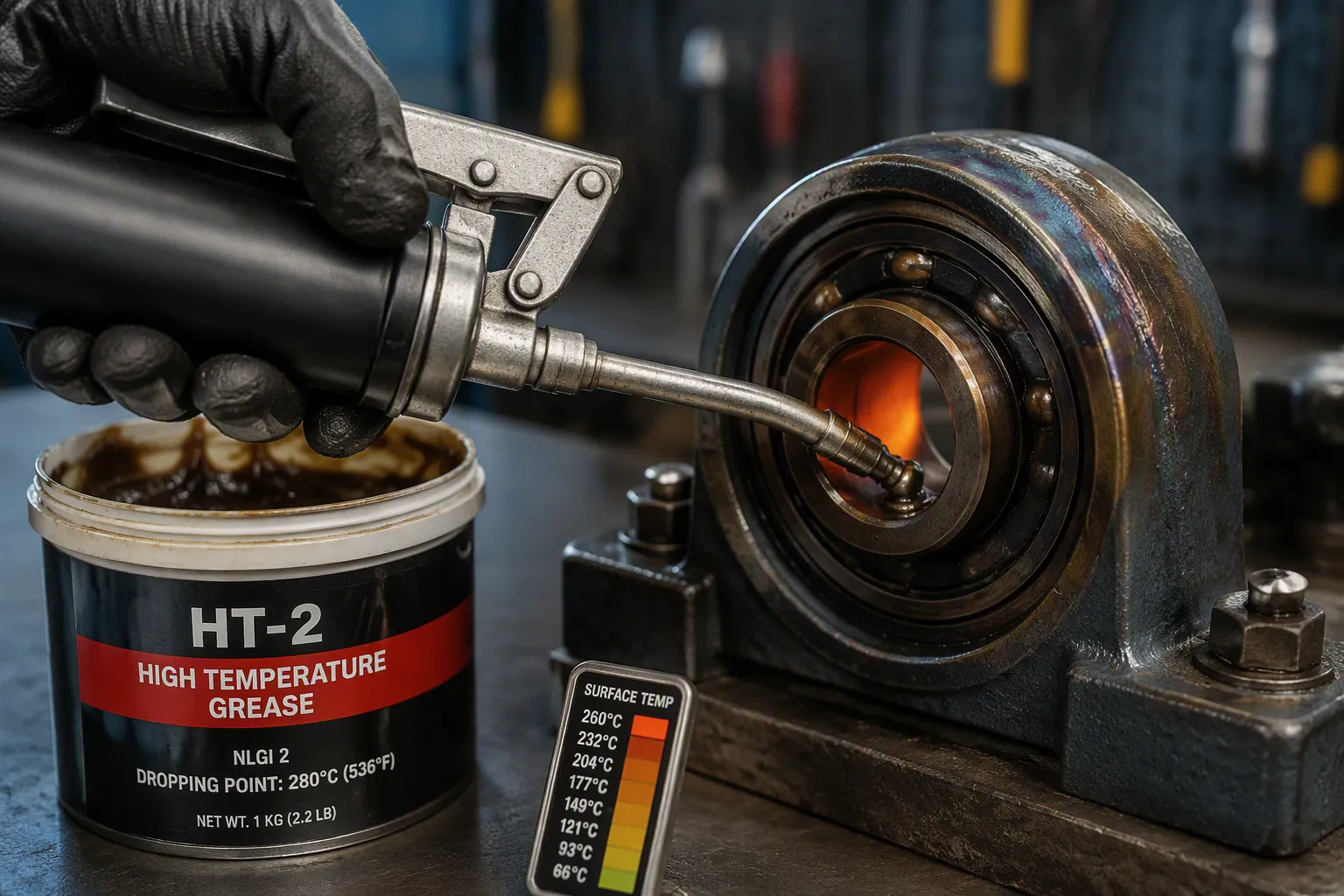
You can start with a specific grease recommendation. If your application involves extreme temperatures, choose a PFPE formulation. For standard ball bearings operating at moderate temperatures, a lithium complex grease delivers reliable results. This grease performs well because of three core properties: dropping point, oxidation stability, and viscosity. The dropping point indicates the thermal limit. Oxidation stability prevents hardening at high heat. Viscosity ensures the oil film supports the load. This post explains how these properties drive your selection. You will learn proper application techniques and maintenance intervals. This knowledge helps you avoid premature bearing failure and extends equipment life.
Key Takeaways
Choose greases with high dropping points and strong oxidation stability for heat resistance.
Use PFPE or complex calcium sulfonate greases for temperatures above 250°F.
Fill bearings with less grease at higher speeds to prevent overheating.
Clean old grease completely before switching types to avoid catastrophic failures.
Understanding High-Temp Grease
Why Standard Greases Fail
Standard greases break down under high heat. The heat triggers thermal breakdown that destroys the lubricant’s structure. You might notice hard lumps forming inside the bearing housing. The soft, pasty texture turns powdery or brittle. Operating resistance increases, and vibrations become noticeable. These symptoms point to hardening and coking.
The mechanism follows a clear sequence. High temperatures cause the base oil to evaporate. The thickener then undergoes irreversible structural changes. Solid residues remain and form hard deposits on bearing surfaces. These deposits block grease channels, preventing fresh lubricant from reaching critical contact points. Your bearing runs hotter, wears faster, and eventually fails.
Prevention requires two actions. First, shorten the grease replacement cycle when operating temperatures stay elevated. Second, select products designed for heat resistance, such as PFPE, complex calcium sulfonate, or polyurea-based formulations. These greases maintain high dropping points and resist evaporation loss. Always clean old grease thoroughly before regreasing. Mixing old and new product can trigger additional hardening.
Key Grease Properties
Three properties determine whether a grease survives high-temperature service. Dropping point marks the thermal limit where thickener structure collapses. Oxidation stability measures resistance to chemical breakdown from heat and air. Base oil viscosity determines whether the lubricating film can support your bearing’s load.
Oxidation deserves special attention. Heat accelerates base oil oxidation, which degrades lubricating properties and produces acidic byproducts. The grease loses viscosity and forms insoluble deposits that block flow paths. A process that takes years at moderate temperatures can occur in just months or weeks at elevated heat. Oxidation stability directly controls service life.
A lithium complex grease has a dropping point of 260°C (500°F).
This figure explains why lithium complex products serve many industrial applications. Standard lithium soap greases drop at 175–205°C, far too low for demanding heat. The complex formulation extends the range considerably.
Thermal and oxidative stresses work together. When your equipment runs hot, thermal stress degrades the grease while oxidation attacks it simultaneously in contact with air. You cannot treat these factors separately. Matching the grease properties to your actual operating envelope prevents premature failure and extends bearing life.
Types of High-Temp Grease
Synthetic Base Oils for Grease
The base oil determines the grease’s temperature ceiling. PFPE (perfluoropolyether) oils lead the pack. They operate continuously at +250°C and handle higher temperature spikes. Many PFPE formulations reach +300°C while maintaining lubricating properties over long cycles. This performance comes at a cost. A popular PFPE product is expensive due to its molecular stability.
Silicone oils offer a different balance. They deliver outstanding thermal and oxidation stability across a range of −70°C to +200°C. Their viscosity index exceeds 300, meaning the oil barely thins as temperatures climb. Mineral oils lose viscosity rapidly under the same conditions. Silicone’s chemical inertness prevents reactions with metals, plastics, and elastomers. Low volatility reduces evaporation in static high-heat applications. Low surface tension helps the oil spread and wet bearing surfaces thoroughly.
Ester-based oils sit between these extremes. They offer good thermal stability at moderate cost. Many industrial greases use esters when operating temperatures stay below silicone or PFPE limits. You sacrifice some high-heat capacity but gain significant cost savings.
Grease Thickeners
The thickener holds the oil in place. Polyurea thickeners provide a dropping point near 270°C (518°F). Industry sources consistently cite this figure. Some commercial formulations list slightly lower values around 260°C (500°F) per ASTM D2265.
Lithium complex thickeners drop at approximately 260°C (500°F). This chemistry readily accepts extreme-pressure (EP) additives, making it versatile for heavily loaded bearings.
Calcium sulphonate complex thickeners excel in demanding environments. Their dropping point exceeds 300°C (572°F). With synthetic base oils, they operate up to 195°C (383°F). The thickener’s structure resists heat and water, providing consistent performance in extreme conditions.
Selecting the Right Grease
Selection Factors
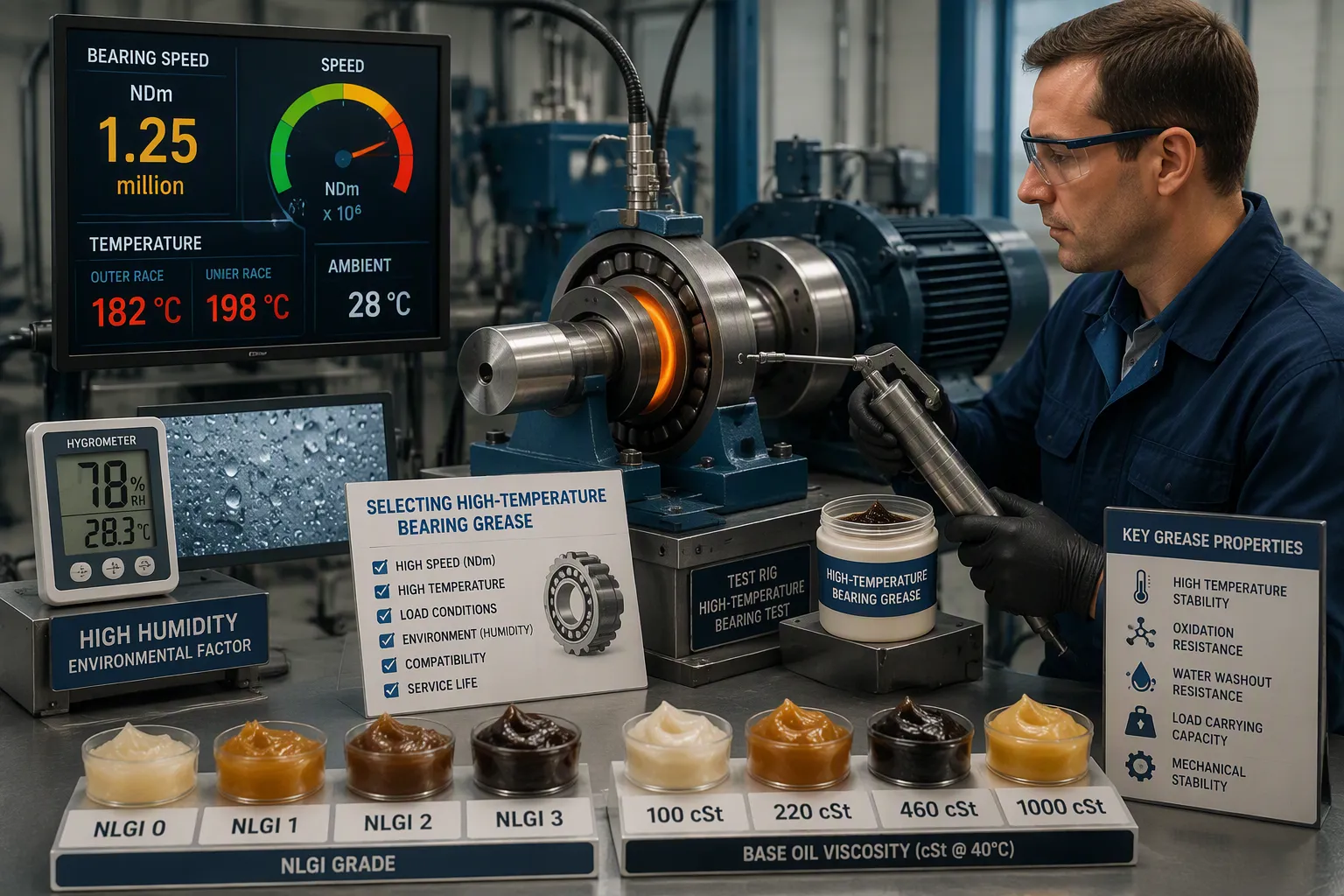
Temperature is critical, but you must also consider speed, load, and operating environment. Start with speed. You measure bearing speed using the speed factor (DN or NDm). When this factor exceeds 500,000, standard products can no longer keep up. A bearing with an NDm of 293,125 operating at 150°F needs a base oil viscosity of about 7 cSt (ISO 22-32). A general-purpose product with roughly 220 cSt delivers about ten times that. The excess creates heat, increases energy consumption, and accelerates degradation.
As bearing speed increases, high-speed formulations use a higher NLGI grade. The base oil viscosity drops to reduce internal friction. This prevents excessive oil bleed from the thickener.
Check the dropping point (ASTM D566/D2265) when selecting high-temperature lubricant for high-speed bearings. A high dropping point is essential, but it does not equal the maximum usable temperature. Maintain a buffer between the bearing’s operating temperature and the dropping point.
Load matters too. Lithium complex chemistry accepts EP additives for enhanced load-carrying capacity. This chemistry makes it versatile for heavily loaded bearings.
The operating environment adds another layer. High humidity combined with heat accelerates degradation. Moisture acts as a catalyst in base oil oxidation. The process turns the lubricant corrosive, forming acids that damage metal surfaces. In cold conditions, humidity causes condensation inside the product. The resulting water can freeze, causing blockages.
To mitigate combined stress, look for formulations with:
Enhanced oxidation inhibitors for thermal and moisture stress
Water-resistant thickeners (calcium complex) to prevent washout
Rust inhibitors to protect against corrosion
Water-displacing agents to limit condensation effects
Seal and Grease Compatibility
Seal material matters as much as the lubricant itself. Nitrile (NBR) works for lower-temperature applications, while Viton (FKM) handles higher temperatures. For continuous service above moderate temperatures, Viton is required.
Mixing incompatible products can trigger cascading failures. Always clean old lubricant thoroughly before applying a new formulation.
Applying and Maintaining Grease
Proper Grease Amount and Intervals
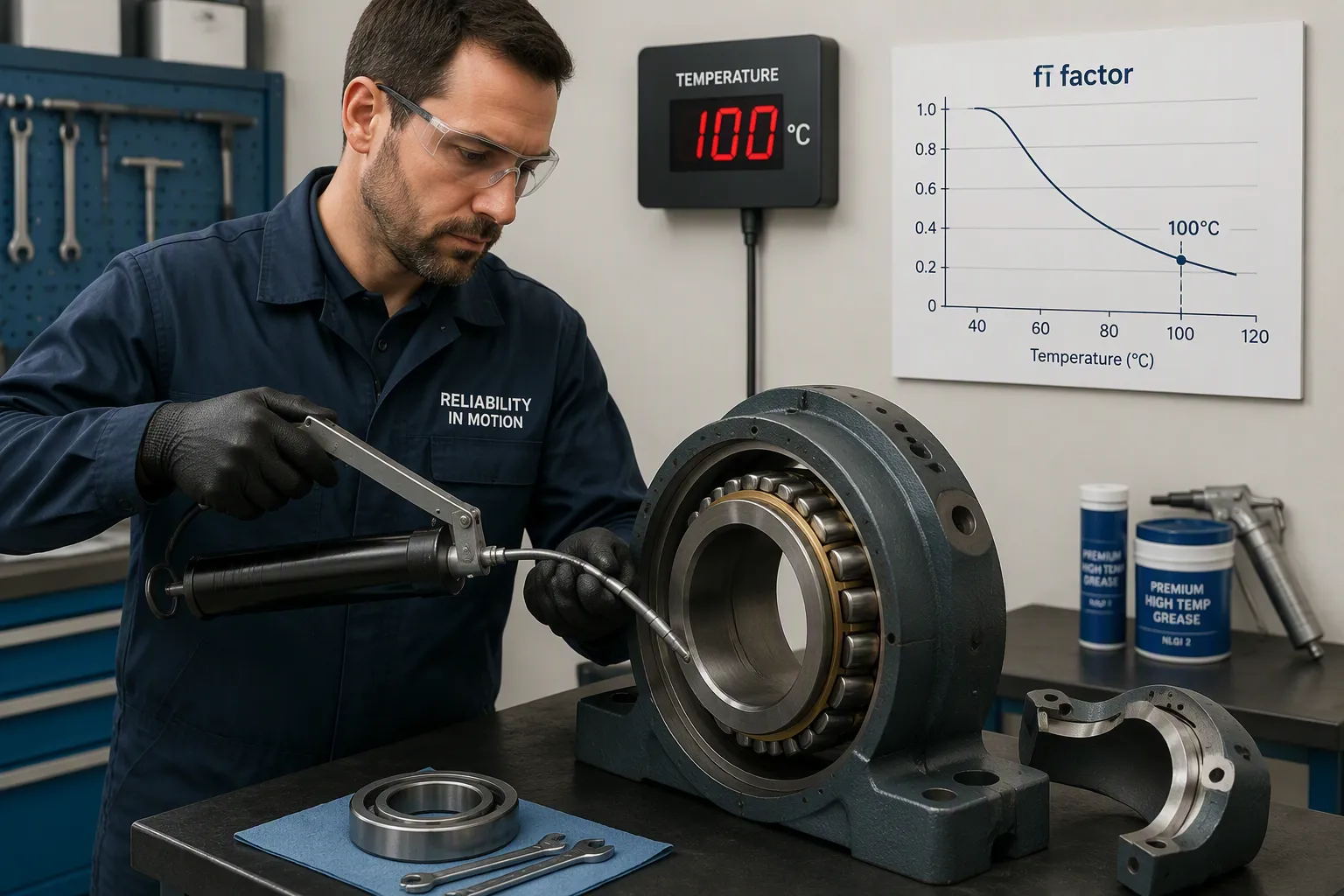
You must get two things right: how much you put in and how often you add more. The amount depends on bearing speed. For high-speed bearings, fill the cavity to a lower amount; for lower speeds, you can fill more. The key rule is simple: the higher the shaft speed, the lower the initial fill volume should be. Excess lubricant forces the rolling elements to push through the product instead of rolling freely. This friction directly raises the operating temperature. The heat then causes the oil to separate from the thickener, which worsens lubrication and drives temperatures even higher. The cycle continues until the bearing fails.
Over-lubrication creates a chain of problems you want to avoid. In sealed or shielded bearings, excess product produces a churning effect that destroys the lubricant structure. Lumps form and damage internal components like cages and rolling elements. The extra lubricant also attracts dirt and contaminants from the environment. These particles add more friction and generate additional heat. In electric motors, over-lubricated bearings allow product to reach the windings. This reduces motor efficiency and raises operating temperature, potentially damaging the motor beyond repair.
Re-lubrication intervals should be adjusted based on temperature. As bearing temperature rises, the interval shortens. The Arrhenius rate rule states that for every increase of 18°F (10°C), the lubricant’s useful life is cut in half. Consequently, re-lubrication intervals must be shortened as operating temperature rises.
A common mistake is skipping the run-in procedure after re-lubrication. Running the bearing briefly at low speed allows excess product to distribute evenly across all rolling surfaces. Without this step, you risk over-lubrication and excessive operating temperatures from the start.
Cleaning and Monitoring
You must remove old lubricant completely before packing fresh product into the bearing cavity. Mixing old and new formulations can trigger compatibility failures you cannot easily reverse. The thickener structures may react with each other, causing the mixture to soften, harden, or separate. Any of these outcomes leaves your bearing unprotected and accelerates wear.
Monitor your bearings regularly for signs of degradation. Check for these warning indicators:
Lubricant leaking or running out of the bearing
Dry residue around seals or housings
Unusual bearing noise during operation
Higher vibration readings than normal
Frequent re-lubrication requirements
Repeat bearing failures in the same application
In high-temperature applications, using standard formulations instead of high-temperature ones is a frequent mistake. When the lubricant exceeds its design temperature, the base oil, thickener, and additives break down. The product may soften and bleed oil too quickly. It may harden and stop releasing oil to the contact points. It may oxidize, darken, or form hard deposits. In severe cases, it separates completely, leaks out of the housing, or leaves a dry sticky residue. The bearing then runs without any real protection. Look for hardened Grease at the seals as one specific warning sign of this breakdown.
Check for three forms of degradation: oil separation from the base, chemical breakdown from excess heat, and lubricant hardening. These signals all indicate that your maintenance schedule needs adjustment. Either shorten the interval between re-lubrication or switch to a more heat-resistant product that matches your operating conditions.
Proper fill amounts and correct intervals keep your bearings running cool and lasting longer. Regular monitoring catches problems early before they escalate into costly failures.
Your best grease depends on your specific operating conditions. Start with dropping point and oxidation stability. These two properties determine whether the product survives your heat levels.
Lithium complex greases handle many moderate applications effectively. They offer good temperature resistance and accept EP additives for heavy loads. For extreme heat, PFPE-based greases deliver unmatched performance. Their molecular stability withstands continuous temperatures above 250°C.
No single product fits every bearing. Match the grease chemistry to your temperature range, speed, and environment. Consider seal compatibility before switching formulations.
Share your application details with us. Tell us your operating temperature, bearing type, and speed. We will recommend the right grease for your equipment.
FAQ
How do I know when to replace high-temperature grease?
Look for darkened, burnt, or hardened grease. Check for oil separation or dry residue around seals. Unusual noise or vibration signals trouble. If you see these signs, clean the bearing completely and apply fresh grease.
Can I mix different grease types?
No. Mixing incompatible thickeners causes softening, hardening, or oil separation. These failures damage bearings quickly. Always purge old grease thoroughly before switching products. Check compatibility charts when you cannot avoid a change.
What temperature destroys standard grease?
Standard greases break down under high heat. Heat evaporates the base oil and changes the thickener structure permanently. Hard deposits form on bearing surfaces. Switch to high-temperature formulations like PFPE products when your equipment runs hotter.
How often should I re-grease high-temperature bearings?
Re-lubrication intervals decrease as bearing temperature rises. Monitor grease condition regularly and adjust your schedule based on what you see.
Why does PFPE grease cost so much?
PFPE molecules resist heat and chemicals better than any other base oil. Manufacturing requires complex fluorochemistry. You pay for unmatched thermal stability that extends bearing life in extreme conditions.
See Also
The Defining Qualities of Exceptional High-Performance Industrial Grease
Essential Facts About Grease for Harmonic Drive Reducers
The Impact of Colloidal Stability on Grease Performance
FAKKT Grease Solutions Tackle Modern Automotive Industry Challenges
FAKKT-GC874K Synthetic Grease Significantly Boosts Automotive Reliability