


Polyurea grease made from fully synthetic oil plays a critical role in high-temperature applications. This advanced lubricant offers several advantages over conventional greases. For instance, it exhibits superior oxidation stability due to the absence of metal ions, which can catalyze oxidation. Additionally, polyurea thickened grease maintains better thermal stability at temperatures exceeding 180℃, outperforming traditional greases with metal soap thickeners. These features enhance bearing performance, ensuring machinery operates smoothly even under extreme conditions.
Key Takeaways
Polyurea grease offers superior thermal stability, making it ideal for high-temperature applications.
Synthetic oils in polyurea grease provide excellent oxidation resistance, enhancing machinery performance.
Additives in polyurea grease improve its longevity and protect against rust and wear.
Polyurea grease is used in industries like automotive, aerospace, textile, and paper for reliable lubrication.
Choosing the right polyurea grease involves considering base oil type, additives, and application environment.
Polyurea Grease Composition
Base Oil Characteristics
Polyurea grease derives its exceptional performance from its unique base oil composition. Typically, manufacturers use fully synthetic oils, such as poly-α-olefin (PAO) and silicone fluids, as the primary dispersion medium. These synthetic oils provide superior thermal stability and oxidation resistance compared to traditional mineral oils. As a result, polyurea thickened greases maintain their lubricating properties even in high-temperature environments.
The optimal formulation often includes a polyurea thickener made from diphenylmethane-4,4′-diisocyanate. This component enhances the grease’s physicochemical properties and wear performance, making it suitable for demanding applications. The combination of these synthetic base oils and the polyurea thickener contributes to the grease’s ability to withstand extreme conditions, ensuring reliable operation in high-temperature bearings.
Additives and Their Benefits
Additives play a crucial role in enhancing the performance of polyurea grease. They provide specific benefits that improve the grease’s overall functionality. Below is a table summarizing common additives used in polyurea grease and their respective advantages:
Additive Type | Benefit |
|---|---|
Extreme Pressure (EP) Additives | Help the grease withstand high loads. |
Oxidation Inhibitors | Prevent degradation over time. |
Corrosion Inhibitors | Protect metal surfaces from rust and corrosion. |
These additives work synergistically with the base oils to enhance the grease’s longevity and reliability. For instance, oxidation inhibitors prevent the grease from breaking down, while corrosion inhibitors protect machinery from rust. This combination of high-quality base oils and effective additives makes polyurea thickened grease a preferred choice for high-temperature applications.
Performance in High Temperatures
Thermal Stability
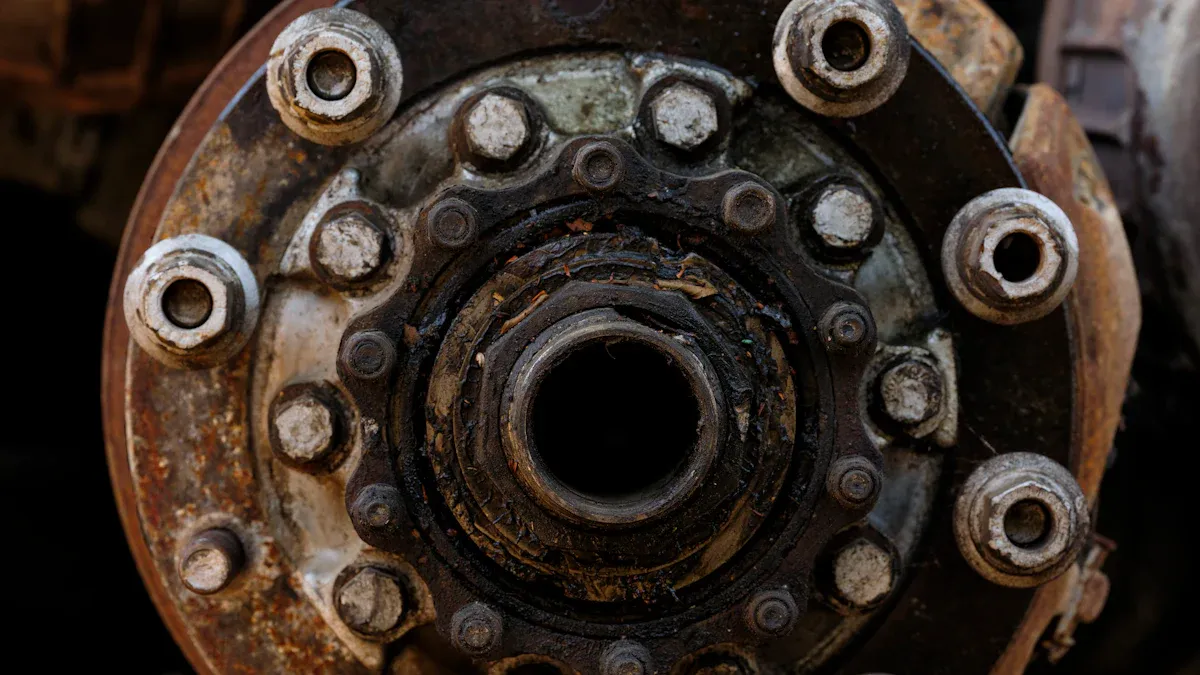
Polyurea grease exhibits remarkable thermal stability, making it an excellent choice for high-temperature applications. This stability allows the grease to maintain its properties even when exposed to extreme heat. For instance, laboratory tests using a TA Q500 thermogravimetric analyzer have shown that polyurea greases can withstand temperatures ranging from 30 to 800 °C without significant degradation. This capability ensures that machinery remains lubricated and protected under demanding conditions.
In comparison to other high-performance greases, polyurea thickened greases stand out. For example, the Mobil SHC Polyrex™ series utilizes a polyurea thickener that provides the necessary thermal stability for high-temperature environments. This contrasts with greases like the Mobil Centaur XHP™ series, which rely on a Calcium Sulfonate thickener. The advanced formulation of polyurea grease protects equipment long after conventional greases would have broken down.
Viscosity Retention
Viscosity retention is another critical factor in the performance of polyurea grease at elevated temperatures. Polyurea greases maintain their viscosity better than many conventional greases, ensuring consistent lubrication over time. The following table highlights the differences in performance metrics between polyurea grease and conventional greases:
Property | Polyurea Grease | Conventional Grease |
|---|---|---|
Dropping Point | ~230°C (varies) | |
Evaporation Loss | ~0.4% | ~2% |
The low evaporation loss of polyurea grease contributes to its longevity. This characteristic minimizes the need for frequent re-lubrication, making it suitable for applications requiring long service intervals. Additionally, polyurea greases can last three to five times longer than lithium-based greases under similar conditions.
The inherent antioxidative properties of polyurea grease further enhance its performance. These properties help maintain grease integrity over extended periods at high temperatures. With a high dropping point of approximately 270 degrees C (518 degrees F), polyurea grease remains stable under heat, ensuring reliable operation in high-temperature bearings.
Applications of Polyurea Thickened Grease
Automotive and Aerospace
Polyurea thickened grease finds extensive use in the automotive and aerospace industries. In automotive applications, it lubricates high-temperature bearings in engines and transmissions. This grease withstands extreme conditions, ensuring smooth operation and reducing wear. In aerospace, it plays a vital role in maintaining the performance of critical components. The high thermal stability of polyurea grease ensures that it remains effective even during prolonged exposure to high temperatures.
Textile and Paper Industries
The textile and paper industries also benefit significantly from polyurea thickened grease. This grease addresses high-temperature lubrication challenges effectively. It provides strong alkali environment protection, thanks to its fully synthetic formula. This stability prevents corrosion and chemical degradation of bearings, which is crucial in these industries.
Moreover, polyurea grease maintains structural integrity under high temperatures ranging from 80 to 120 °C. It resists cold water flushing and steam, unlike traditional lubricants that may soften or carbonize. This characteristic ensures long-term lubrication, reducing the need for frequent replenishment. Such stability is essential in textile machinery that operates under harsh conditions.
Selecting the Right Polyurea Grease
Key Considerations
When selecting polyurea grease for high-temperature bearing applications, several factors come into play. Understanding these factors ensures optimal performance and longevity of machinery. Consider the following key aspects:
Factor | Description |
|---|---|
Base Oil Type | The type of base oil affects performance; synthetic oils generally perform better. |
Additives | Additives improve properties like oxidation resistance and wear resistance. |
Application Environment | Specific conditions such as temperature and exposure to moisture or chemicals are crucial. |
Operating temperature, load, and speed significantly influence the choice of polyurea grease formulation. Polyurea greases excel in high-temperature environments due to their high dropping points, typically exceeding 500°F. This feature makes them suitable for applications like electric motor bearings, where extended regreasing intervals are advantageous. However, these greases may not perform well under extreme load conditions, as polyurea thickeners do not accommodate high-pressure additives effectively.
Product Recommendations (e.g., FAKKT-UB 45001)
For those seeking reliable polyurea grease, the FAKKT-UB 45001 stands out as a premium choice. This product offers exceptional thermal stability, operating efficiently in temperatures ranging from -40°C to 200°C. Its high dropping point of over 300°C ensures that it maintains performance even in extreme conditions.
Other notable products include:
Grease Type | Dropping Point | Continuous Operating Temp |
|---|---|---|
Polyurea (ZTSH) | 260°C | -20 to 220°C |
Key specifications of polyurea greases include:
High thermal stability, especially above 180°C.
Good oxidation stability due to the absence of metal ions.
Anti-wear properties inherent in the polyurea thickener.
Polyurea grease typically offers 2-3 times the service life of simple lithium grease, sustaining over 10,000 operating hours in sealed bearings, often matching the bearing’s lifetime. This longevity makes polyurea grease an excellent investment for businesses aiming to reduce maintenance costs.
Polyurea grease made from fully synthetic oil offers numerous advantages for high-temperature bearings. Its exceptional performance ensures reliability in demanding environments. The following table summarizes its key benefits:
Advantage | Description |
|---|---|
High-temperature performance | Polyurea grease excels in high-temperature settings, making it ideal for industries like construction and manufacturing. |
Oxidation and corrosion resistance | This grease protects machinery from environmental factors, leading to extended equipment life. |
Mechanical stability | Polyurea grease withstands significant stress, essential for bearings, gears, and joints. |
Using polyurea grease can also reduce maintenance costs. Although it may have a higher initial price than lithium grease, it leads to longer service life and less frequent relubrication. This results in lower downtime risks and better overall value for businesses.
FAQ
What is polyurea grease?
Polyurea grease is a lubricant made from fully synthetic oils and a polyurea thickener. It excels in high-temperature applications, providing superior thermal stability and oxidation resistance compared to conventional greases.
How does polyurea grease perform in extreme temperatures?
Polyurea grease maintains its properties in extreme temperatures, operating efficiently from -40°C to 200°C. Its high dropping point, over 300°C, ensures reliability in demanding environments.
Can polyurea grease reduce maintenance costs?
Yes, polyurea grease can reduce maintenance costs. Its long service life and lower re-lubrication frequency minimize downtime, making it a cost-effective solution for businesses.
In which industries is polyurea grease commonly used?
Polyurea grease is widely used in automotive, aerospace, textile, and paper industries. Its high-temperature performance makes it suitable for various applications requiring reliable lubrication.
How do I choose the right polyurea grease?
Consider factors like base oil type, additives, and application environment when selecting polyurea grease. These aspects ensure optimal performance and longevity for specific machinery needs.
See Also
Discovering The Qualities Of Superior Industrial Grease
Boosting Car Dependability Using FAKKT-GC874K Synthetic Grease
FAKKT-UB 45001: Setting Tribological Benchmarks In Tough Conditions
FAKKT Grease: Tackling Today’s Automotive Issues Effectively
Exploring Grease Colloidal Stability And Its Performance Effects