


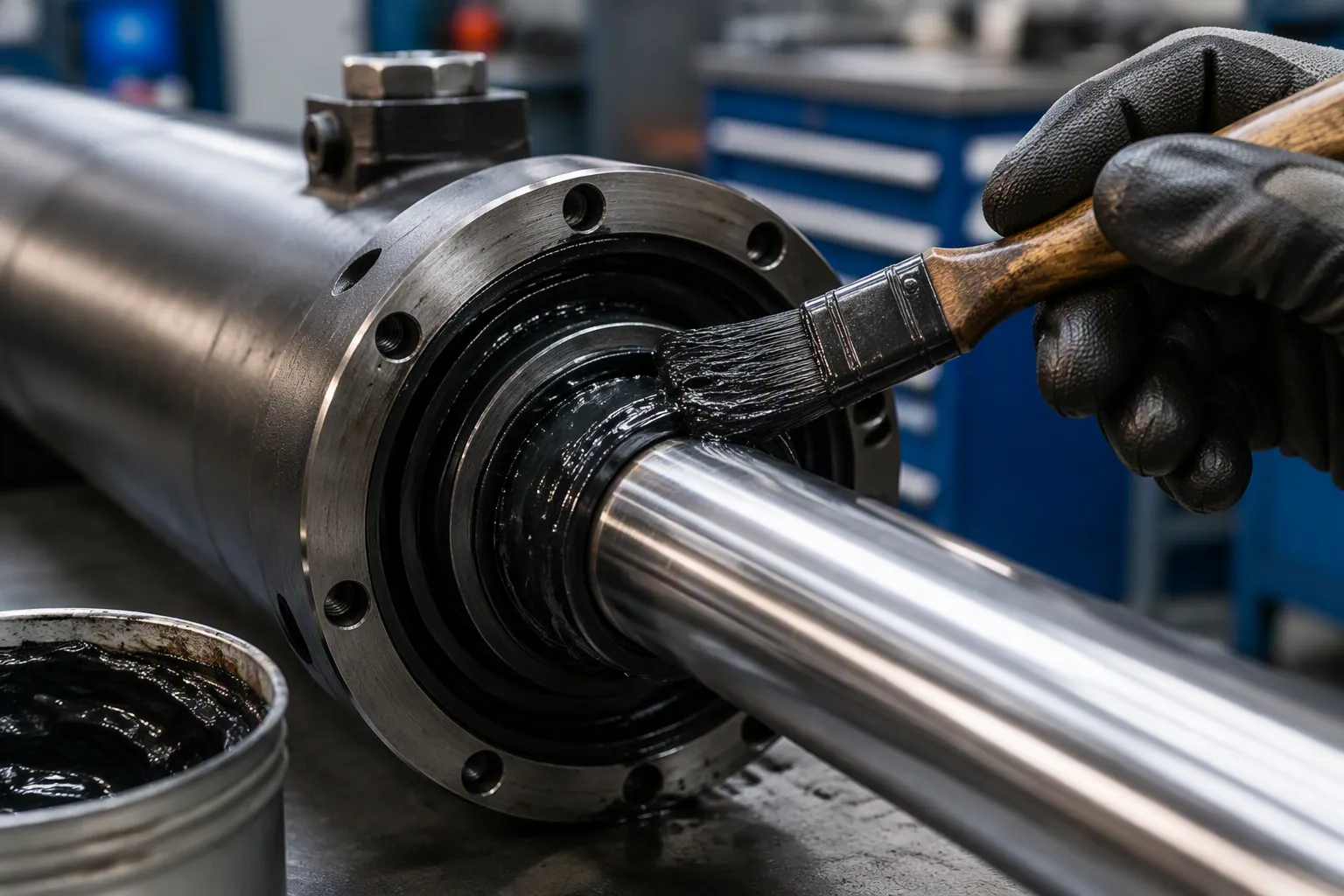
Unplanned hydraulic cylinder failure driven by seal degradation remains one of the most disruptive and costly events in industrial fluid power systems. A single seal leak can trigger a full emergency shutdown, halting production and incurring cascading costs in maintenance, lost output, and environmental compliance. This scenario is not uncommon: field maintenance data consistently shows that seal-related issues are the single largest driver of hydraulic cylinder repairs and unplanned downtime across manufacturing, construction, mining, and mobile equipment sectors.
According to LTJ Industrial’s 2026 hydraulic cylinder repair benchmark report, seal wear and failure accounts for over 50% of all cylinder repair events, and cylinder leakage contributes up to 30% of total system downtime in industrial settings. The financial impact extends far beyond replacement parts: a continuous leak rate of just one drop per second wastes approximately 420 gallons (1,600 liters) of hydraulic fluid annually. At a typical industrial fluid cost of $5 per gallon, this equals $2,100 per year in direct fluid loss alone—excluding maintenance labor, production downtime, and spill remediation expenses (Sain et al., 2025).
This guide provides a technical, evidence-based framework for selecting and applying grease for high-pressure cylinder seals. It draws on tribological research, industry standard test methods, and field-proven maintenance practices to explain how grease performs under extreme pressure, how formulation determines performance, and how to match lubricants to seal materials and operating conditions. The goal is to replace trial-and-error maintenance with repeatable, data-backed procedures that extend seal life and reduce unplanned failures.
Key Takeaways
Grease serves two critical functions in high-pressure cylinders: it reduces boundary friction between seal lips and cylinder bores, and acts as a secondary sealing barrier against fluid leakage and contaminant ingress.
Material compatibility between grease and seal polymer is non-negotiable; incompatible lubricants cause swelling, hardening, or cracking via mechanisms defined by ASTM D471 immersion testing.
High-pressure service requires grease with superior colloidal stability, high dropping point, and adequate viscosity to maintain a continuous lubricating film under compressive load.
Proper assembly lubrication and condition-based re-greasing schedules reduce seal wear rates by 3–10× compared to unlubricated or improperly lubricated operation.
Water-resistant grease formulations are required for wet or outdoor environments to prevent washout and corrosion-induced seal damage.
Core Tribological Functions of Lubricating Grease in High-Pressure Seals
In high-pressure hydraulic cylinders (typically operating above 2,000 psi / 140 bar), seals operate under boundary lubrication conditions where direct surface contact is only prevented by a thin, pressure-resistant lubricant film. Grease fulfills two distinct but equally critical roles in this environment: friction and wear control, and secondary sealing/contamination protection.
Friction Reduction and Wear Control
Every piston stroke creates sliding contact between the seal lip and the cylinder bore surface. Without effective lubrication, this contact generates frictional heat, adhesive wear, and abrasive material removal. Over time, the seal polymer develops micro-cracks, loses its lip geometry, and can no longer maintain a pressure-tight seal.
Grease addresses this by forming a thin, continuous tribofilm between the seal and bore surfaces. This film physically separates asperities on the mating surfaces, lowering the coefficient of friction by approximately 85–90% compared to dry sliding. The result is reduced heat generation, slower material degradation, and dramatically extended seal service life.
High operating pressures make this task substantially more difficult. Under compressive load, standard greases experience shear thinning and oil separation, causing the lubricant film to squeeze out of the contact zone. Once the film collapses, metal-to-elastomer contact occurs almost immediately, initiating rapid wear. This is why colloidal stability—the ability of the grease thickener matrix to retain base oil under mechanical and thermal stress—is the defining performance property for high-pressure applications. A colloidally stable grease maintains its structural integrity and film thickness even under extreme loads, rather than migrating away from the seal interface.
Formulation factors that improve pressure retention include higher-viscosity base oils, lithium complex or polyurea thickener systems, and solid lubricant additives such as PTFE. These components create a structurally robust grease network that resists compression and maintains film integrity.
Secondary Sealing and Contamination Barrier
Beyond lubrication, grease acts as a dynamic secondary seal. Even precision-manufactured new seals have microscopic surface roughness that creates tiny leak paths along the bore. Grease fills these micro-gaps, forming a cohesive barrier that slows fluid migration past the primary seal lip. As the primary seal wears over time, this grease barrier extends functional seal life by providing a second line of defense against leakage.
Grease also protects seals from contaminant-driven failure. Dirt, water, and metal particles that enter the cylinder bore act as abrasives, scoring the bore surface and embedding in the seal polymer. This accelerates wear and creates leak paths. A properly applied grease layer at the seal lip traps these contaminants before they reach the sealing interface, keeping both the seal and bore surface clean and smooth.
Water exposure is a particularly common failure mode. Standard greases wash away readily in wet environments, eliminating both the lubricating film and contamination barrier. High-pressure greases formulated for water resistance maintain adhesion and structural integrity even with moisture present, protecting both seal elastomers and metal surfaces from corrosion and wear.
Formulation Chemistry and Critical Performance Properties
Grease performance is determined by three core components: base oil, thickener system, and additive package. Each component serves a distinct engineering function, and their balance determines whether the grease will survive high-pressure cylinder service or fail prematurely.
Base Oil
The base oil makes up 75–90% of grease volume and defines its fundamental viscosity, temperature range, and oxidation resistance.
Mineral base oils offer cost-effective performance for moderate pressure and temperature conditions.
Synthetic base oils (PAO, ester, or polyglycol) provide superior oxidation stability, wider temperature operating ranges, and more consistent viscosity under pressure. For high-pressure systems that generate significant frictional heat, synthetic base oils almost always deliver longer service life and more reliable film retention.
Thickener System
The thickener acts as a three-dimensional sponge that holds the base oil in suspension and gives grease its semi-solid consistency. The thickener chemistry is the primary determinant of colloidal stability, dropping point, and water resistance.
Lithium complex thickeners provide excellent mechanical stability, high dropping points, and good water resistance, making them the most common choice for general industrial high-pressure applications.
Polyurea thickeners offer exceptional thermal stability (dropping points >300°C) and oxidation resistance, making them ideal for high-temperature continuous operation. They also maintain structural integrity under repeated shear cycles better than many soap-based thickeners.
PTF E-thickened greases provide the lowest friction coefficients and excellent chemical resistance, suited for extreme pressure and chemically aggressive environments.
Additive Package
Additives make up 1–15% of grease formulation and are tailored to specific performance requirements:
Anti-wear (AW) and extreme pressure (EP) additives (such as ZDDP, molybdenum compounds) form sacrificial protective layers on metal surfaces, preventing adhesive wear and scoring under boundary lubrication conditions. Tribological research shows that properly formulated AW additive packages can reduce component wear rates by over 70% in high-pressure hydraulic systems (Runda Chemical, 2026).
Corrosion inhibitors form a molecular barrier on metal surfaces, preventing rust formation from moisture and condensation. This is critical because even minor surface roughness on cylinder bores dramatically accelerates seal wear.
Oxidation inhibitors slow base oil degradation at elevated temperatures, extending grease service life.
Critical Performance Metrics
Three measurable properties determine suitability for high-pressure cylinder service, all defined by standardized ASTM test methods:
Viscosity (base oil kinematic viscosity) Higher viscosity oils create thicker, more pressure-resistant lubricating films. Under extreme compressive load, low-viscosity greases are squeezed out of the contact zone, leading to film collapse. For high-pressure seals, base oil viscosities of ISO VG 150–460 are typically specified.
Dropping point (ASTM D2265) The temperature at which grease melts and loses its structural integrity. High-pressure cylinders generate significant heat from friction and fluid compression; a grease with a low dropping point will soften and migrate away from the seal area. Lithium complex greases typically have dropping points above 260°C; polyurea greases can exceed 300°C.
Water washout resistance (ASTM D1264) Measures the grease’s ability to resist being washed away by water. For outdoor, marine, or washdown-prone environments, water-resistant formulations are essential to maintain the seal barrier and prevent corrosion.
Material Compatibility: Seal-Grease Matching Framework
Material compatibility is the foundation of reliable seal performance. Using an incompatible grease can cause seal polymer swelling, hardening, cracking, or softening—all of which lead directly to leakage and premature failure. These effects are chemical in nature, governed by the same polymer-solvent interactions defined in ASTM D471 standard immersion testing.
Compatibility by Seal Material
The following table summarizes recommended grease types for common high-pressure hydraulic seal materials, based on ASTM D471 compatibility data and field application experience (O-Ring Supply Co., 2025; TYS Seals, 2025):
表格
Seal Material | Recommended Grease Types | Key Engineering Notes |
|---|---|---|
NBR / HNBR (Nitrile Rubber) | Silicone grease (e.g., Parker O-Lube, Molykote 11); PAO synthetic grease | Industry standard for petroleum-based hydraulic systems; <2% volume swell per ASTM D471. Avoid ester-based oils and glycol fluids. |
FKM (Fluorocarbon Rubber) | Silicone grease; PFPE grease (Krytox series) | Excellent for high-temperature service (to 200°C+). PFPE preferred for aerospace and phosphate ester fluid systems. Avoid amine-based additives. |
EPDM | Silicone grease; glycerine / propylene glycol | Critical: Never use petroleum-based greases—they cause 40–80% volume swell within hours. Silicone grease is the standard general-purpose choice. |
PU (Polyurethane) | PAO-based lithium complex grease; ester-free synthetic grease | Superior wear resistance for high-pressure service. Limited to ≤90°C continuous operating temperature. Avoid excessive base oil aromatic content. |
PTFE | Dry PTFE film; PFPE grease; silicone grease | Extremely low friction; chemically inert to most hydraulic fluids. Suitable for service from -200°C to +260°C. |
FFKM (Perfluoroelastomer) | PFPE grease | Near-universal chemical compatibility; specified for semiconductor, aerospace, and aggressive chemical service. |
For assembly lubrication specifically, thick, tacky greases (such as Parker O-Lube) are preferred because they remain seated in seal grooves during piston insertion, rather than being wiped or pushed aside. This ensures the seal is fully protected through the entire assembly process.
Always verify compatibility with both the seal material and the system hydraulic fluid. A grease that is compatible with the seal but incompatible with the system fluid can cause contamination, foaming, or additive depletion issues.
Application and Maintenance Best Practices
Even the highest-performance grease will fail if applied incorrectly or maintained inadequately. The following procedures are derived from standard hydraulic repair practices (LTJ Industrial, 2026) and predictive maintenance frameworks (AHS Hydraulics, 2026).
Assembly Lubrication Procedures
Proper lubrication during cylinder assembly prevents seal damage during installation and ensures uniform film formation at startup.
Surface preparation: Thoroughly clean the seal groove, cylinder bore, and piston rod with lint-free cloth and compatible solvent. Any trapped dirt or debris will act as an abrasive and accelerate seal wear.
Application method: Apply a thin, uniform coating of grease to the entire seal circumference, with extra attention on the seal lip (the primary contact zone). The coating should leave the surface glossy but not dripping or caked.
Quantity control: Excess grease is as harmful as insufficient grease. Over-greasing can cause hydraulic lock within the seal cavity, leading to seal lip inversion, extrusion, or permanent deformation. A general guideline is to fill the seal cavity to 30–50% of its void volume.
Groove retention: Use tacky assembly-grade grease to hold seals in place during installation, especially when stacking multiple seals or wipers.
Preventive Re-Greasing Schedules
Grease is not a permanent lubricant; it degrades over time due to shear, heat, and contamination. A proactive re-greasing schedule maintains the protective film and extends seal life.
Baseline guidelines by duty cycle:
Standard-duty, intermittent operation: Re-grease every 100–200 operating hours, or quarterly for light use.
High-pressure continuous operation: Re-grease every 50–100 operating hours.
Dusty, sandy, or muddy environments: Re-grease every 30–45 operating hours, as contaminants accelerate grease degradation.
High-temperature ambient conditions: Shorten intervals by 30–50% due to accelerated oxidation.
Proper greasing procedure:
Grease equipment while running (where safe) to distribute lubricant evenly across the full stroke.
Wipe grease fittings clean before attaching the grease gun to prevent dirt ingestion.
Apply grease slowly until a slight purge is visible at the seal edge; stop immediately to avoid over-pressurization.
Always follow OSHA 29 CFR 1910.147 lockout/tagout (LOTO) procedures before performing any maintenance on pressurized hydraulic systems.
For optimal results, use NLGI Grade #2 consistency grease for most high-pressure cylinder applications. Adjust intervals based on observed seal condition; if grease appears dry, caked, or contaminated at inspection, shorten the schedule.
Conclusion
Grease for high-pressure hydraulic cylinder seals is far more than a simple assembly aid—it is a critical tribological component that controls friction, prevents leakage, blocks contaminants, and directly determines seal service life. Effective lubrication strategy requires understanding formulation chemistry, verifying polymer compatibility, and implementing structured maintenance procedures.
The most common failure modes—seal swelling from incompatible grease, film collapse from low colloidal stability, and accelerated wear from under-lubrication—are all preventable through systematic selection and application. By matching grease properties to operating pressure, temperature, and seal material, and by following condition-based maintenance schedules, maintenance teams can dramatically reduce unplanned downtime, lower total cost of ownership, and extend cylinder service life.
For extreme operating conditions—pressures above 5,000 psi, temperatures above 180°C, or aggressive chemical environments—consult with a tribological specialist or seal manufacturer to validate lubricant selection and application rates.
FAQ
Can you use any grease for your high-pressure cylinder seals?
No. You must match grease to your seal material. Wrong grease causes swelling, hardening, or cracking. These failures lead directly to leaks and costly downtime. Check compatibility before applying any grease.
How often should you re-grease your high-pressure cylinder?
For standard-duty applications, grease every 1-2 hours of operation. High-impact or dusty conditions demand more frequent service, about every 30-45 minutes. Adjust your schedule based on the seal condition you observe.
What happens when you use the wrong grease with your seal material?
Petroleum-based, lithium-based, and copper-based greases can damage polyurethane and rubber seals. Swelling, hardening, or cracking occurs. These failures destroy the seal’s ability to contain pressure. Leaks follow quickly.
Does grease really help prevent leaks?
Yes. Grease fills microscopic gaps between the seal and bore. It blocks fluid escape paths. The grease acts as a second line of defense if the primary seal starts to wear.
See Also
Key Traits Defining Superior Industrial Grease Performance
Essential Insights on Lubricants for Harmonic Drive Reducers
Innovative FAKKT Greases Addressing Contemporary Auto Issues
Boosting Car Dependability Using FAKKT-GC874K Synthetic Grease
The Role of Colloidal Stability in Grease Efficiency Explained