


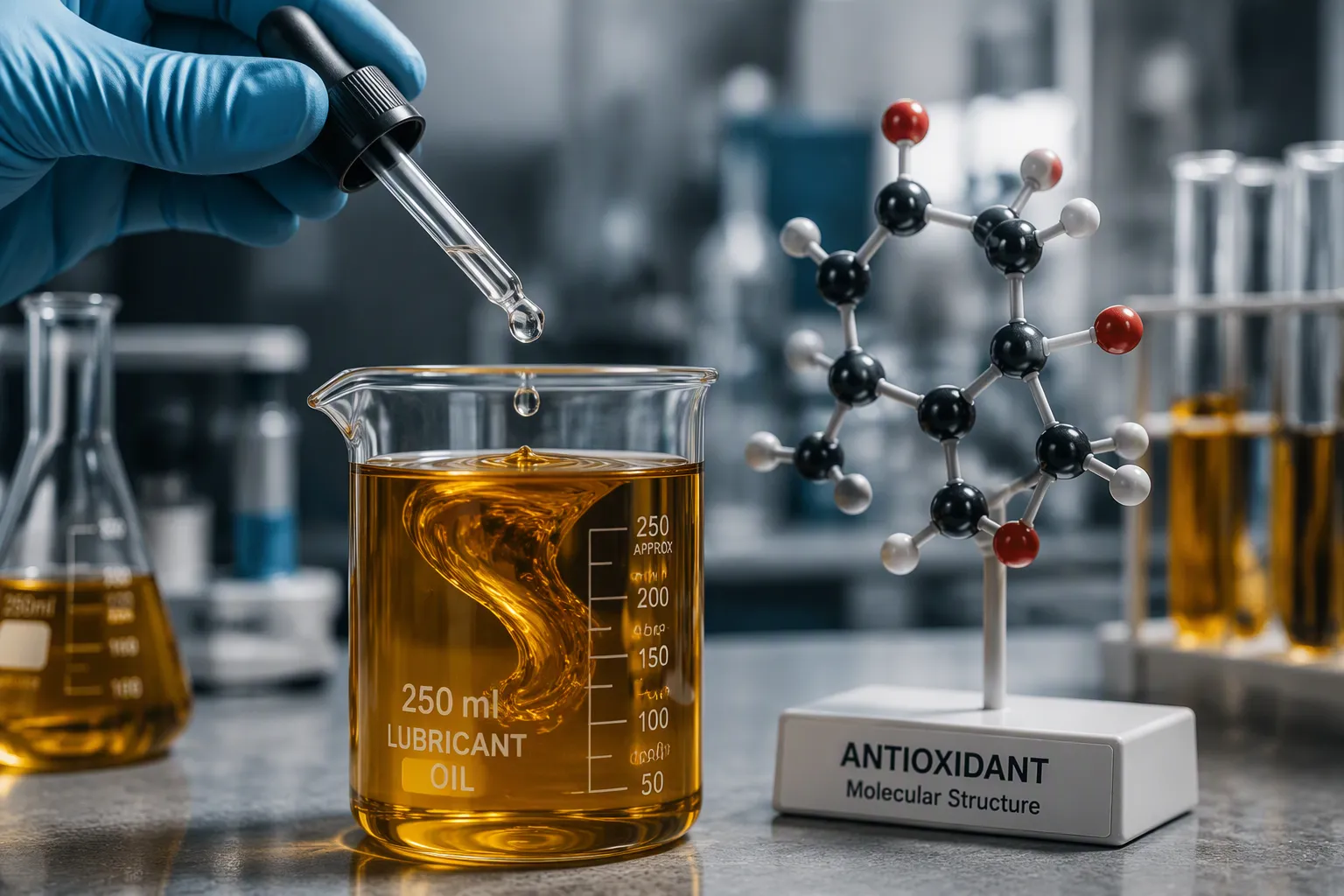
Antioxidants are additives that help lubricants last longer. They boost the base oil’s ability to resist oxidation. Just like preservatives in food, these antioxidant additives stop oil from going bad. Heat, air, moisture, and metal surfaces speed up oxidation, creating sludge and varnish. This breakdown harms equipment. Antioxidants play a key role in lubricants. This post explains three main antioxidant types and how each one stops the chain reaction. We also talk about the Antioxidant in Lubricant Materials and how it works. Knowing about these lubricant additives is important for extending drain intervals and protecting equipment. The base oil needs antioxidant protection over long periods. Different base oils need different antioxidant packages.
Key Takeaways
Antioxidants stop lubricants from breaking down because of heat, air, and metal.
Three main kinds of antioxidants work as a team to protect oil.
Radical terminators stop free radicals, which breaks the oxidation chain.
Peroxide decomposers break down harmful hydroperoxides into stable products.
Metal deactivators create a protective layer on metal surfaces. This layer stops catalytic reactions from happening.
Why Lubricants Oxidize
Understanding antioxidants starts with knowing why base oil breaks down. Heat, oxygen, moisture, and metal surfaces start oxidation. That is the mechanism of lubricants oxidation.
The Oxidation Chain Reaction
Oxidation starts when heat or metal makes free radicals. A free radical is a molecule with an unpaired electron. It reacts very easily. The free radical reacts with oxygen. This makes a peroxy radical. The peroxy radical takes hydrogen from another hydrocarbon. This makes a hydroperoxide and a new free radical. The chain keeps going. Each new radical makes more hydroperoxides. These hydroperoxides fall apart. They release even more radicals. Hydroperoxides are the main middle step in this process. Metal surfaces like copper and iron speed up the reaction. Water helps break hydroperoxides into more radicals. The process gets faster fast. This cycle repeats many times each second. This chain reaction shows the mechanism of lubricants oxidation at work. Without an antioxidant, the reaction runs without stopping. The oxidative stability of the oil depends on additives. A good antioxidant stops the chain. It blocks new free radicals from forming. Hydroperoxides cannot build up. The reaction slows down. Antioxidant chemistry targets these steps. Each antioxidant type stops a different stage.
Effects on Oil and Equipment
The chain reaction makes harmful by-products. Viscosity goes up. Thicker oil needs more energy to pump. Power use rises. Higher viscosity means pumps work harder. Energy costs increase. Sludge and varnish form from these products. Varnish deposits appear when these by-products reach saturation. These products hit a saturation point in the lubricant. They stick to metal surfaces. These deposits block valves and filters. Varnish stops moving parts from moving freely. It plugs small oil flow holes and strainers. Filter efficiency drops. Maintenance costs go up. Lubricant oxidation leads to shorter equipment life. Drain intervals get shorter when oils break down faster. For every 10°C rise in temperature, the oxidation rate doubles. Hot systems see faster oxidative degradation. The antioxidant package must work hard to inhibit oxidation in these conditions. Without protection, oxidation of lubricants causes wear and bearing failure. The base oil molecules are open to attack. Antioxidants protect base oil quality and make lubricants last longer.
Antioxidants and Lubricants: Radical Terminators
Radical terminators are one of the main kinds of antioxidants. These additives are also known as primary antioxidants. Each radical terminator stops the oxidation chain reactions. The antioxidant works on free radicals directly. A free radical is a molecule with an unpaired electron. It reacts very fast. The radical terminator gives a hydrogen atom to the radical. The antioxidant neutralizes the radical. The chain reaction stops. Without the antioxidant, the chain keeps growing. Knowing this antioxidant mechanism is key for formulators. Every antioxidant in this group acts as a first line of defense. Antioxidants and lubricants work together to protect equipment.
How Phenols and Amines Work
Two common radical scavengers are hindered phenols and aromatic amines. Both are examples of primary antioxidants. Primary types trap free radicals directly. Secondary types break down peroxides later. Phenols and amines are primary types. Each primary antioxidant neutralizes peroxy free radicals.
The hindered phenol is a strong antioxidant. It traps peroxyl and macromolecular radicals. The antioxidant stops the chain through a termination step. The phenol gives a hydrogen atom to the radical. This atom transfer mechanism drives the process. The hydrogen atom removal rate is a key sign of antioxidant activity. This rate relates to the O-H bond dissociation enthalpy. A lower enthalpy means faster activity. The antioxidant gives up its hydrogen. The radical becomes stable. The phenol itself forms a stable phenoxyl radical. This new radical does not start new reactions. The chain ends.
Aromatic amines work in a similar way. Each amine gives a hydrogen atom. The amine group gives up its hydrogen. The radical is neutralized. A stable nitrogen-centered radical forms. This new radical does not continue the chain reaction.
Both types work well across a broad temperature range. This range improves processing and long-term thermal stability. The source states both hindered phenols and aromatic amines contribute to this stability. However, the source does not offer a specific comparison of their efficiency at elevated temperatures. Both types serve well in many applications.
Where They Perform Best
Radical terminators perform best at moderate temperatures. High heat can use up the additive faster. At moderate temperatures, the protection lasts longer. It provides steady coverage over time. One additive alone cannot cover all stages. The combination approach is standard. A radical terminator stops the chain. A peroxide decomposer breaks down byproducts. A metal deactivator stops catalytic metals. Together, they form a complete package.
Formulators choose the right additive for each base oil. Some base oils respond better to phenols. Others work better with amines. Many blends use both types. The synergy improves performance. The oil lasts longer. Equipment stays protected. This knowledge of antioxidants and lubricants helps users select the right product. The right choice extends drain intervals. It reduces maintenance costs.
Peroxide Decomposers and Oxidation Control
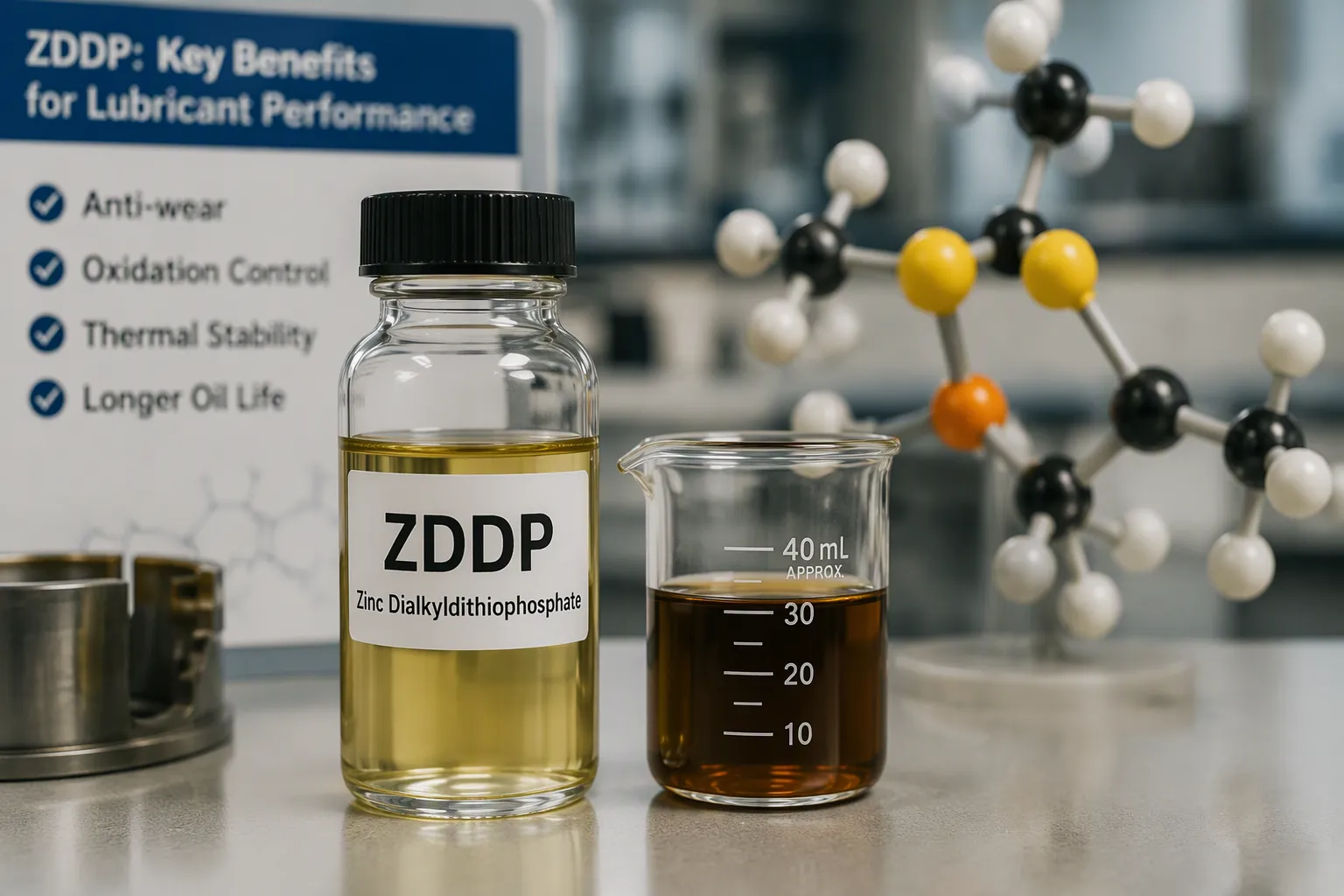
Peroxide decomposers are the second line of defense for lubricants. These secondary antioxidants break down hydroperoxides before they turn into harmful free radicals. This mechanism stops the chain reaction from starting again. The peroxide decomposer is a key part of any complete antioxidant package. It works with radical terminators. Together, they give full protection.
The Role of ZDDP
ZDDP is a widely used peroxide decomposer. This strong antioxidant contains sulfur and phosphorus. Its structure lets ZDDP react with hydroperoxides. It turns them into stable products. This stops the chain from growing. It prevents organic acids from forming. Hydroperoxides cannot make new radicals. The oxidation cycle slows down.
ZDDP acts as a secondary antioxidant by decomposing hydroperoxides into stable, nonreactive products. This prevents the formation of new radicals and protects the oil from further oxidation. ZDDP gets used up in the process.
ZDDP works as a secondary antioxidant. It stops hydroperoxides from turning into reactive radicals. This antioxidant stops chain branching. Most peroxide decomposers have sulfur or phosphorus. These elements directly reduce hydroperoxides. ZDDP interrupts the chain reaction. The additive gets used up as it works. Each antioxidant in this class has a specific job. How fast it gets used up matters for making the lubricant.
ZDDP is a key anti-wear part in car and heavy-duty engine oils. It offers reliable cam and tappet protection. It also resists micropitting. In multi-function packages, ZDDP provides secondary antioxidant activity. It also gives good corrosion protection. This helps keep base oils stable under heat stress.
Sulfur compounds also break down hydroperoxides. Thioesters and thioethers react with peroxides. They turn them into nonreactive products. This stops the chain from growing. It stops organic acids from forming. Dialkyl dithiophosphates and dialkyl dithiocarbamates work the same way. Each antioxidant type handles hydroperoxides in its own way. They protect metal surfaces from acid damage.
Benefits Beyond Oxidation
ZDDP protects against wear. It forms a protective layer on metal surfaces. Using the right antioxidant gives long-term protection. The layer lowers friction. It stops metal from touching directly. Camshafts and tappets stay protected.
This product has good anti-oxidation and corrosion protection. It also provides antiwear and extreme pressure properties. It can protect engine bearings from corrosion. It also stops oil viscosity from rising.
The corrosion protection keeps engine bearings safe. This antioxidant works well with radical terminators. Without it, acids would attack bearing surfaces. The additive stops these threats. It also stops viscosity from rising fast.
ZDDP has two functions, so it cuts down on the number of additives needed. It works as both an antioxidant and an anti-wear agent. This makes it easier for formulators. Better protection costs less.
Dialkyl dithiophosphate is a multi-effect additive. It has anti-oxidation, anti-corrosion, and anti-wear properties. Zinc Dialkyldithiophosphate is the most widely used.
An antioxidant package includes radical terminators and peroxide decomposers. These primary and secondary antioxidants work together. Radical terminators stop the first chain. Peroxide decomposers take care of byproducts. Metal deactivators stop catalytic damage. The base oil gets full protection. Equipment lasts longer. Maintenance costs are lower.
Metal Deactivators in Lubricants
Metal deactivators are the third kind of additive. They stop metal surfaces from causing bad reactions. Copper and iron ions make breakdown happen faster. These additives form protective layers on metal parts.
How Metal Ions Speed Up Oxidation
Copper ions create a strong catalytic effect. They make hydroperoxides break down faster. Free radicals multiply. The chain reaction speeds up. Heat and moisture make the problem worse. Metal deactivators hold back copper ion activity. This slows the breakdown process. Chelating agents stick to metal ions. They trap harmful ions. The catalytic cycle stops. In machinery with copper parts, this matters.
Common Deactivator Chemistry
Two main families act as metal deactivators. Triazole-based compounds include benzotriazole and tolyltriazole. Thiadiazole-based compounds use sulfur and nitrogen atoms.
Category | Key Structural Feature | Mechanism of Action |
|---|---|---|
Triazole-based | Nitrogen atoms with lone pair electrons | Forms a compact inert protective layer on metal surfaces; prevents metal ion dissolution and catalytic breakdown |
Thiadiazole-based | Polysulfide bonds plus nitrogen and sulfur atoms | Forms sulfide protective film; chelates metal ions; scavenges active sulfur |
Benzotriazole forms a stable complex on copper surfaces. The molecule bonds through its triazole nitrogen atoms. It creates a thin film. The film blocks copper dissolution. Tolyltriazole works in a similar way. Its methyl group makes the film more hydrophobic. This boosts persistence.
Thiadiazole-based deactivators form a sulfide film. They also chelate metal ions. They scavenge sulfur compounds.
Metal deactivators work with antioxidant additives. This combination creates synergy. The antioxidant package covers more stages. Each antioxidant type handles a different problem. This antioxidant role is crucial for long fluid life.
These deactivators work alongside antioxidants to provide full protection.
Turbine oil faces elevated temperatures and metal contact. Metal deactivators extend fluid life. They maintain varnish control. Operators value reliability improvements. These additives pair with antioxidant systems for synergistic protection.
The base oil benefits from this protection. The right deactivator choice extends system life.
How an Antioxidant in Lubricant Materials Works with Others
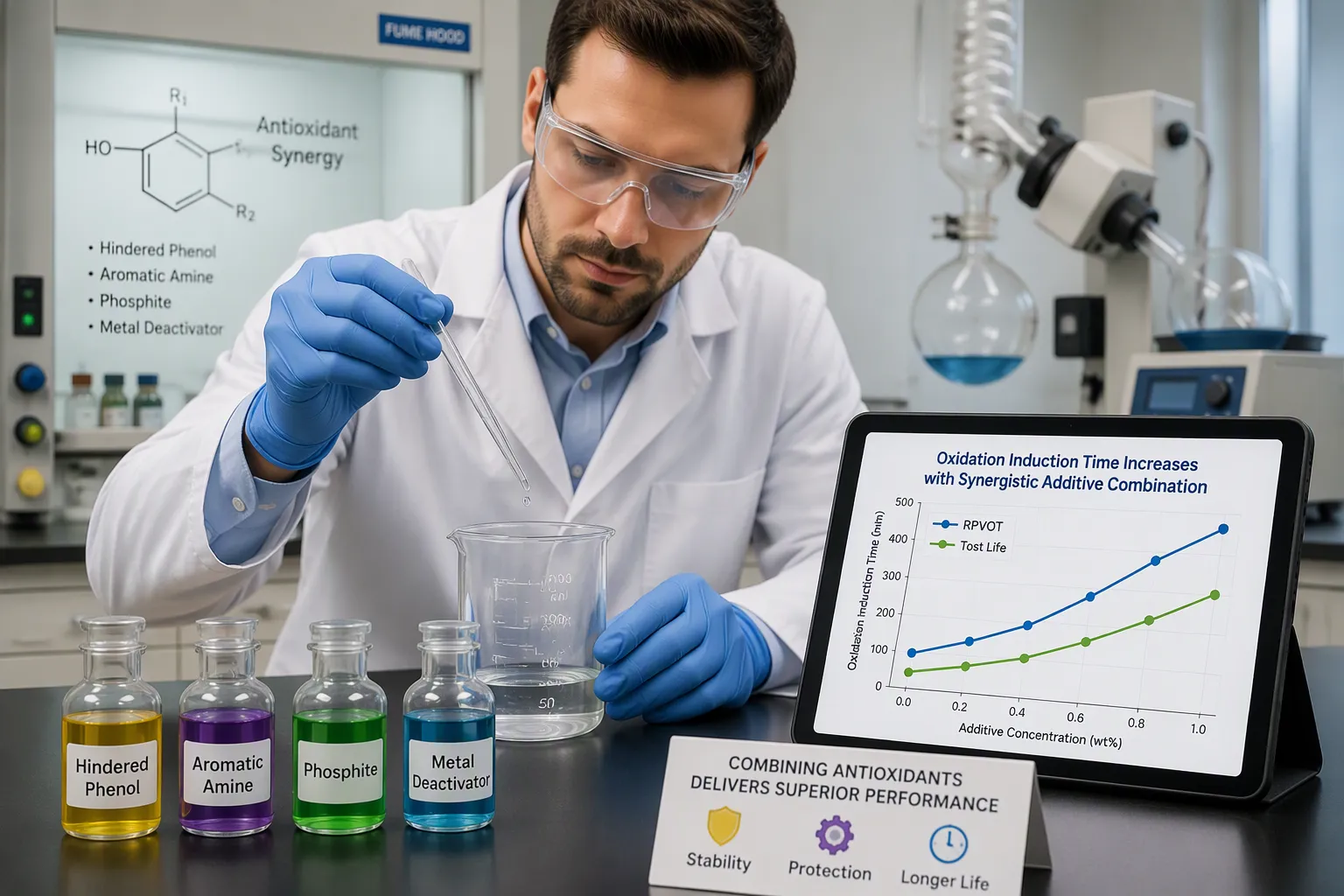
An antioxidant in lubricant materials hardly ever works by itself. Formulators mix different types together to cover every stage of oxidation. This method protects the base oil across a wide range of temperatures.
Synergy in Real Formulations
A full package uses a mix of primary and secondary antioxidants. Radical terminators stop the first chain reaction. Peroxide decomposers break down hydroperoxides before they can form new radicals. Metal deactivators stop catalytic metals from starting the cycle over again. Each antioxidant makes the others stronger.
Metal deactivators boost phenolic antioxidant performance in systems that have yellow metals. They shut down copper ions that speed up auto-oxidation. They also form protective films and create synergistic effects with antioxidants. In a ternary compound with phenolic and amine antioxidants, the synergistic effect is large, significantly increasing oxidation stability.
Commercial packages balance these components with care. The table below shows what each antioxidant class adds.
Additive class | Chemical examples | Mechanism of action | Role in balancing the package |
|---|---|---|---|
Primary antioxidants | Hindered phenols; aromatic amines (alkylated diphenylamines, phenyl-alpha-naphthylamine derivatives) | Scavenge peroxy radicals and terminate the radical chain reaction | Form the main radical-scavenging reserve; phenols perform well at moderate temperatures, while amines are effective at higher temperatures |
Secondary antioxidants | Phosphites, sulfides, thiocarbamates, sulfurized phenols, ZDDP-type chemistry where acceptable | Decompose hydroperoxides (ROOH) before they break down into new radicals | Attack the oxidation chain at a different point and complement primary antioxidants by reducing hydroperoxide-driven initiation |
Metal deactivators | Copper/metal deactivators | Passivate catalytic metal surfaces such as copper and iron | Reduce metal-catalyzed hydroperoxide decomposition and radical generation, supporting the overall oxidation-control system |
Formulators have to think about synergy, antagonism, and dosage. Some additives help each other work better. Others compete for metal surfaces. Each antioxidant has a best treat rate. Too little does not work. Too much can lead to deposit formation. This antioxidant balancing act is fit to the application.
Future Trends
OEM specifications are changing how antioxidants are developed. Emissions rules push OEMs to require ashless anti-wear additives. These protect catalytic converters from phosphorus damage. Longer drain intervals raise the demand for high-performance antioxidants. The shift from ZDDP-based additives to ashless formulations comes from regulatory and OEM pressure. OEM approvals require additive innovation. This drives demand for ashless antioxidants. Modern powertrains need low-ash, low-viscosity oils. Anti-wear agents must not get in the way of emission after-treatment systems. OEMs now set additive profiles in their own testing protocols. This leads to platform-specific fluid designs that often call for ashless antioxidants. An antioxidant in lubricant materials must change to meet these demands. Higher operating temperatures and sustainability pressures will shape the next generation of antioxidant chemistry.
Radical terminators, peroxide decomposers, and metal deactivators each stop oxidation at a different point. A good antioxidant package mixes these types together. The right package makes oil drain intervals longer and protects equipment. It also cuts down on maintenance costs. Formulators must pick the correct antioxidant for each base oil. That antioxidant type works with others to create synergy. Knowing antioxidants classification and applications in lubricants helps build effective blends. Future development will answer tighter emissions rules. Higher temperatures and longer drain intervals push innovation. This change calls for new antioxidant chemistries and sustainable formulations. The base oil needs strong antioxidant protection. The industry will keep moving toward ashless options.
FAQ
What are antioxidants in lubricants?
Antioxidants are additives that make a lubricant better at fighting oxidation. They keep base oil from breaking down when heat, air, moisture, and metal touch it. These additives stop the chain reaction that makes sludge, varnish, and thicker oil. An antioxidant package makes oil last longer and keeps equipment safe.
How do antioxidants stop oxidation?
Each antioxidant type works at a different step. Radical terminators give hydrogen atoms to free radicals. This stops the chain reaction. Peroxide decomposers break hydroperoxides down into stable products. Metal deactivators form protective films on metal surfaces. This blocks catalytic metal ions from making breakdown happen faster.
Why are multiple antioxidant types used together?
One antioxidant alone cannot cover every oxidation step. Radical terminators handle free radicals. Peroxide decomposers attack hydroperoxides. Metal deactivators stop catalytic metals. Together, they create synergy. This antioxidant mix protects base oil across a wide temperature range and makes drain intervals longer.
What happens when antioxidants run out?
The additive gets used up as it works. Without antioxidant protection, oxidation runs without stopping. Viscosity rises. Sludge and varnish form. Acids attack bearings. Drain intervals get shorter. Equipment life drops. Fresh oil with a full additive package brings back protection.
Do antioxidants provide benefits beyond oxidation control?
Yes. ZDDP acts as both an antioxidant and an anti-wear agent. It forms a protective layer on metal surfaces. This lowers friction and stops metal-to-metal contact. It also gives corrosion protection for engine bearings. This dual function cuts down the number of additives needed in a formulation.
See Also
How Colloidal Stability In Grease Affects Its Overall Performance
Boosting Automotive Reliability Using FAKKT-GC874K Synthetic Grease Technical Bulletin
Why Underrated Silicone Oils Are Your Plastic Parts Best Friend
Key Factors That Make High-Performance Industrial Grease Truly Exceptional
FAKKT Grease Solutions Addressing The Modern Automotive Industry Challenges