


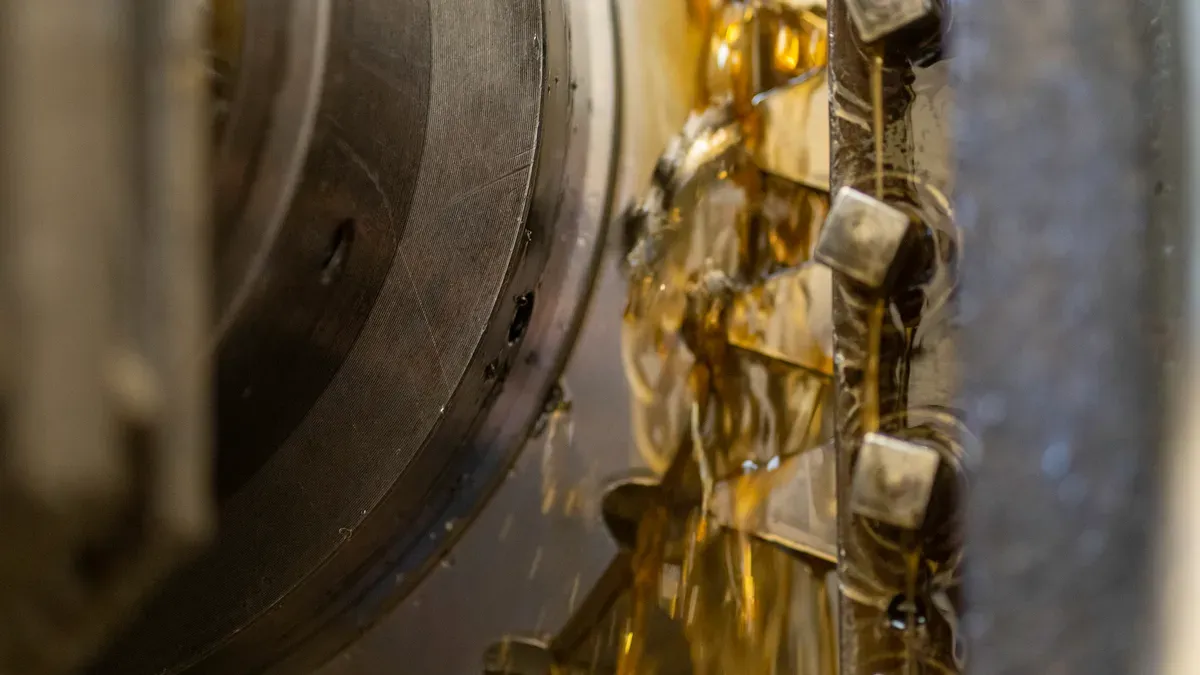
Selecting the right grease for food processing equipment is crucial for ensuring safety and optimal performance. Using improper lubricants can lead to severe consequences. For instance, equipment may fail under moisture or temperature stress, resulting in increased downtime. You might face more maintenance demands and unplanned shutdowns, disrupting your operations.
Consider these factors when choosing grease:
High temperatures and humidity can degrade lubricants.
Rigorous cleaning cycles with harsh chemicals require careful selection.
Poor choices can increase equipment failure risks and create safety hazards.
By making an informed choice, you enhance reliability and efficiency in your operations.
Key Takeaways
Choose food-grade grease that meets safety standards like NSF and ISO 21469. This prevents contamination and ensures compliance.
Match grease with your equipment’s materials and follow manufacturer guidelines. Proper compatibility reduces wear and extends equipment life.
Select grease based on operating temperature, viscosity, and additives. This ensures optimal performance and protection in harsh conditions.
Use water- and chemical-resistant greases in moist or chemically aggressive environments. They protect against corrosion and prolong lubricant effectiveness.
Assess environmental conditions and review technical data to pick the best grease. Proper selection enhances safety, efficiency, and equipment longevity.
Food-Grade Standards

Compliance Importance
When selecting grease for food processing equipment, compliance with food safety regulations is non-negotiable. You must ensure that the lubricants you choose meet stringent hygiene and safety standards. This compliance protects not only your equipment but also the food products you process. Using non-compliant grease can lead to contamination, resulting in serious health risks for consumers.
Food-grade lubricants fall into specific classifications based on their intended use. Here’s a breakdown of these classifications:
Classification | Description |
|---|---|
H1 | Food-grade lubricants used in food processing involving possible incidental food contact in trace amounts. |
H2 | Food-grade lubricants used on equipment or machinery where there is no possibility of food contact. |
H3 | Food-grade lubricants used to prevent rust on hooks, trolleys, and similar equipment, typically edible oils. |
To ensure safety, you should look for greases that are:
Non-toxic: Must not contain harmful ingredients.
Resistant to washout: Should remain effective in water or steam.
High temperature stability: Must withstand temperature fluctuations.
Corrosion protection: Should protect machinery from corrosion.
Odourless and tasteless: Should not affect the food’s taste or smell.
Compliance with ISO standards, particularly ISO 21469, is crucial for food-grade greases. This standard ensures that lubricants meet hygiene requirements for food production. The NSF has established classifications for food-grade lubricants, which help maintain food safety and quality in processing environments.
Key Certifications
Certifications play a vital role in verifying the safety and quality of food-grade greases. Here are some of the most recognized certifications you should consider:
USDA H1, H2, and H3 categories: These classify food-grade lubricants based on their safety for food contact.
ISO 21469: This certification includes annual audits and laboratory testing to ensure compliance with safety standards.
NSF registration: The NSF has replaced USDA for food-grade lubricant registrations, ensuring compliance with safety standards.
In different regions, specific certifications may be required. For example:
NSF H1 registration: Required in Mexico and the USA, ensuring compliance with FDA 21 CFR 178.3570.
ISO 21469: Mandatory in Brazil, covering quality protection during production, storage, and transport.
Kosher and Halal certifications: Important for companies exporting to countries with Jewish and Muslim populations, ensuring compliance with religious dietary laws.
By choosing greases that meet these certifications, you can ensure that your food processing operations remain safe and compliant with industry standards.
Compatibility with Equipment
Material Compatibility
When selecting grease for food processing equipment, you must consider the materials used in your machinery. Different materials can react differently with lubricants, impacting performance and safety. Here are some common materials found in food processing equipment and their compatibility with grease:
Material | Properties | Influence on Grease Compatibility |
|---|---|---|
Stainless Steel | Corrosion resistant, rust-resistant, tolerates cleaning agents | Ideal for food processing, but may lead to bearing failure |
Carbon Steel | Mechanical ductility, prone to corrosion under cleaning conditions | Can lead to premature failure in food processing equipment |
CrNi Alloy | Galling and work hardening, lower load rating than carbon steel | Less effective in reducing corrosion in bearings |
Using compatible materials reduces wear and tear, which extends the equipment’s lifespan and minimizes replacement costs. A chemical compatibility guide ensures that materials do not react with the substances processed, thus maintaining product purity and compliance with health regulations. Incompatibility between lubricants and equipment materials can lead to significant issues such as increased friction and premature wear. For instance, certain lubricants may react negatively with plastics, causing them to deform or crack. Therefore, selecting a lubricant that is compatible with the specific materials used in food processing equipment is vital for maintaining operational integrity.
Manufacturer Guidelines
Manufacturers provide essential guidelines for selecting the right grease based on equipment material. Here are some key recommendations to follow:
Assess the specific environmental and mechanical service conditions, including speed, temperature, corrosion factors, shock/vibration, metal wear, and water exposure.
Determine the current Mean Time Between Failure (MTBF) and set goals for improving operational life.
Review the technical data for the grease brands being considered, focusing on performance attributes rather than marketing claims.
In food processing machinery, selecting the appropriate grease involves considering various factors such as base oil viscosity, environmental conditions, and specific application requirements. For example, greases like Chesterton 630 SXCF, which has an ISO VG 46 base oil, are recommended for bearings operating at high speeds. Higher viscosity options like Chesterton 630 SXCF 220 #1 are suitable for larger, slower RPM bearings. The choice of grease should be informed by its performance data, particularly in relation to the specific mechanical and chemical challenges faced in food processing environments.
Performance in Food Processing

Temperature Tolerance
Temperature tolerance plays a critical role in the effectiveness and safety of grease used in food processing. Greases that can withstand higher temperatures maintain their operational limits and stability under varying conditions. This capability is essential for preventing failures caused by oxidation or breakdown. When you choose a grease with high-temperature tolerance, you enhance equipment performance and reduce the risk of costly downtime.
Viscosity and Additives
Viscosity is another vital factor in selecting the right grease for food processing. The appropriate base oil viscosity ensures effective lubrication under different operational conditions. Greases formulated with specific additives enhance performance, particularly in harsh environments. These additives create a protective film on bearing surfaces, reducing wear and preventing corrosion. This protection is crucial, as food-grade lubricants must perform well while ensuring safety by preventing contamination.
Here’s a table summarizing key factors influencing viscosity and additive selection:
Grease Type | Operating Temperature | Base Oil Characteristics | Additives |
|---|---|---|---|
Lithium | Up to +120°C | Varies by formulation | Enhances performance |
When selecting grease, consider these important additive characteristics:
No taste
No color
Physiologically inert
Greases with aluminum complex or calcium sulfonate complex thickeners are recommended for high water resistance. This is essential in food processing, where cleaning processes can introduce moisture. Additionally, synthetic lubricants are preferred in high-temperature applications. They maintain their properties better than mineral oils, which can carbonize and lose effectiveness. This careful formulation ensures compliance with food safety regulations while optimizing equipment performance.
Environmental Resistance
Water Resistance
In food processing environments, water exposure is inevitable. Greases must resist washout and spray-off to maintain their lubricating properties. Water-resistant greases prevent the lubricant from being washed away during cleaning cycles or contact with moisture. This resistance ensures that machinery continues to operate smoothly without frequent reapplication.
Water washout resistance is crucial because it helps keep bearings and moving parts protected from corrosion. When grease can withstand water exposure, it reduces the risk of rust formation, which can compromise equipment integrity and safety. Spray-off resistance also plays a vital role, especially in high-pressure cleaning scenarios, where water can dislodge or dilute lubricants.
Mechanical and roll stability in the presence of water ensures that the grease remains intact and effective, even when subjected to constant moisture. Stability to prevent leakage is equally important, as it keeps the lubricant contained within the bearing or gear, reducing contamination risks and maintaining hygiene standards.
For example, synthetic greases formulated with water-resistant thickeners, such as calcium sulfonate complexes, excel in moist environments. They provide a durable barrier that protects against water ingress, extending the lifespan of both the grease and the equipment.
Chemical Resistance
Food processing often involves exposure to various chemicals, including cleaning agents, acids, and alkaline substances. Greases with high chemical resistance can withstand these harsh conditions, significantly extending their service life.
Formulating food-grade grease to resist oxidation and high temperatures helps it endure the demanding environment of food production. Resistance to oxidation prevents the grease from breaking down prematurely, which could lead to increased friction, wear, and potential contamination. High chemical resistance also acts as a barrier, protecting mechanical parts from corrosive substances that could otherwise cause damage or failure.
This resistance is especially vital when cleaning involves aggressive chemicals or steam sterilization, which can degrade lesser lubricants. A grease that resists chemical attack maintains its integrity longer, reducing the need for frequent reapplications and minimizing downtime.
For instance, synthetic food-grade greases like FAKKT-G are designed to withstand extreme conditions, including exposure to acids and alkaline cleaners. Their formulation ensures that they continue to protect machinery, even in chemically aggressive environments, ultimately prolonging equipment life and ensuring safety compliance.
Choosing the right grease for food processing equipment is essential for maintaining safety and efficiency. Focus on these key factors:
Operating Temperature: Select grease based on the temperature range of your application. Synthetic options often provide broader ranges.
Base Oil Viscosity: Ensure the grease has the appropriate viscosity for your equipment’s load and speed.
Application Techniques: Proper application and re-application are crucial to prevent equipment failures.
To make informed choices, assess environmental conditions, review the Mean Time Between Failure (MTBF), and analyze technical data for grease brands. By prioritizing these aspects, you can enhance the reliability and longevity of your food processing operations.
FAQ
What is food-grade grease?
Food-grade grease is a lubricant specifically formulated for use in food processing environments. It meets safety standards to prevent contamination and protect machinery.
Why is compliance important for grease in food processing?
Compliance ensures that the grease you use meets safety regulations. This protects both your equipment and the food products you process from contamination.
How do I know if grease is compatible with my equipment?
Check the manufacturer’s guidelines for recommended lubricants. You should also consider the materials used in your equipment to ensure compatibility.
What are the benefits of using synthetic grease?
Synthetic grease offers superior performance in extreme temperatures and harsh conditions. It provides better lubrication, reduces wear, and extends the lifespan of your equipment.
How often should I apply grease to my equipment?
The frequency of grease application depends on your equipment’s usage and environmental conditions. Regularly inspect and maintain your machinery to determine the best schedule.
See Also
Key Factors That Define Exceptional Industrial Grease Performance
The Role of Colloidal Stability in Grease Performance
Innovative FAKKT Grease Solutions Addressing Today’s Automotive Issues
Improving Automotive Reliability Using FAKKT-GC874K Synthetic Grease
FAKKT-UB 45001: Setting Standards for High-Performance Tribology